



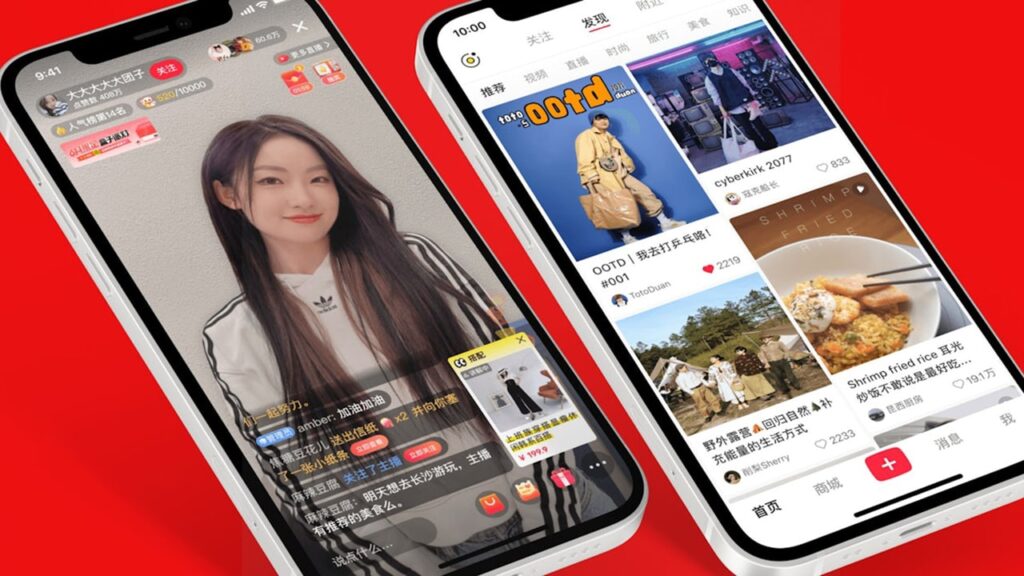
Chinese game publishers with limited marketing budgets often face a difficult choice when promoting a new title: HeyBox, Bilibili, or Xiaohongshu (also known as RedNote)?
At first glance, many people would call the comparison unfair. It is like asking which team is most likely to win the FIFA World Cup and including China’s men’s national soccer team among the contenders. Compared with HeyBox and Bilibili, Xiaohongshu barely seems to belong in the conversation. On what grounds should it even be considered?
That skepticism is not unfounded.
HeyBox got its start during the early boom of PUBG: Battlegrounds. It later built a large gaming user base through services such as data lookup, social features, and game sales, pulling ahead of comparable rivals. It also has the most mature integrated marketing pipeline among the three. Within the app, a game can move through the full cycle from exposure to search to conversion.
Bilibili, meanwhile, is familiar to most Chinese internet users. It began with anime and ACG, an abbreviation for animation, comics, and games, and has since accumulated a large base of broader internet users.
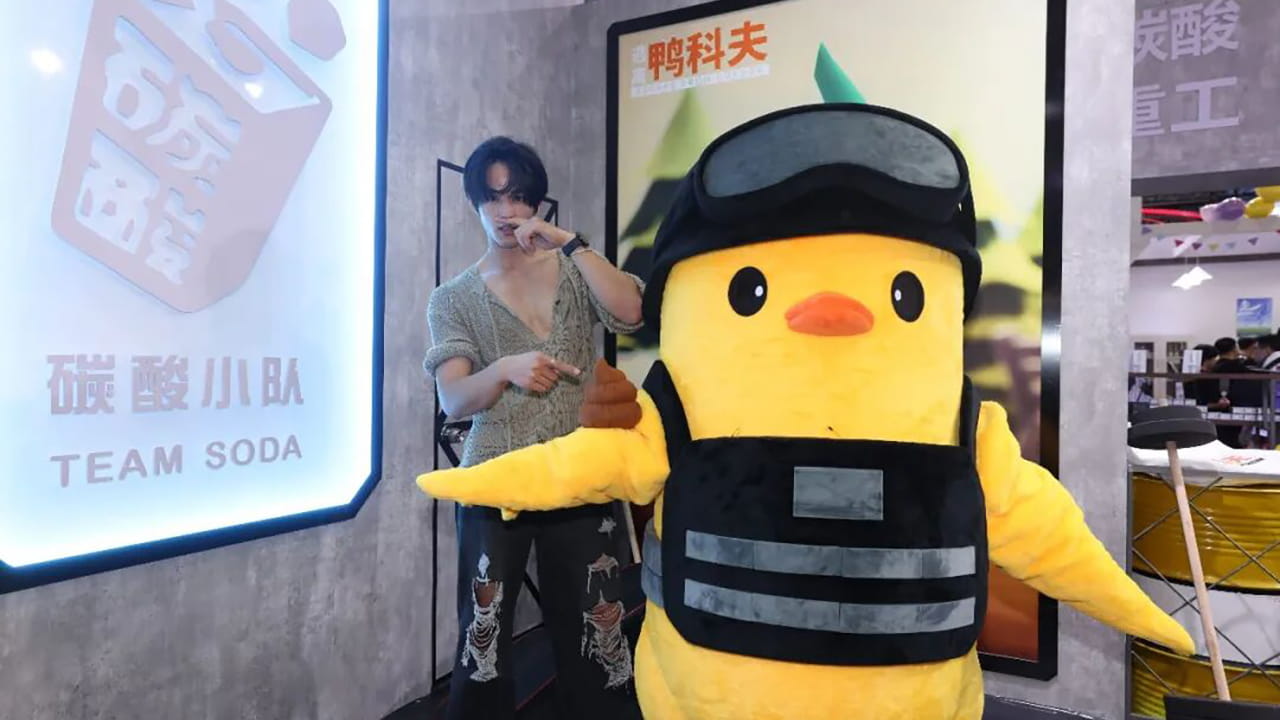
Bilibili entered the games market by jointly operating titles such as Guns GirlZ (also known as Houkai Gakuen 2). Later, its operation of titles including Fate/Grand Order and Azur Lane brought in substantial revenue. In indie games, it has released titles such as Dead Cells and Warm Snow, while its in-house studio launched the indie hit Escape from Duckov in 2025. Bilibili World, the convention it organizes, has also become one of China’s top offline exposure channels for games, allowing for more targeted promotion.
By comparison, Xiaohongshu does not appear to have much history in game marketing. It does not have an obvious gaming pedigree, and even its apparent algorithmic advantage has come under pressure in recent years.
Yet, many games have benefited from marketing on Xiaohongshu. Take Caiji Mengxiangjia, which has surpassed 460,000 preregistrations on TapTap, according to the draft’s figures. The project was originally initiated because the team’s “Xiao Caiji” IP character became popular on Xiaohongshu. After formal R&D began in 2023, its posts averaged more than 100,000 views.
Smaller products that once lacked exposure channels and marketing budgets have also found target players on Xiaohongshu. Huolongguo, an indie game producer, once shared such an experience: since his game’s first reveal in 2024, he has handled marketing himself across Xiaohongshu, HeyBox, and Bilibili. Unexpectedly, according to his own figures, most of the players he eventually attracted came from Xiaohongshu.
Xiaohongshu’s own team has also continued to maintain and build its game-related business system in recent years. According to platform figures cited in the draft, a topic created in 2023 for game developers on Xiaohongshu has accumulated 1.85 billion views. In 2025, the platform held its first RedLand convention, with a venue spanning more than 80,000 square meters and 3.9 billion impressions across the internet. Preparations for the next edition are underway.
According to data released by Xiaohongshu, searches for game-related terms on the platform increased 70% year-on-year. Annual game searches grew by more than 70%, game-related content posts rose 147%, and annual watch time for game live streams climbed 250%. As of 2025, the monthly active users of game-related communities had exceeded 120 million.
Judged by past data and platform capabilities, Xiaohongshu has likely become a marketing channel that game industry practitioners can no longer ignore. It is not necessarily inferior to several other frequently discussed platforms, and it has found a distinctive source of competitiveness in this field.
Xiaohongshu began as a product seeding platform, and recommending games fits naturally within that model. After years of operation, many Xiaohongshu posts now feel more human and trustworthy. For a time, some internet users treated Xiaohongshu as an alternative to Baidu.
A trusted platform is a useful place for products to conduct content marketing and community operations. Games are no exception.
For game marketing specifically, Xiaohongshu also has clear advantages, including relatively low barriers and lower costs.
Compared with other platforms, video-heavy platforms such as Bilibili and Douyin concentrate users’ emotions and attention on dynamic content. Creators who want players to remember them often need to keep publishing high-quality videos, while view counts can become a core indicator players use to judge product quality. On HeyBox, products that do not have deep collaboration with the platform may receive relatively limited exposure and lack stronger algorithmic promotion that directly reaches users.
For products with mature operations teams and marketing strategies, adding Xiaohongshu to the mix can be a useful extra step. If teams synchronize prepared materials to Xiaohongshu, they may be able to generate discussion and decent results, even when the content consists only of images and text.
Indie game developers feel this point more strongly. Most indie developers wear multiple hats. Beyond development, it is difficult for them to invest additional resources in marketing and operations. For them, the optimal solution is often to hand these tasks to a publisher. But not every team has the chance to sign with one, and not every product receives sufficient publishing resources.
A producer known as Qie’e Jingcha regularly shares game progress. Because her time and energy are limited, she mostly uses image-and-text posts. Once she finishes them, she publishes them across mainstream social platforms such as Douyin and Xiaohongshu. Soon, Qie’e Jingcha realized that other platforms are ultimately video-first. Image-and-text posts receive limited traffic, and users do not devote much attention to that type of content.
But with only so many people on the team, “it’s impossible to have a video every time we post something.” By comparison, marketing on Xiaohongshu feels much more comfortable.
Another advantage of posting promotional content on Xiaohongshu is its sense of freedom.
Compared with other platforms, content on Xiaohongshu tends not to feel as overtly goal-driven. The platform encourages content with strong self-expression and emotion. Huolongguo said he often “posts whatever he dreams about,” without a clear promotional cadence. Yet this approach has helped his product attract many likeminded users.
The premise behind this freedom is the sense of real people that the platform has cultivated. For Xiaohongshu users, games are not a standalone vertical. They are part of sharing and discussing daily life: how to have fun, how to relax, what happened inside and outside a game, and what those experiences mean.
Many users shared how they created family members inside Tomodachi Life: Living the Dream.
Huolongguo’s game, for example, is related to job hunting. Works that connect more closely to everyday life often receive more attention on Xiaohongshu. Few people would discuss job hunting in a vertical gaming community, but such discussions feel natural on Xiaohongshu. It is a life-sharing platform, and users may be more easily drawn to content that seems connected to their own experiences.
That sense of real people also aligns with one of today’s most effective marketing methods: sincerity.
“Developers making games is a form of creation, and users posting content on the platform is also a form of creation. In both processes, creation itself is connected. When you gain certain feelings during game development and then share those feelings, there is a high chance that users will be drawn in by your sincere sharing.”
Users attracted by that kind of resonance are often more likely to understand developers’ design choices, empathize with them, and ultimately convert.
Products that have achieved solid marketing results on Xiaohongshu have often done this in some form.
Sweet Home, released this year, is a typical example. The domestically produced game tells a story about the distinctive anxieties, hesitations, and reflections of adolescence. It has led many players to think back on their own past and present. Some even reported physical symptoms while playing and said they burst into tears.
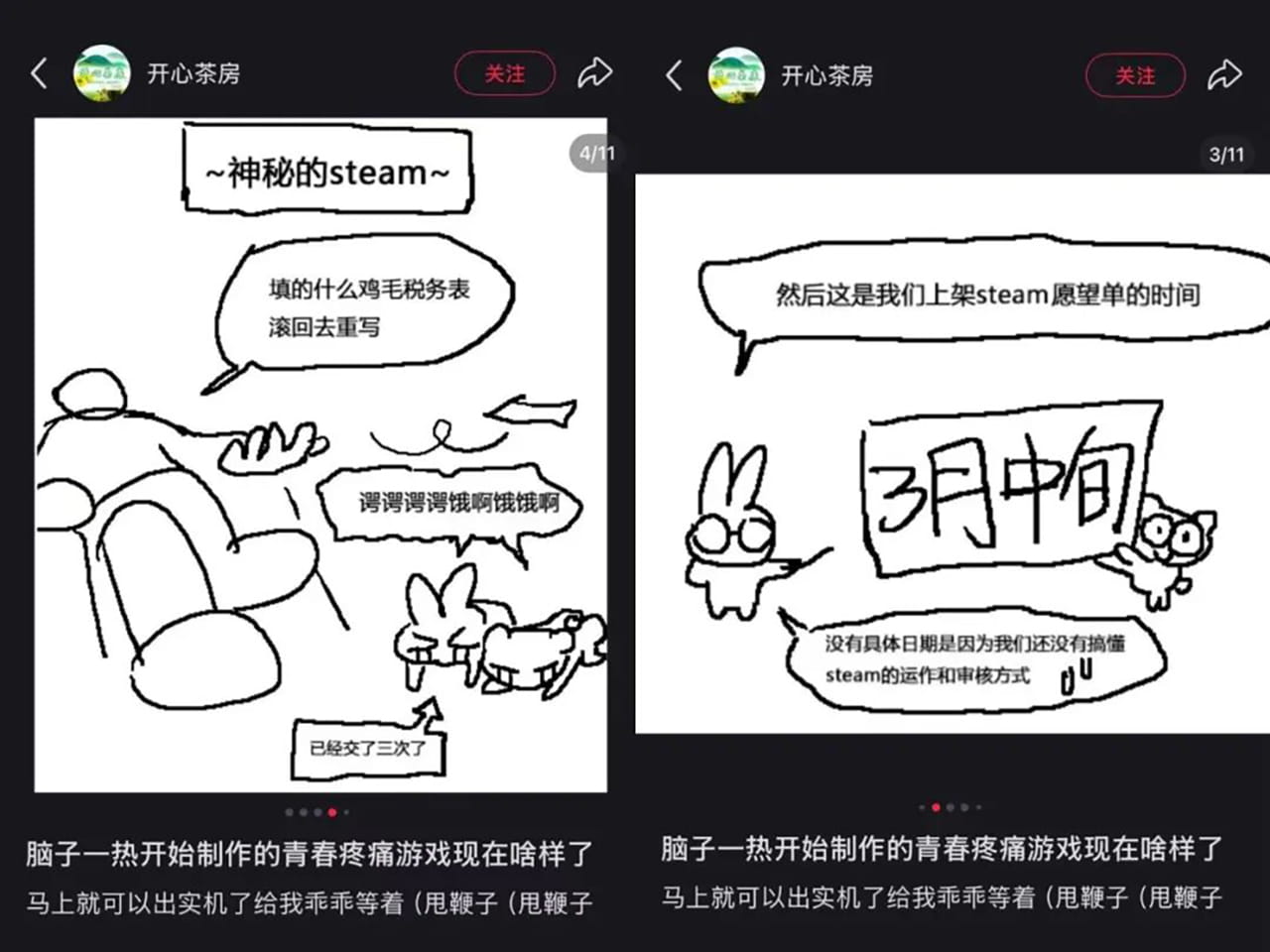
Before the game’s release, aside from conventional marketing content, developer Kaixin Chafang occasionally posted simple comics about the stories and reflections of its two team members during development. In the comics, the two members of the production team are represented as a rabbit whose eyes are always red from rushing to meet development deadlines and a bear. They share the origins of the game’s development, its progress, and small episodes such as “not knowing how to fill out Steam reports, so we temporarily couldn’t put up a wishlist.”
Most of the game’s promotional scenes are also closely tied to everyday life. The protagonists wear Chinese-style school uniforms or padded winter jackets, hold a younger sister’s hand, and pose for a photo in front of stalls hung with lanterns for Lunar New Year.
This kind of content, close to life and rich in personal expression, helped the product attract users with similar emotional resonance in advance, laying the foundation for Sweet Home’s launch.
A low barrier, however, does not mean low content quality.
The core of Xiaohongshu is that it does not only reward high-profile creators. Content from ordinary users also has a chance to be seen more widely. The platform can introduce creators to people who might be interested, but whether those creators are remembered still depends on the team itself.
At the end of 2025, Huolongguo was shortlisted for a Tencent-backed game creation competition. At the time, he casually published a post sharing the news and unexpectedly received traffic support from the platform. But perhaps because of the content quality and the audience it reached, the post ultimately did not bring much attention to the game. “The data looked good, but the audience was wrong. In the end, the conversion it brought was basically zero.”
In other words, algorithmic promotion can increase a post’s exposure and likes. But whether it can attract people, retain them, and bring in the right people still depends on the creator’s own thinking.
On Xiaohongshu, many products adopt specific execution strategies in addition to conventional marketing content. Mihoyo, known internationally as Hoyoverse, opened accounts on multiple platforms to promote its new life simulation title Petit Planet, which began its second closed beta test in April. The content it posts on Bilibili focuses mainly on generating pageviews, along with long companionship-style videos. On Weibo, it adds repost lotteries to important marketing content to attract user attention.
On Xiaohongshu, Petit Planet has added more image-and-text content suited to the platform’s nature. Simple text paired with cute animal characters from the game allows players to feel the companionship and healing quality the game wants to deliver. It is also easy to spread on the platform.
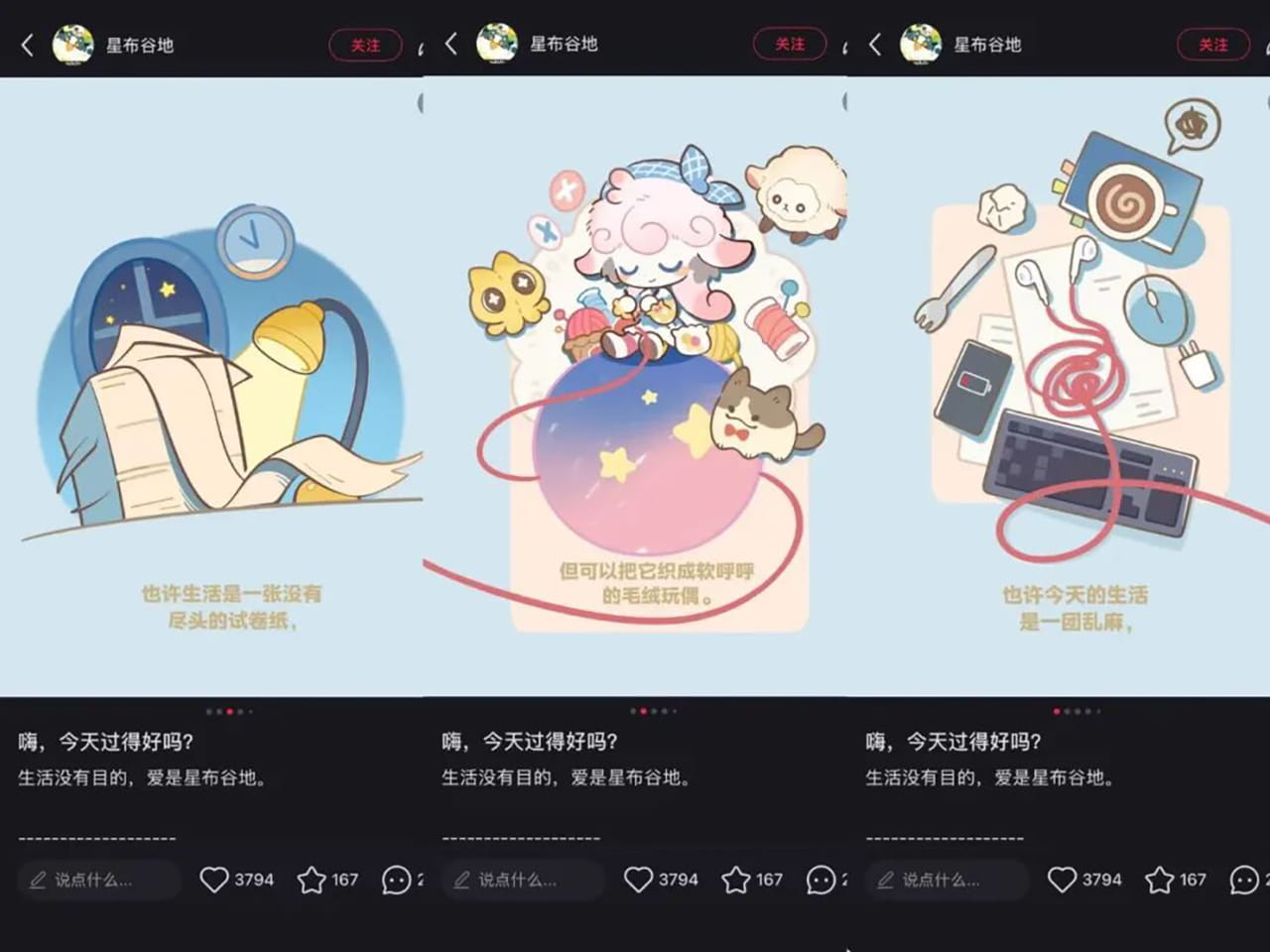
In the indie game space, most teams appear not to understand content operations at the start. They need time to learn and accumulate experience.
Before developing an indie game, Qie’e Jingcha was an illustrator and had no experience in game marketing.
Qie’e Jingcha had already gained some followers and popularity on Xiaohongshu as an illustrator. In the early stages of promoting her game, she posted game-related content on her own account and also shared artwork.
But as game-related content attracted more followers, Qie’e Jingcha realized how large the traffic gap could be between different types of content. On her account, interactive posts such as life complaints and IP character sharing generated dozens or even hundreds of times more traffic than usual, while content that leaned toward pure display and sharing often performed relatively flatly.
For this group of creators, Xiaohongshu has built a more systematic content operations framework. Under its activity for game developers on the platform, development teams that steadily update at least one piece of content each month can join an official community for indie game creators. After joining, creators can receive content guides summarized by the platform and fill out forms to apply for additional traffic support.
The platform also continues to follow these creators’ posts and regularly supports high-quality content among them. Today, the community has gathered about 3,500 developers, according to figures cited in the draft.
Rooted in everyday life, Xiaohongshu’s sense of real people gives developers and players a more direct way to communicate. For developers, it helps them meet and attract loyal supporters for their work. For players, the algorithm makes it easier to find like-minded users and gives them more of a voice with developers, narrowing the communication gap that previously existed between the two sides.
In other words, Xiaohongshu is like a more authentic pair of “eyes.” Huolongguo said that through Xiaohongshu’s marketing model, “it is easy to see which specific themes the general public is interested in, and also to see which direction within a game is the most appealing.” In mobile games, such matters often require substantial effort, time, and money to validate.
Of course, online expression always contains survivorship bias. Developers should treat feedback on Xiaohongshu as a valuable reference point, not as a definitive conclusion.
Unlike the gaming businesses of other platforms, Xiaohongshu still has not integrated features such as a game center, downloads, or external jumps. If anything, that may weaken the commercial atmosphere that might otherwise appear. Whether such functions will be integrated in the future, and how the platform might build deeper collaborations with game developers, remain open questions.
Still, Xiaohongshu appears to place considerable importance on its gaming business.
Since 2024, official accounts for popular Chinese games have gradually joined Xiaohongshu. Some overseas products have done the same. The recently released Forza Horizon 6, for example, has also opened an account on Xiaohongshu.
Starting in 2025, Xiaohongshu began building out its game livestreaming business. Multiple esports events, including KPL and Valorant Champions Tour competitions, can now be watched on Xiaohongshu. At the same time, it has formed targeted business teams around verticals such as casual games, ACG titles, and female-oriented content to provide users with more relevant content.
But the most fundamental reason Xiaohongshu is building a gaming business may not be revenue alone. It may also be that a user need exists.
After Hupu, Baidu Tieba, Bilibili, Douyin, and other content platforms had already occupied the market, Xiaohongshu was still able to rise and, at one point, reach 400 million monthly active users. To a large extent, that was because it had a complete and distinctive brand identity, according to 36Kr.
For example, its algorithm remembers users’ emotional tones and discussion interests, and it does not rely entirely on a recommendation feed. Among content platforms that have reached a certain scale, Xiaohongshu is unusual in being driven by both recommendations and search, while also having stable user habits. In other words, Xiaohongshu users are more proactive in searching for content they are interested in, more willing to reply to related content, and more likely to receive strong feedback from it.
This can be interpreted more directly: on Xiaohongshu, users can easily develop the desire to express themselves. Products that have received strong marketing responses on Xiaohongshu in the past generally also had a strong sense of expression, such as Sweet Home and Sultan’s Game.
In April 2025, The Hundred Line: Last Defense Academy producer Kazutaka Kodaka mingled with players on Xiaohongshu, generating a number of internet memes.
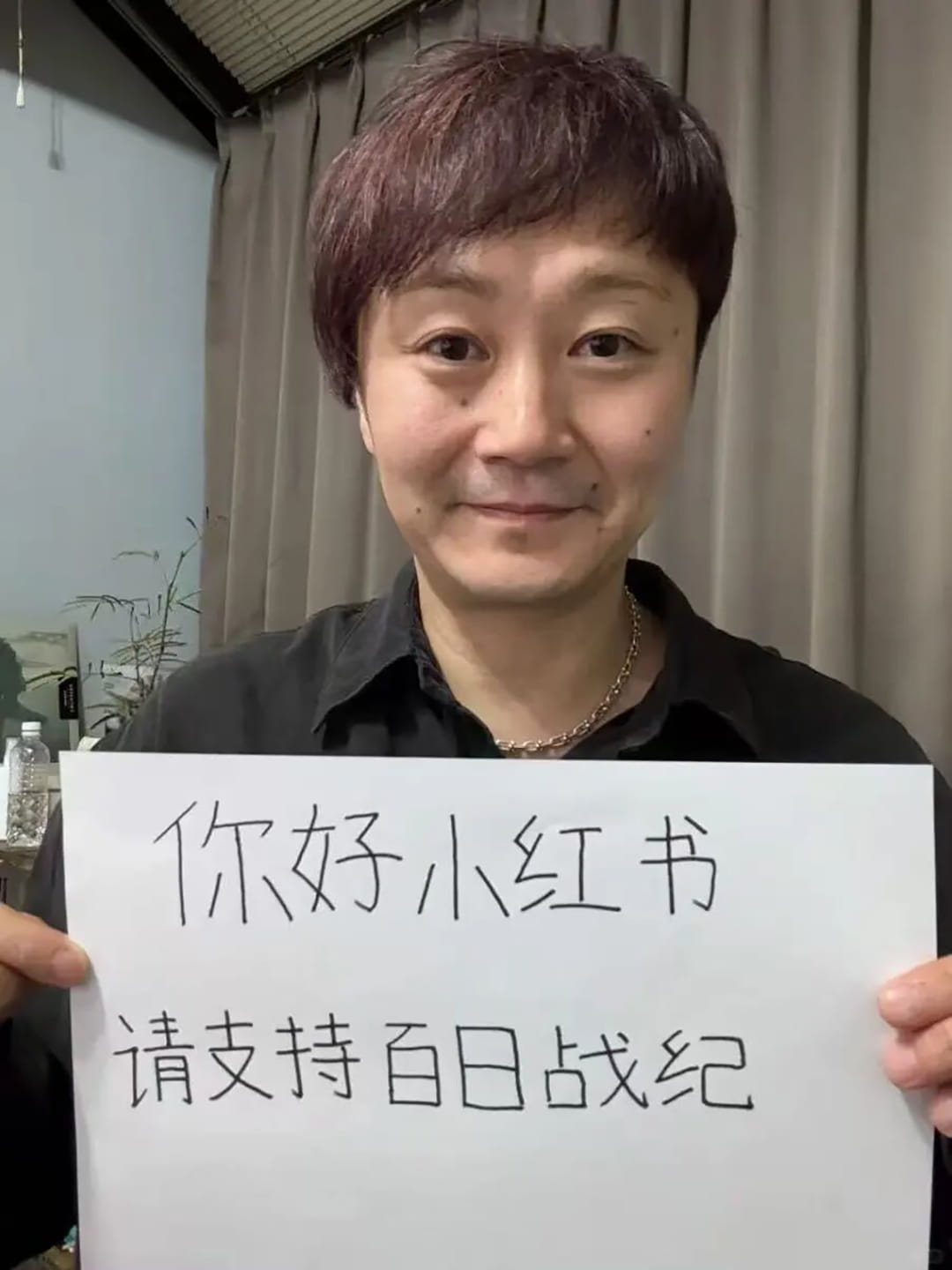
This sincere atmosphere has made Xiaohongshu a community that crosses barriers.
Similar comments were once made about Baidu Tieba. The difference is that Xiaohongshu is not organized around strictly vertical communities or hobbies. Even within the same interest group, users are often shaped by their life experiences, geography, and interests, and may develop different discussion tendencies around the same content. Some people play games because they like the mechanics. Some enjoy the world inside. Others are drawn in by a particular character.
The World Cup content that has recently gone viral on Xiaohongshu follows the same logic. In traditional communities such as Hupu, users may focus on results, player performance, and similar topics. On Xiaohongshu, users discuss and cosplay as Norwegian professional football player Erling Haaland, complain together about the abstract artificial intelligence-generated ads inserted during the World Cup, and generate many kinds of expressive content. Even the platform’s official accounts join in from time to time with the memes.
But in the end, the World Cup will end, and everyone will return to daily life, just as every game will eventually be cleared. If users can be seen and accepted, the enthusiasm for communication does not disappear.
KrASIA features translated and adapted content that was originally published by 36Kr. This article was written by Beiguo Shu (alias) for 36Kr.