

On August 27, Hong Kong-listed Manycore Tech released its interim results for 2026.
During the reporting period, the spatial intelligence company generated RMB 405 million (USD 60.1 million) in revenue, while its overall gross margin rose to a record 83%. Adjusted net profit reached RMB 55.42 million (USD 8.2 million), up 211% year-on-year and approaching the level recorded for all of last year.
The same day, Manycore launched Lux3D, a 3D generation model, and began internal testing of a new-generation world model product. The technology announcements lifted investor sentiment, with the company’s shares closing 6.97% higher.
Beyond the earnings release, Manycore could also become eligible for Southbound Stock Connect in early September, potentially broadening its investor base and improving the stock’s liquidity and market visibility. The company was recently selected as a constituent of the Hang Seng Composite Index, with the change set to take effect on September 7.
More notable than the improvement in profitability is the way spatial intelligence is moving from a technology foundation toward commercial monetization.
Three details stand out:
- First, revenue from artificial intelligence applications surged 177% year-on-year, suggesting the company’s new AI products and applications have begun establishing a growth trajectory and that its efforts to commercialize spatial intelligence are gaining traction.
- Second, capital expenditure rose 124% year-on-year, reflecting the company’s commitment to full-stack investment. By prioritizing compute capacity, Manycore is laying the groundwork for the next phase of business growth.
- Third, the company disclosed its average daily token consumption, signaling that usage of its underlying models is scaling rapidly and that its strategy of becoming a midstream infrastructure provider is beginning to take shape.
More specifically, LuxReal, an AI video creation platform launched in the first half of the year, combines Manycore’s proprietary spatial generation model SpatialGen with 3D technology. It is designed primarily to address spatial consistency in AI-generated video and can rapidly create long-form narrative videos with a high degree of spatiotemporal consistency.
In June, LuxReal’s monthly registered users increased by more than 270% from the previous month, while monthly revenue rose by more than 470%. Both user numbers and revenue have climbed rapidly since the product launched.
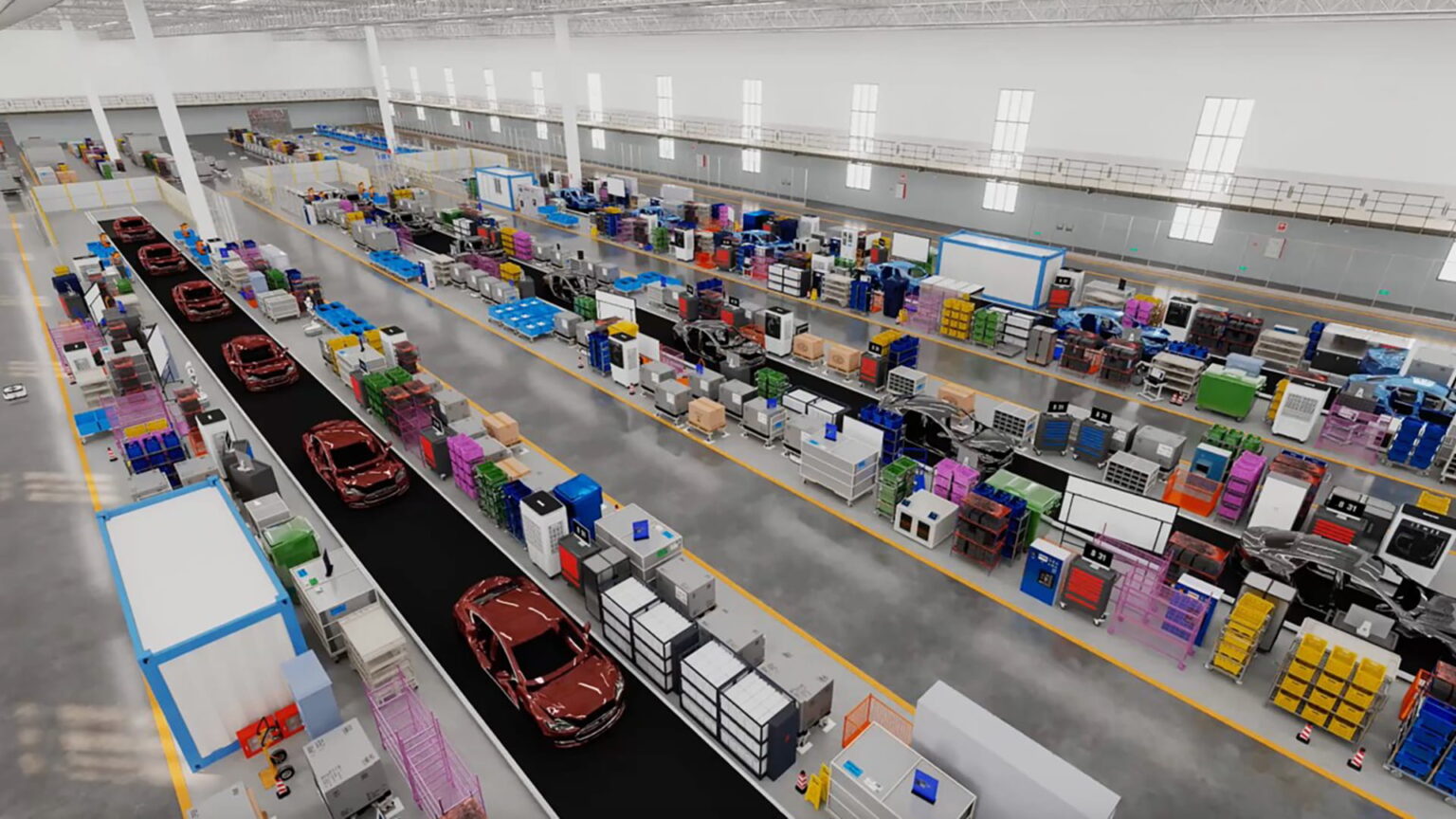
In physical AI, SpatialVerse, which provides virtual training environments for AI agents, secured RMB 6.8 million (USD 1 million) in orders during the first half of the year, already exceeding its total for all of last year.
The product can generate high-fidelity, physically accurate synthetic data to meet training data requirements in areas including world models and embodied intelligence. SpatialVerse has established partnerships with Chinese physical AI companies including Agibot, Galbot, Noematrix, AI² Robotics, Songying Technology, and Hesai Technology. It also maintains close industry and academic collaborations with several major overseas technology companies.
As physical AI adoption accelerates, the business could continue expanding its addressable market in China and overseas, becoming an important growth engine in Manycore’s push to build infrastructure for physical AI.
In addition, leveraging its proprietary spatial intelligence foundation models and high-quality 3D data, Manycore has integrated capabilities including spatial reconstruction, generation, editing, and understanding into its Aholo spatial intelligence platform, which it has opened to external users.
The platform serves industries including entertainment and media, AI agent training, industrial digital twins, gaming, and spatial design. Its core objective is to make Manycore Tech an infrastructure provider for spatial intelligence.
The company has established partnerships with Arashi Vision, Pico, Hesai, and Huace Film & TV, among others, as it continues to broaden the range of applications for spatial intelligence.
To support this infrastructure strategy, Manycore is also continuing to develop an integrated full-stack technology system spanning compute, models, and applications.
At the compute layer, the company’s self-built GPU cluster processed an average of about 12.9 million computing tasks per day during the first half of the year.
At the model layer, in addition to the newly launched Lux3D model and the world model product currently undergoing internal testing, Manycore Tech has previously open-sourced SpatialLM, a spatial understanding model, and SpatialGen, a world generation model.
For world model development, the company is pursuing an explicit 3D approach, with a focus on improving core capabilities including dynamic interaction, stable consistency, and editability. These models are intended to provide underlying support for applications including AI video, gaming, embodied intelligence training, and digital twins.
RELATED ARTICLE
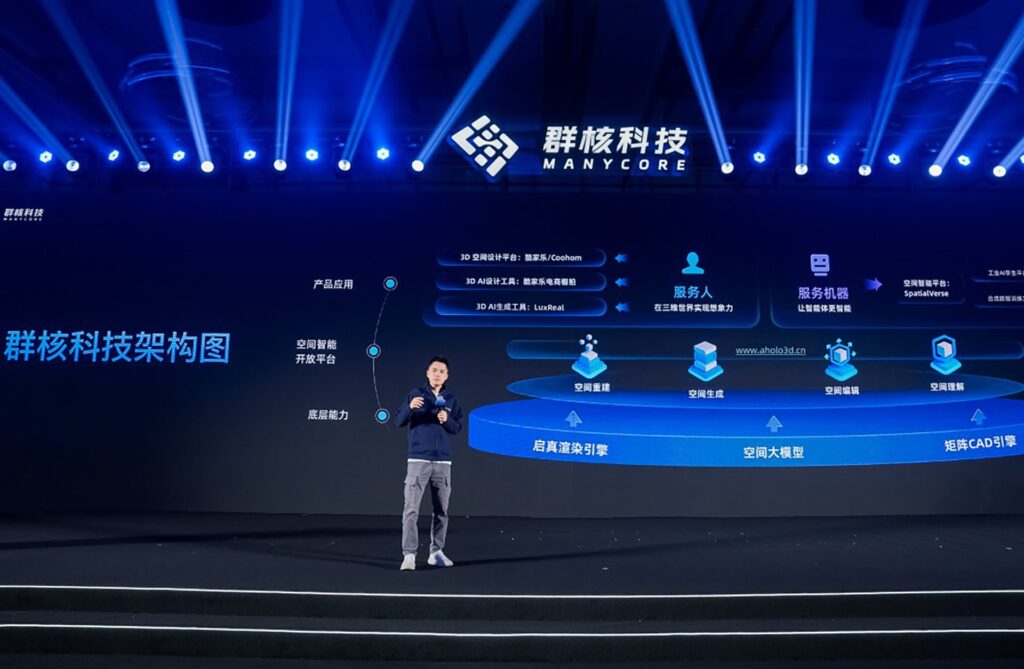
As one of the relatively few Hong Kong-listed companies developing world models, Manycore Tech is extending the scope of Hong Kong’s AI sector from language-based foundation models toward applications involving the physical world.
At the application layer, the token-based business model currently appears capable of becoming a new source of revenue growth.
Under this system, deployed applications generate large volumes of 3D data. That data feeds back into model training, and improvements in model capabilities can then further enhance the company’s products, creating a reinforcing flywheel.
As Manycore continues iterating its world models, accumulating 3D digital assets, and deploying its technology across more industries, its strategy of becoming an infrastructure provider for spatial intelligence could move more quickly toward commercial realization.
Note: RMB figures are converted to USD at rates of RMB 6.74 = USD 1 based on estimates as of August 31, 2026, unless otherwise stated. USD conversions are presented for ease of reference and may not fully match prevailing exchange rates.