


Microintelligence opened subscriptions for its Hong Kong IPO on October 20, seeking to raise approximately HKD 800 million (USD 101.9 million) as it expands the use of artificial intelligence in industrial manufacturing. The offering closes on October 23, with trading scheduled to begin on October 28.
The company plans to issue 37,275,800 H shares, comprising 3,727,600 shares in the Hong Kong public offering and 33,548,200 shares in the international offering. At an offer price of HKD 16.63 (USD 2.1) to 21.46 per share, it could raise approximately HKD 800 million at the top of the range, excluding the overallotment option.
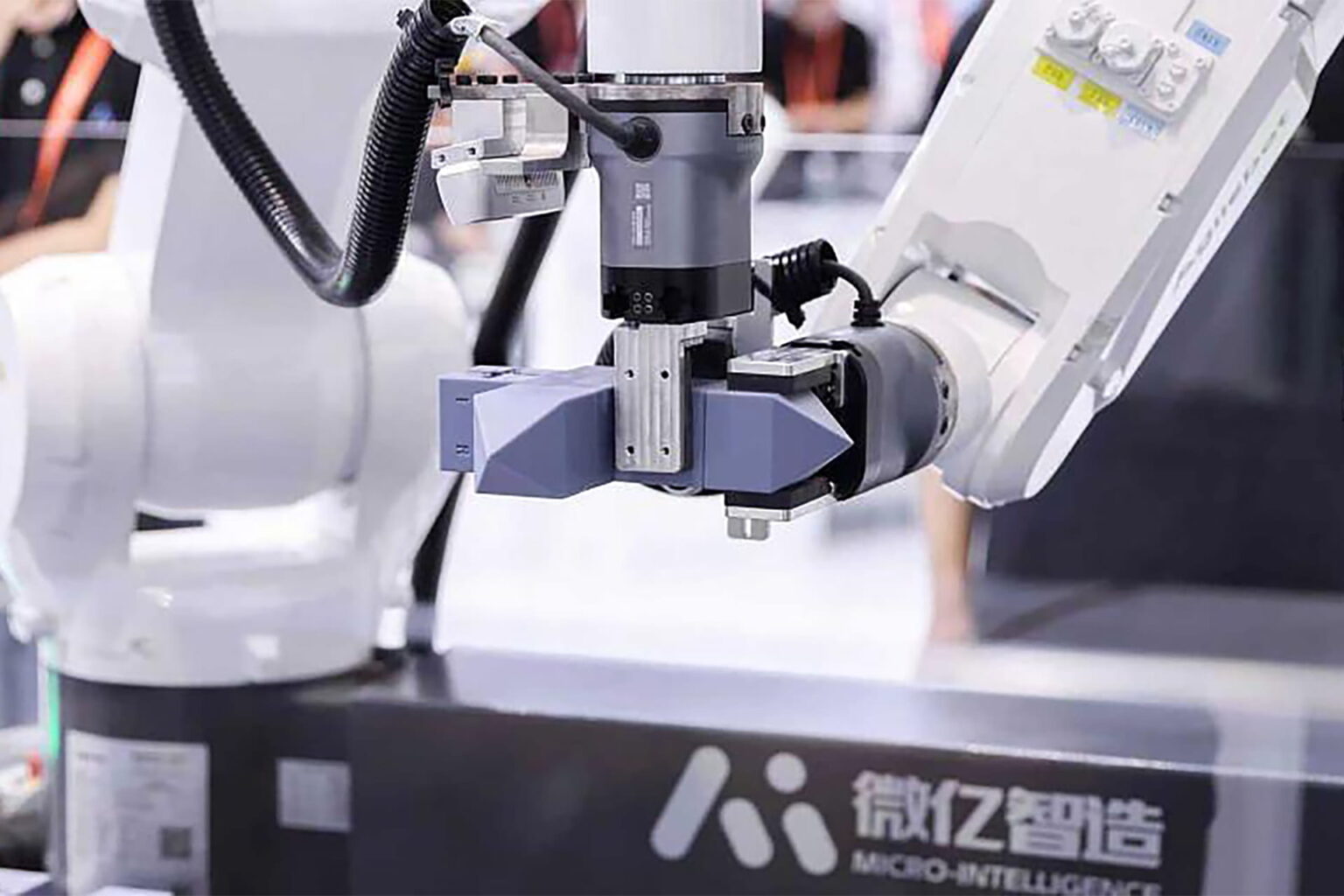
Chairman and CEO Zhang Zhiqi said Microintelligence aims to accelerate the adoption of AI in factories and improve its effectiveness. Its standardized architecture spans cloud computing, edge computing, and devices, enabling its embodied intelligent industrial robots (EIIR) to perceive their surroundings, learn, make decisions, and execute tasks.
The robots generate data during operation. Expert corrections, task execution records, and manufacturing process knowledge are organized into training datasets to refine the company’s AI models, which are then integrated into products deployed in factories. Its acquisition of Agilebot added robot hardware and low-level motion control capabilities, enabling Microintelligence to integrate perception and model-based decision-making with physical control and execution.
Microintelligence said it has accumulated more than 23 terabytes of annotated industrial data, comprising over 1.6 billion records. The data come from actual production processes and manufacturing tasks and are used to train and improve its models. According to China Insights Consultancy, most industrial embodied intelligence robotics companies held less than five terabytes of such data in 2024. Microintelligence’s larger dataset could give it an advantage in model development, although its commercial value depends on how effectively the data improve performance.
In tandem with advancements in physical AI, Microintelligence’s EIIR products have evolved from equipment designed for individual processes into workstations capable of handling multiple tasks. Their applications have expanded from individual production lines to adjacent processes and other industries, allowing customers to address different manufacturing requirements through a single provider.
Capabilities initially developed for the computers, communications, and consumer electronics (3C) sector have since been applied to new energy and automotive manufacturing. In the first five months of 2026, new energy accounted for 47.2% of revenue, with segment revenue increasing 75% year-on-year (YoY). Automotive manufacturing contributed 41.8% of revenue, with segment revenue rising 57.7% YoY.
According to its prospectus, Microintelligence has commercialized automotive applications that combine intelligent inspection with grinding, loading and unloading, or surface repair. In the new energy sector, it has integrated inspection with grinding or sorting and secured large orders for applications combining inspection with loading and unloading.
As its EIIR products have become more capable, they have accounted for a growing share of Microintelligence’s revenue. New orders add to its project pipeline, while customer prepayments are recorded as contract liabilities. The company recognizes revenue after projects pass acceptance checks, while faster collection of receivables can help convert recognized sales into operating cash flow.
Microintelligence’s revenue increased from RMB 434 million (USD 64.9 million) in 2023 to RMB 796 million (USD 119 million) in 2025, representing a compound annual growth rate (CAGR) of 35.4%. Revenue reached RMB 424 million (USD 63.4 million) in the first five months of 2026, up 22.6% YoY.
EIIR revenue grew from RMB 114 million (USD 17 million) in 2023 to RMB 453 million (USD 67.7 million) in 2025, representing a CAGR of 99.3%. Its contribution to total revenue increased from 26.3% to 57% over the period. In the first five months of 2026, EIIR revenue reached RMB 260 million (USD 38.9 million), accounting for 61.4% of the total.
The company secured approximately RMB 530 million (USD 79.2 million) in new projects during the first five months of 2026, up about 49% YoY. Projects in progress totaled roughly RMB 666 million (USD 99.6 million) at the end of May, an increase of about 118% YoY. Contract liabilities reached RMB 94.9 million (USD 14.2 million), up 93.6% from the end of 2025. Together, new orders, ongoing projects, and customer prepayments provide visibility into potential future revenue, subject to project completion and customer acceptance.
Microintelligence also reported profitability and positive operating cash flow. Its adjusted net profit reached RMB 33.84 million (USD 5.1 million) in the first five months of 2026, up 41.5% YoY, while net cash generated from operating activities totaled RMB 12.69 million (USD 1.9 million).
RELATED ARTICLE
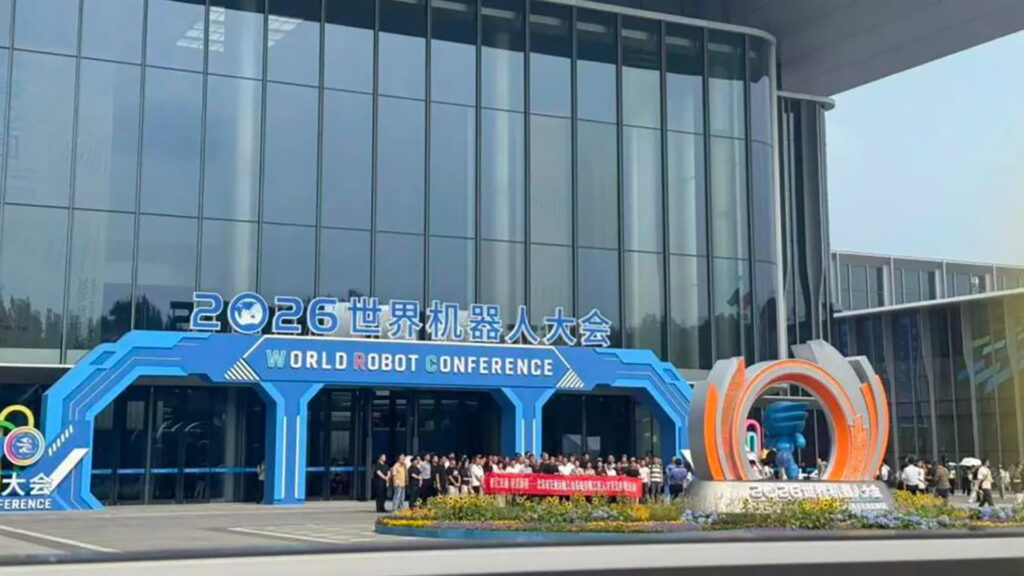
According to IPO Zaozhidao, Microintelligence ranked first in China’s industrial embodied intelligence robotics market by 2025 revenue, with a market share of 20%.
Microintelligence’s factory deployments offer a measure of the commercial value of its AI models. Production data support model improvements, while orders, revenue, collections, profitability, and cash flow provide indicators of business performance. The company’s planned use of IPO proceeds for R&D and overseas expansion could extend its technology into more industrial settings, although its ability to scale will depend on converting new deployments into sustained revenue and cash generation.
This article was adapted based on a feature originally written by Stone Jin and published on IPO Zaozhidao. KrASIA is authorized to translate, adapt, and publish its contents.
Note: HKD, RMB figures are converted to USD at rates of HKD 7.85 = USD 1 and RMB 6.69 = USD 1 based on estimates as of October 22, 2026, unless otherwise stated. USD conversions are approximate and, where appropriate, rounded for ease of reference. They may not fully match prevailing exchange rates.