



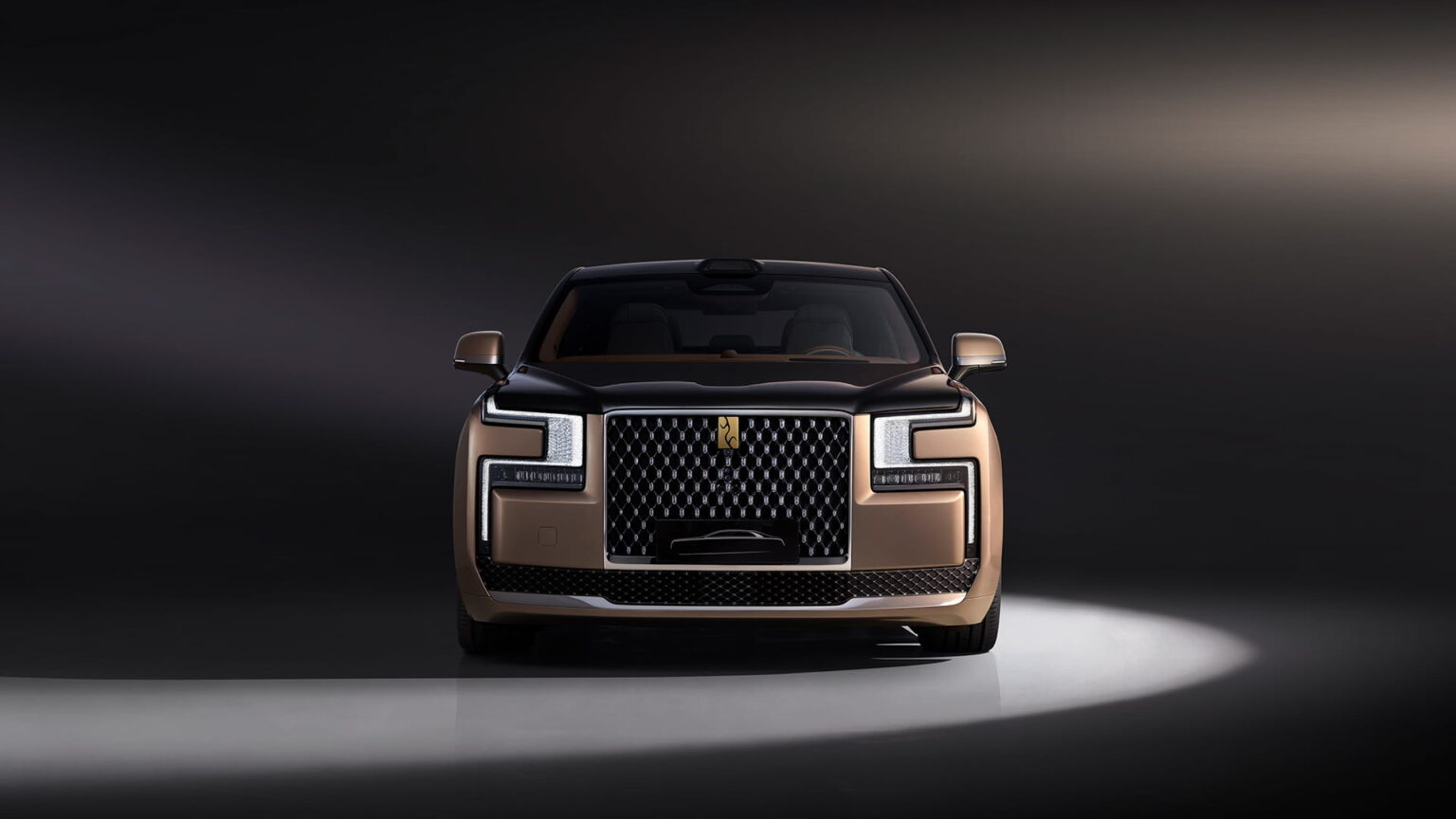
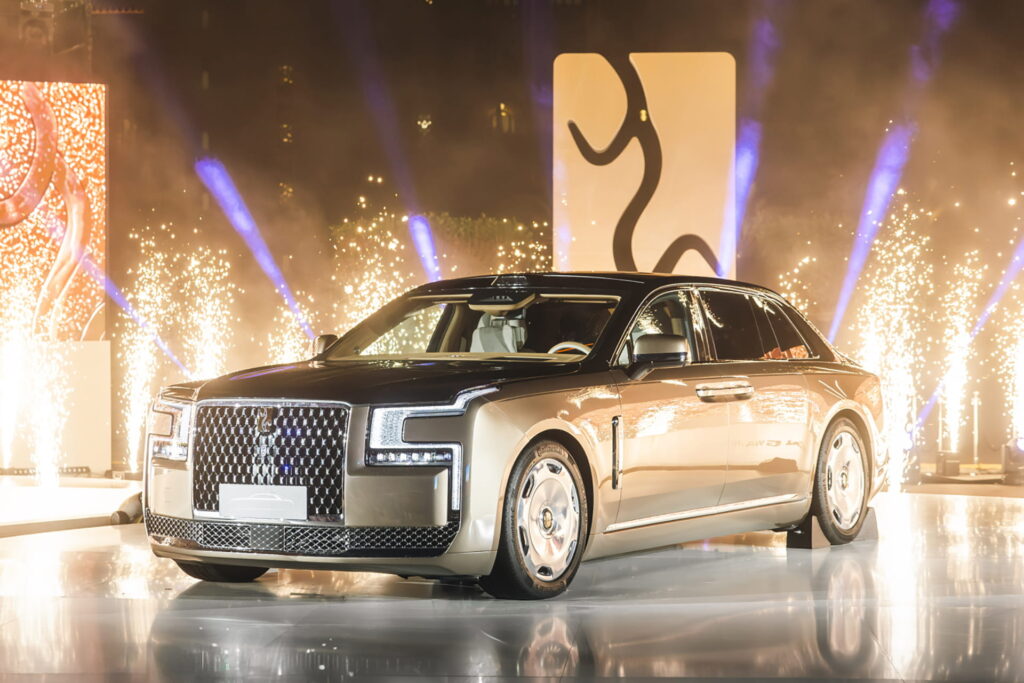
BYD has built a global business selling new energy vehicles at scale. Its Yangwang Altior, a flagship executive sedan unveiled in Abu Dhabi on November 7, aims to test something different: how much buyers are willing to pay for a BYD when the same budget puts a Maybach, Bentley, or Rolls-Royce within reach.
The Altior breaks with the letter-and-number naming convention of Yangwang’s U7, U8, and U9. It will be offered in executive and bespoke editions, with Shanhe Dingyun as its first themed bespoke edition. Reservations for the latter require a deposit of RMB 300,000 (USD 44,900) against a preliminary price of RMB 2.08 million (USD 311,000).
BYD already manufactures its own power batteries and vehicles, develops the technologies that go into them, and operates a global supply chain. The Altior will therefore test whether that manufacturing reach can support higher prices and, ultimately, greater profit per vehicle.
Since launching the U8 in 2023, Yangwang has built a lineup spanning SUVs, supercars, and luxury sedans. The U8 entered the RMB 1 million (USD 150,000) SUV market with an independent four-motor drive system called Yisifang and the ability to float in an emergency. The U9 sports car demonstrated BYD’s capabilities in electric propulsion and body control. On November 1, the U9 Xtreme reached 503.17 kilometers per hour, becoming the first roadgoing production car to exceed 500 kilometers per hour, according to BYD, which announced the result on November 6.
While the U7 took Yangwang into the RMB 1 million sedan market, where buyers also expect executive comfort, the Altior is set to take the brand further upmarket.
At RMB 200,000–500,000 (USD 29,900–74,900), technology, software features, and value for money figure prominently in purchasing decisions. Above RMB 1 million, brand heritage, exclusivity, craftsmanship, service, and the status associated with ownership carry greater weight. The U8 and U9 helped establish Yangwang’s engineering credentials. The Altior must give owners a reason to value it in everyday use.
The UAE offers a sizable market for that test. Research firm Marqstats estimates that buyers there purchased about 17,800 luxury passenger cars priced above AED 400,000 (USD 109,000) in 2025. Those vehicles accounted for approximately 6.2% of units sold and more than 20% of the market’s sales value.
BYD also has momentum in the country. According to figures published by Focus2move on November 7, new vehicle sales in the UAE fell 24.7% year-on-year (YoY) in the first nine months of 2026, while BYD’s local sales rose 448.5%.
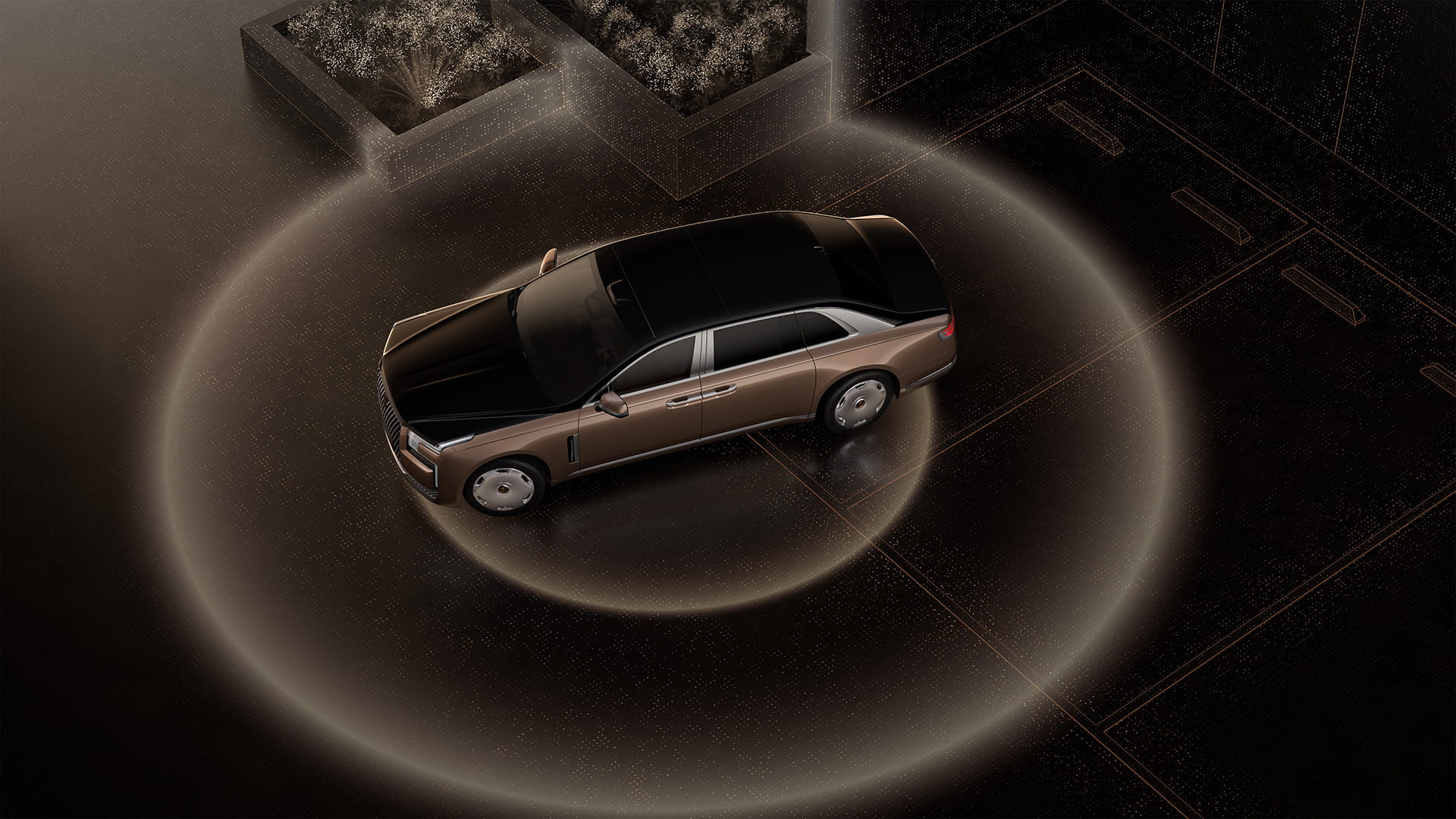
BYD’s push upmarket began gaining volume around 2022, when it took operating control of Denza and launched the D9. In 2023, it introduced Yangwang and Fangchengbao. Each of the three brands targets a different segment.
Denza’s D9 and its N and Z series give BYD a presence in midrange and premium minivans, SUVs, and sedans. Fangchengbao targets buyers with more specialized preferences, particularly in offroad vehicles and emerging categories. Yangwang commands the highest prices and serves as a showcase for technologies BYD wants buyers to associate with the group.
Together, the three brands sold about 136,000 vehicles in 2023, 190,000 in 2024, and 397,000 in 2025. By then, they accounted for approximately 8.6% of group sales.
In the first nine months of 2026, their combined sales volume rose about 75% YoY to 409,000 vehicles, accounting for more than 13% of BYD’s total. The third quarter alone contributed approximately 181,000 vehicles, up 96.7%. BYD cited the brands’ growing share of sales in its interim report as evidence of progress in its push upmarket.
The October figures show where buyers are spending. Fangchengbao sold about 43,900 vehicles, up 41% YoY and accounting for roughly three-quarters of the three brands’ combined sales of 59,300. Denza sold approximately 15,200, up 50%, while Yangwang sold 258, down 61%.
The group has found buyers for higher-priced vehicles, but most of that volume comes from Fangchengbao. The Altior gives Yangwang an entry into the ultra-luxury executive sedan segment, where it still has to demonstrate that it can command a premium consistently.
RELATED ARTICLE
BYD’s revenue for the first nine months of 2026 reached RMB 566.304 billion (USD 84.8 billion), remaining nearly flat YoY. Net profit attributable to shareholders fell 4.24% to RMB 22.345 billion (USD 3.3 billion). Excluding nonrecurring items, attributable profit rose 2.51% to RMB 21.004 billion (USD 3.1 billion).
Results improved in the third quarter. Revenue rose 13.59% YoY to RMB 221.488 billion (USD 33.2 billion), while attributable net profit increased 28.08% to RMB 10.02 billion (USD 1.5 billion), about 21.6% higher than in the previous quarter. Gross margin stood at approximately 18%, up 0.4 percentage points from a year earlier but down 0.9 percentage points from the preceding quarter.
A shift toward higher-priced vehicles could lift BYD’s earnings per vehicle and give it more pricing flexibility. Soochow Securities estimates that BYD earns about RMB 55,000 (USD 8,230) per Denza vehicle, RMB 20,000 (USD 2,990) per Fangchengbao, and RMB 200,000 (USD 29,900) per Yangwang, well above the estimated earnings from its mass market models.
Overseas markets are already changing where BYD earns its money. In the first nine months of 2026, it sold about 1.34 million new energy vehicles abroad, up approximately 91% YoY. Third-quarter overseas sales reached about 551,000, up 136.6% and equivalent to roughly 41.6% of group volume.
Another 170,000 overseas sales in October, up approximately 102%, brought the ten-month total to about 1.507 million, an increase of 93%. Domestic sales, by contrast, declined over the same period.
International sales have also generated higher margins. In its interim report, BYD put first-half overseas revenue at RMB 181.268 billion (USD 27.1 billion), up 33.92% and accounting for more than half of group revenue. Its overseas gross margin stood at 21.71%, compared with 15.67% in China.
For BYD, a market like the UAE offers both potential buyers for its most expensive vehicles and an opportunity to establish what its high-end brand stands for overseas. The U9 Xtreme gave those buyers a performance figure they could measure. The Altior tests whether the Yangwang name itself is worth paying a premium for, and whether that premium can endure.
This article was adapted based on a feature originally written by SY and published on IPO Zaozhidao. KrASIA is authorized to translate, adapt, and publish its contents.
Note: AED, RMB figures are converted to USD at rates of AED 3.67 = USD 1 and RMB 6.68 = USD 1 based on estimates as of November 17, 2026, unless otherwise stated. USD conversions are approximate and, where appropriate, rounded for ease of reference. They may not fully match prevailing exchange rates.