
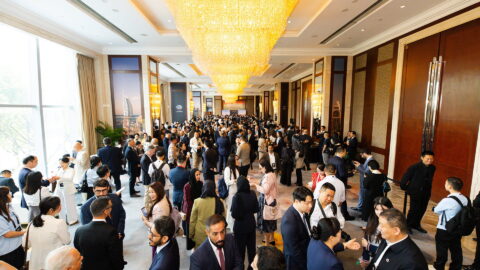
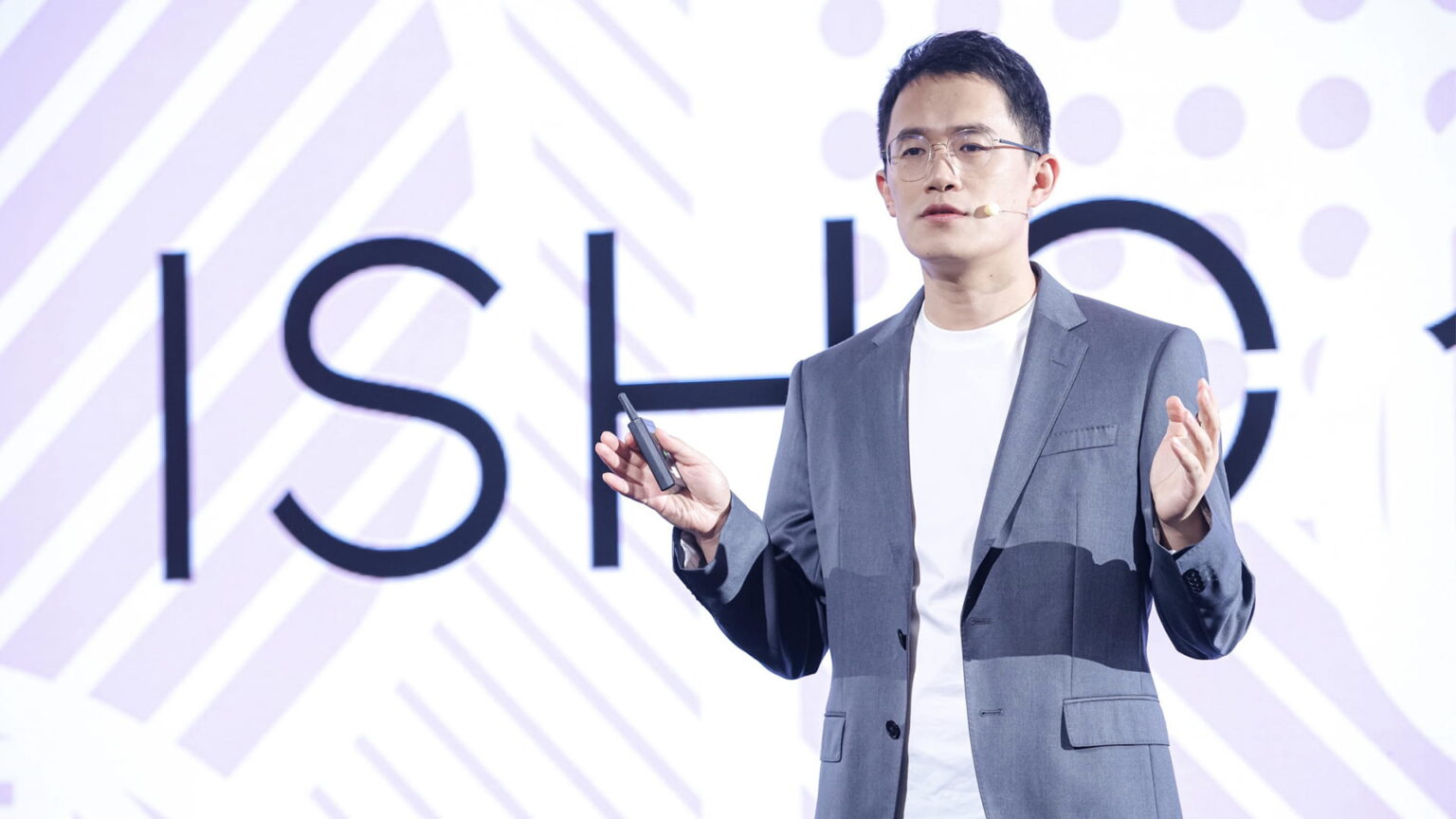
Isho wants to move sleep technology beyond telling people how they slept. At a launch event in Beijing on October 29, the company introduced two devices designed to monitor and improve sleep: the Isho Ring, which tracks physiological signals, and iFlow, a bed-based system that monitors sleep and adjusts temperature. It also unveiled Isho Intelligence, an artificial intelligence system designed to interpret data from both devices.
Founder and CEO Wang Teng sees an opportunity in the eight hours people spend asleep. Wearable technology has traditionally focused on the other 16. Earlier sleep products could tell users how they slept but offered few ways to improve the experience, a limitation Wang believes has held back the market. He expects AI to help close that gap by interpreting readings, making adjustments, and evaluating whether those changes worked.
Sleep also offers an advantage for health monitoring. People tend to remain relatively still and relaxed, Wang told reporters, producing cleaner physiological signals than devices typically capture during the day.
The Isho Ring marks the company’s entry into wearable health monitoring, a market where established competitors such as Oura have spent years refining their products.
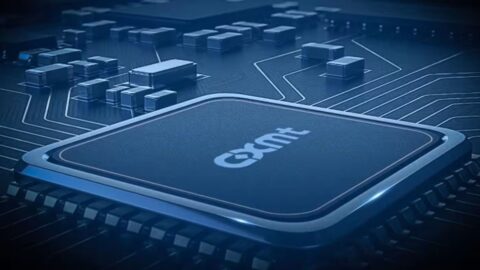
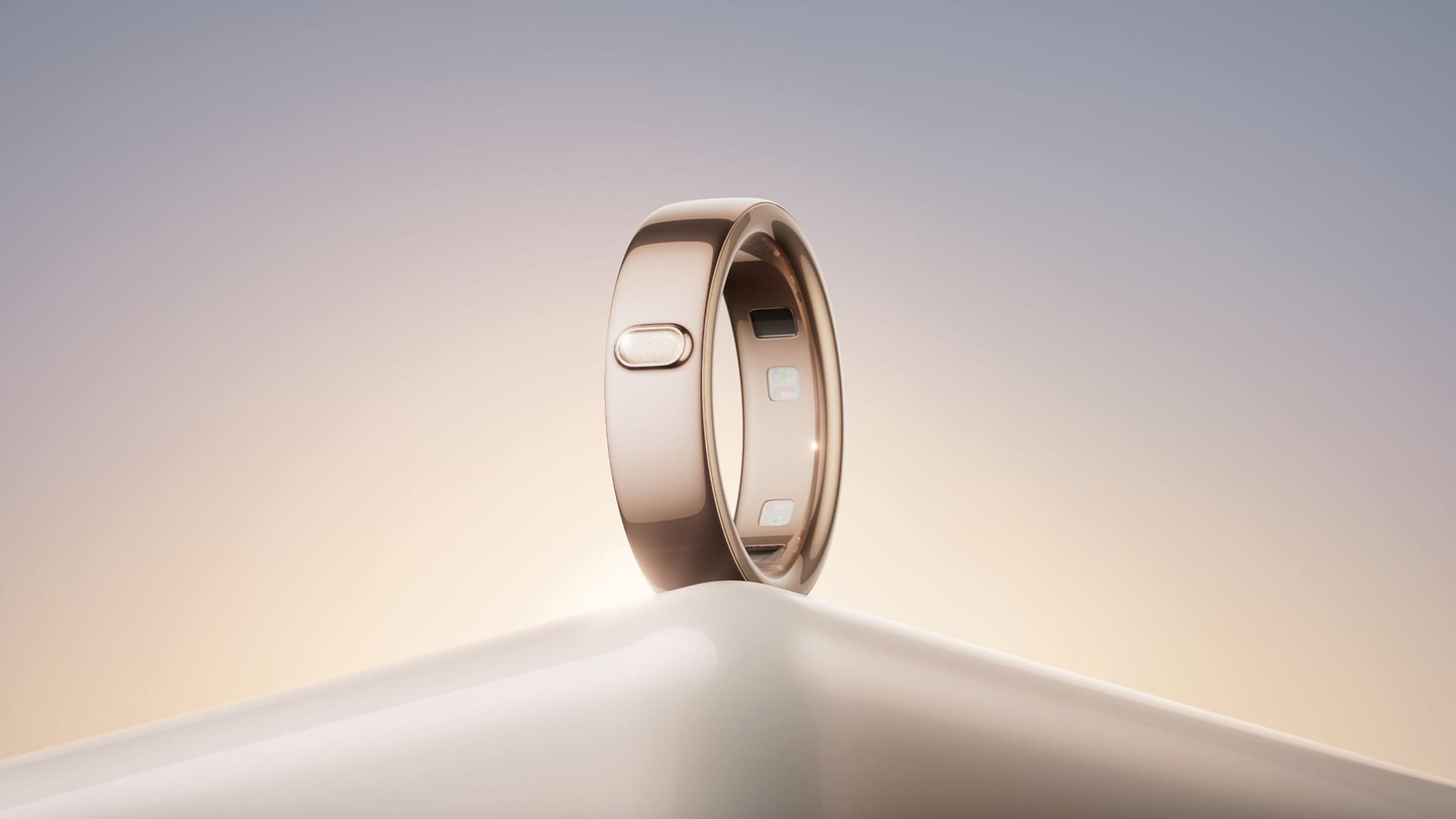
According to Isho, its ring is the first to use the Apollo330B Plus chip, which supports on-device AI processing and comes with 32 megabytes of storage. The company estimates battery life at six to ten days per charge, compared with the six to nine days advertised for Oura’s Ring 5, depending on size and usage.
A more significant distinction lies in how the companies plan to monetize their products.
Oura charges US customers USD 5.99 per month or USD 69.99 annually for access to its core health analysis features. Without a membership, users receive only three basic daily scores. Isho, meanwhile, plans to keep basic features free while eventually charging for selected AI capabilities based on the computing resources they consume.
The Isho Ring continuously tracks 18 health measures. Its Pro edition comes with a charging case that also monitors bedroom conditions, measuring carbon dioxide, temperature, humidity, noise, and light.
Wang estimates that global sales of smartwatches and fitness bands exceed 100 million units combined, compared with tens of millions of smart rings. Earlier generations of chips and components limited how much technology manufacturers could fit comfortably on a finger, he said. As manufacturing improves, he expects the market for smart rings to expand further, potentially helped by larger technology companies entering the category.
For iFlow, the closer comparison is Eight Sleep, which recently introduced its Pod 6 temperature regulation system.
At launch, the Pod 6 started at USD 1,999 for a single-sleeper configuration and USD 2,699 for standard two-person configurations, according to 36Kr. Access to automatic temperature control and health analysis requires an Autopilot subscription starting at USD 199 annually.
In China, iFlow starts at RMB 9,999 (USD 1,500), while the Pro edition costs RMB 12,999 (USD 1,940) and a co-branded version RMB 15,999 (USD 2,390). Wang said comparable systems sold for RMB 18,000–24,999 (USD 2,690–3,740) in China, putting iFlow at roughly 60–70% of competing products’ prices.
Both systems monitor conditions at the bed surface and regulate temperature. The Pod 6 circulates water through a mattress cover to heat or cool it. Eight Sleep said the cover contains 18 biometric sensors on each side, providing nine times the sensor density of its predecessor. Its redesigned hub is also half the size of the previous model and can fit beneath a bed.
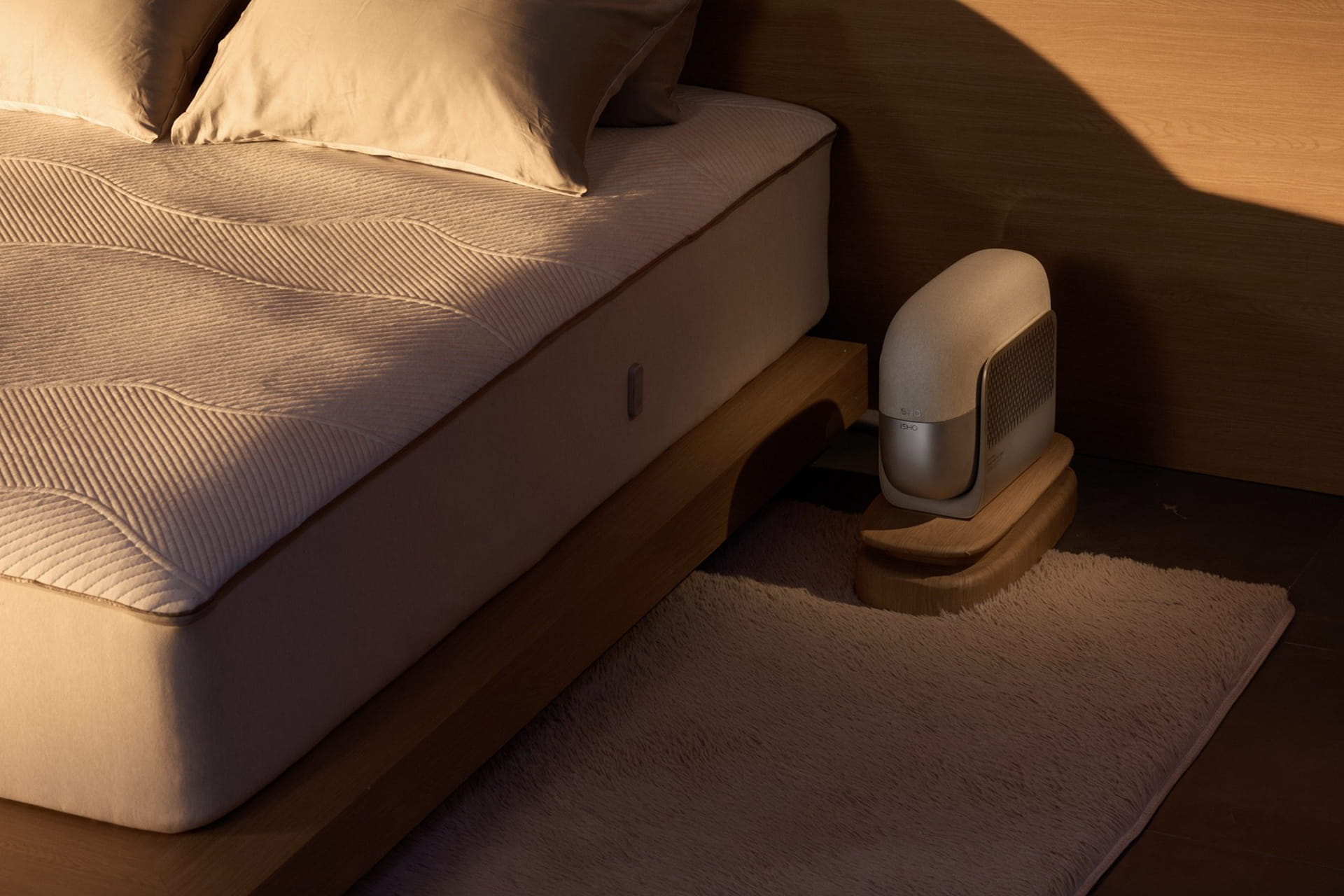
Isho’s iFlow takes a different approach to monitoring. It uses two ballistocardiography (BCG) bands to detect subtle movements associated with heartbeats, breathing, and body movement. Eight sensors measure temperature across the bed, while another monitors bedroom temperature and humidity.
The Pro edition adds a flexible array containing 512 pressure-sensing points to detect sleeping positions. Thermoelectric modules and circulating water regulate temperature, with the Pro featuring six sets of modules capable of dissipating up to 900 watts of heat, according to Isho.
Wang claimed that Isho’s internal measurements showed accuracy “higher than Apple Watch.” He attributed the difference to how the devices collect physiological signals.
iFlow’s continuously powered BCG sensors detect changes in pressure throughout the night, while the Apple Watch uses photoplethysmography, an optical method of measuring blood flow, to capture pulse signals. However, Wang acknowledged that iFlow stops collecting data when users leave the bed, limiting its ability to replace a smartwatch.
Connecting these devices is Isho Intelligence, which combines an application built around Isho Personal Agent with an in-house model for interpreting physiological signals.
The ring collects health data throughout the day, while iFlow adds another stream of measurements during sleep. Wang said the team has already demonstrated how these datasets can be combined. Over time, Isho expects the agent to use the information to make more accurate assessments and provide personalized recommendations.
The business model depends on both hardware sales and the value users eventually place on those recommendations.
Wang expects the devices to generate sustainable gross margins. As adoption grows and Isho collects more data, he sees an opportunity to develop paid health analysis services.
“It’s free in the early stages because we don’t yet have enough data or a large enough knowledge base,” he said. “We’ll be able to charge once the reports become more accurate and users rate them more highly.”
Wang expects the system to take five to ten years to develop. Its commercial prospects will depend partly on whether larger competitors can expand the smart ring market, but also on whether customers using the ring and iFlow together experience enough additional value to justify paying for AI-driven analysis.
For now, Isho has outlined how its devices could work together. Whether they can consistently improve sleep, rather than simply measure it, remains to be established.
KrASIA features translated and adapted content that was originally published by 36Kr. This article was written by Ou Xue for 36Kr.
Note: RMB figures are converted to USD at rates of RMB 6.69 = USD 1 based on estimates as of November 5, 2026, unless otherwise stated. USD conversions are approximate and, where appropriate, rounded for ease of reference. They may not fully match prevailing exchange rates.