


The elite narrative around artificial intelligence has produced its own underdog stories.
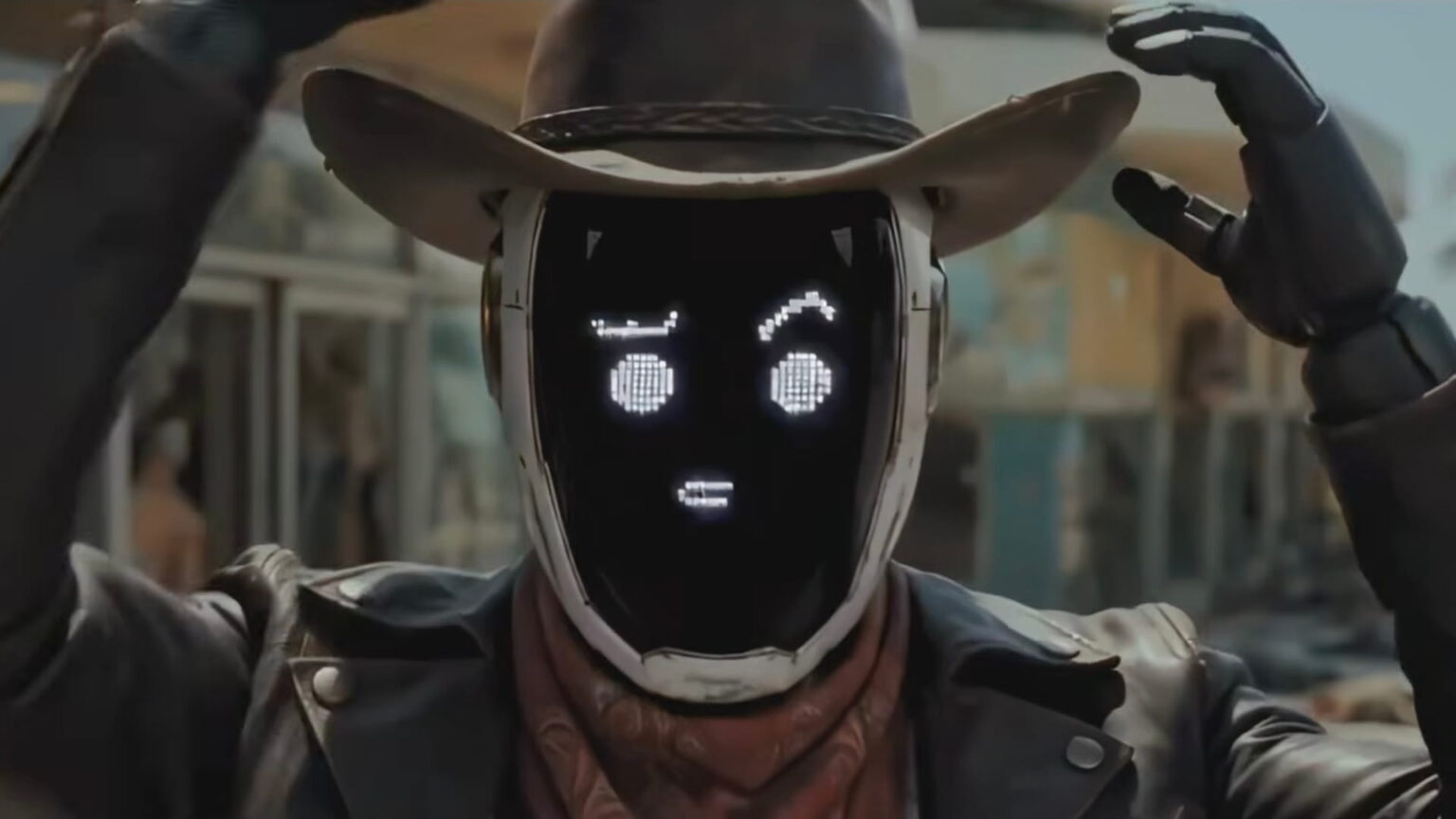
In May, Liu Ziyu, a vocational school graduate working in real estate in Yuxi, Yunnan province, released Zombie Scavenger. The film surpassed 100 million views across online platforms and was widely described as China’s answer to Love, Death & Robots. It also brought Liu an offer from a Hollywood producer.
The short has English subtitles, but an industry professional who has interacted with Liu said he speaks little English and does not know how to bypass China’s internet controls.
A month later, Liu, who was born in 1997, won a directing award at Douyin’s “Movie Adventure Night.”
Meng Ke, born in 2004, has made a similarly improbable ascent. He won “Best AIGC Director” at the Beijing International Film Festival for Mold, a short film he made with AI in an internet cafe. AIGC stands for AI-generated content.
Meng has no formal film training.
“Without AI, I might never have had the chance to step onto the stage at a film festival,” he said.
“AI changed my life,” he added.
Meng now runs a team of more than twenty people. Nearly all were born after 2000, and many are still in college. He said that if the reward for a lifetime of work was merely the ability to buy a home costing RMB 1 million (USD 147,614.5) or RMB 2 million (USD 295,229.1), then the effort would not seem worthwhile.
For much of the film industry’s history, becoming a director allowed little room for a wrong turn.
An aspiring filmmaker was generally expected to graduate from the Beijing Film Academy or the Central Academy of Drama. While there, the student entered competitions, tried to win awards, and hoped to make the right connections before finding a place on a production.
Even then, the first job was likely to be a minor one, such as production assistant.
Entry into the industry did not guarantee a path to directing. Directors occupied sharply different positions in its hierarchy.
At an internal event, the chief content officer of a major Chinese video platform said that, without the breakout short-form drama Summer Rose, the film and television industry would never have considered working with its director, Zhang Dama. Before the series, Zhang had directed only commercials.
Film and television production in China is expensive, risky, and slow to recoup its investment. As financing has become more cautious, projects have grown increasingly dependent on famous directors, screenwriters, and actors with established audiences. Their presence raises the chances of approval, and the cost.
Speaking with 36Kr, director A Zhou gave an example. For a project to pass an investment review and secure financing, he said, it often needs at least one prominent person in the cast. Without one, the discussion goes no further.
Hiring someone at that level can require an eight-figure RMB fee, more than a quarter of an entire production budget.
Costs continue to rise, but the work does not necessarily improve. AI, by contrast, has reduced production costs by “an order of magnitude,” according to iQiyi CEO Gong Yu. It can also preserve more of a creator’s original idea as that idea moves toward the screen.
As models improve, young filmmakers outside the traditional system can now accomplish alone, or in small teams, what once required dozens or hundreds of people.
The prospect that AI may displace part of the film industry’s workforce is unsettling. It is also becoming harder to dismiss.
One producer said that, when she discussed AI filmmakers with industry peers, she could sense the same contempt in the looks they exchanged.
Traditional filmmakers once spent years developing scripts, pitching platforms, raising money, signing actors, and negotiating with creative talent before completing a work or reaching a major distributor. AI filmmakers have shortened that distance with startling speed.
“It is like a swimming race,” one industry professional said. “We care about how to enter the water and what movements to make. They only care about reaching the other end.”
The criticism does not alter what has happened. The rules of entry have changed.
Prompts, taste, and the human hand
AI filmmakers first drew attention because their work was difficult to ignore.
Soon after the Lunar New Year, Phoenix Liu was recovering from an injury. Lying in a rocking chair at home, she spent a week writing Seven Fleeting Days, a screenplay inspired by a near-death experience after a boat struck her while she was diving in Bali.
The film later won “Best AI Feature Film” at the Beijing International Film Festival. When Liu began working on it, little more than a month remained before the submission deadline.
On the first day back at work after the holiday, Liu and her colleagues held a table read.
The film’s protagonist faces a moral dilemma: suing the person responsible for injuring her could break apart an otherwise intact family.
In one scene, a lawyer tells her: “Their freedom does not matter more than your life.”
When the team reached the line, the room fell silent. Some of the women had tears in their eyes.
Liu decided the film had to be made.
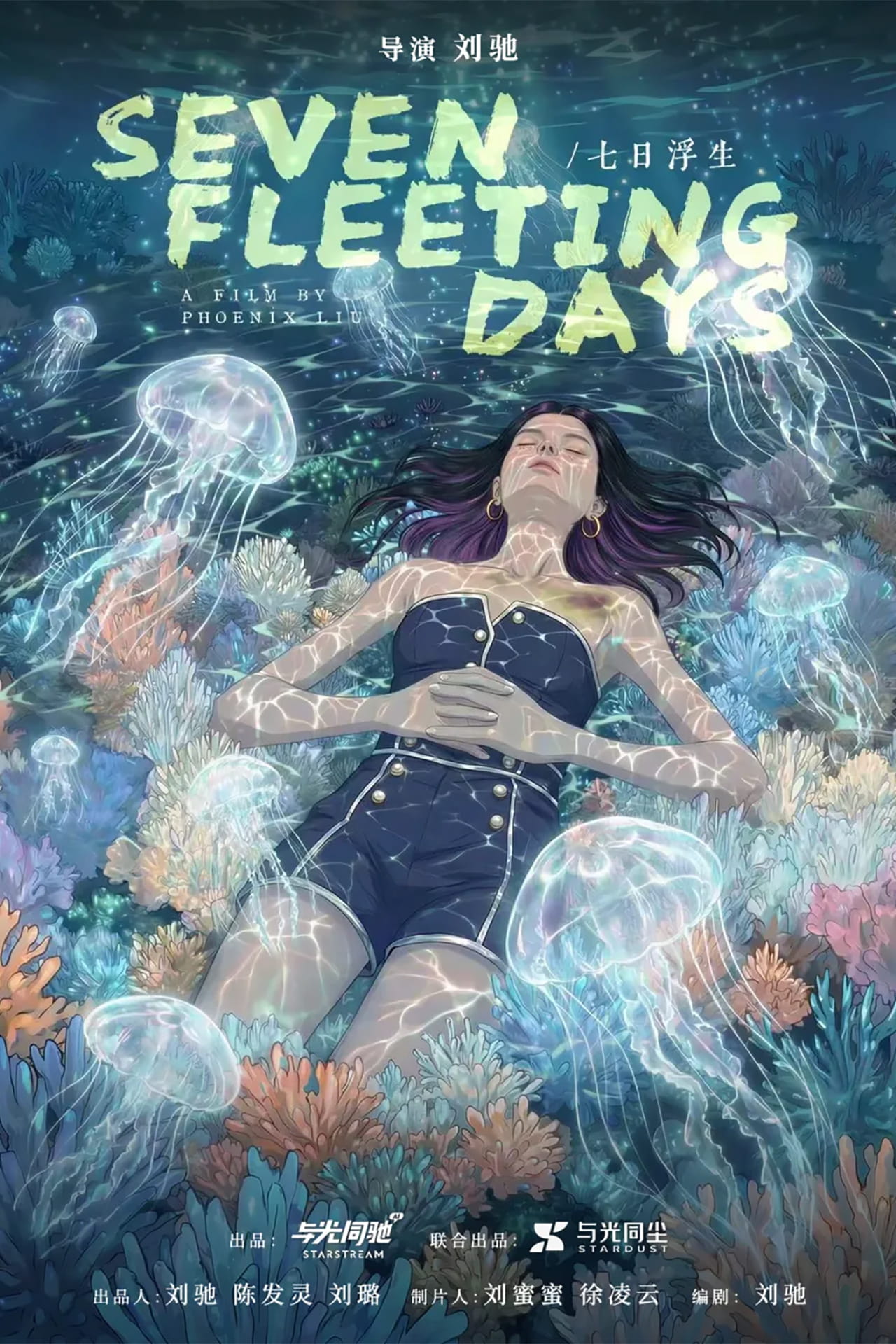
She put her other work aside and devoted herself to producing the nearly 50-minute film. The team consisted of seven people, but conventional job boundaries soon disappeared. Everyone did everything. With the deadline approaching, they used nearly every video generation model and tool available to them.
Before leaving each evening, Liu and her colleagues fed as many storyboard sequences as they could into the models. When they returned the next morning, they reviewed the clips, kept the usable ones, and began assembling the film.
The storyboards could not simply be handed to AI.
“AI cannot accurately understand the contextual relationships, character dynamics, or emotions in a screenplay, so every scene has to be broken down in detail,” Liu said.
She directed each team member much as a conventional director would guide an actor.
“For example, I might write, ‘His eyes turn toward the floor,’” Liu said. “My teammates need to understand why he does that. Is it because he feels guilty, or because he is thinking? They cannot just mechanically feed prompts into a model.”
A mechanical prompt for an AI-generated short drama might read:
“The female lead laughs so hard with joy that she loses her breath, then instantly falls asleep on the male lead’s shoulder. The noisy scene turns quiet in an instant. His eyes full of tenderness, he gently lifts her in a bridal carry.”
Liu Yuqing, who co-created the award-winning short The Tale of the Peony, wrote prompts differently:
“Use Image 1 as the opening frame. The person lying in bed suddenly coughs, opens their eyes, and turns toward the left side of the frame. Camera movement should follow Video 1. The two people beside the bed become frightened and flee toward the left side of the frame. Push the camera toward the person on the bed from this angle. Insert Image 2.”
The prompt was used for a scene in which the protagonist’s lover is gravely ill.
The first prompt emphasizes melodrama and leaves much of the visual interpretation to the model. The second attempts to reproduce a scene that has already been carefully imagined. It depends on human decisions about movement, framing, pacing, and emotion.
A strong visual sensibility is another quality shared by many of these filmmakers.
The visual style of The Tale of the Peony existed before its story.
Jintao Sun, who studied lacquer painting, had long been interested in the behavior of different materials. After AI tools appeared, she began experimenting with whether the texture of xuan paper could be applied to 3D figures and environments.
She produced a series of images and posted them on Xiaohongshu, but struggled to find a story suited to the visual concept.

Later, while seeking advice about PhD applications, Sun met Liu, who was studying at the University of Hong Kong.
Liu suggested making an AI-generated film in the same style, building on the attention Sun’s images had already received. The two quickly agreed to work together.
Sun handled the art direction, while Liu wrote the screenplay and generated the visuals.
Liu loves cinema. Her favorite director is Eric Rohmer, a leading figure of the French New Wave.
At first, she disliked AI. Early video-generation tools were crude and unstable. As the models improved, however, she realized that they could begin to produce some of what she had imagined.
She wrote a screenplay inspired by Yu Xuanji, a poet of the late Tang dynasty. The story examines how rumors are used to malign women and how gossip can almost erase a woman’s talent from public memory.
To maintain a precise and consistent style, the seven-minute short used about ten keyframes per minute. Nearly every one had to be redone.
“Whether it was with Photoshop or drawing, we had to do it ourselves,” Sun told 36Kr.
The Tale of the Peony took six months to complete. Despite working closely together, Sun and Liu met in person only once during production.
When AI appears capable of doing almost anything, the human contribution becomes easier to see. It determines the texture of the image, the emotional rhythm of a scene, and whether a film feels made rather than merely generated.
Another short, Paper Phone, went viral in China in March. Model developers and software providers soon rushed to claim some association with it.
One continuity error was deliberately left in the finished film. The protagonist does not press the phone’s buttons, yet the call connects.
The director kept the shot because the character’s microexpressions, the emotional tension, and the transition into the following scene worked too well to sacrifice.
In an AI-generated film, prompts matter. So do taste, judgment, and the willingness to preserve an imperfect image because it feels alive.
Investment, which can decide whether a conventional film lives or dies, has largely disappeared from the AI filmmaker’s creative process.
The two creators of The Tale of the Peony estimated that the film cost RMB 2,000 (USD 295.2), spent on three subscriptions across two platforms.
In the traditional film industry, a production with an eight-figure RMB budget and a crew of more than 100 could still be called frugal.
Some AI filmmakers cannot say how much their work cost. The figure is too small to seem worth recording.
What live action still holds
Whether live-action filmmaking can truly be replaced remains the larger question.
“An audience’s consumption of an artwork is not based only on the content itself. It also involves the process through which the work was made. We call this the aesthetics of labor,” said Wang Lei, dean of the School of Animation and Digital Arts at the Communication University of China.
Live-action production requires an immense amount of work, he said, but that work can itself become part of a film’s appeal.
Fans of Hayao Miyazaki may know the story of how Ponyo was made. The film used 170,000 handdrawn images.
A single sequence showing a jellyfish rising to the surface required 1,613 drawings.
Audiences respond to the film itself, but they are also fascinated by the effort embedded in it.
AI filmmakers generally agree that some forms of expression and performance still require live-action production.
Film and television are concerned with human emotion and experience, historical memory, and imagined futures. Such material cannot be handed entirely to a model whose decisions remain difficult to interpret.
Yet the moment these filmmakers became visible, partnership offers began arriving.
Model developers and application companies were the most enthusiastic. They started referring to AI filmmakers as “super creators.”
One industry professional told 36Kr that, after Paper Phone went viral, Kuaishou’s Kling AI team moved quickly to secure title sponsorship. It offered a promotional budget dozens of times larger than those proposed by rival platforms.
Another AI video company was so eager to recruit a filmmaker that, before any partnership had been agreed, it offered to pay for the creator’s flights, hotel, and competition fees. It also offered to cover every token used in production.
“Someone from a leading model company contacted me the next day and wanted me to include its name in the publicity,” said one AI filmmaker who won an award at the Beijing International Film Festival.
“But I really did not use its model.”
The company replied that it did not matter. The filmmaker only needed to describe herself as one of its super creators in promotional materials.
Xiaoqi (pseudonym) manages creator partnerships at a large model company. Rival companies have repeatedly recruited creators she was preparing to sign.
To secure a favorable production schedule and an exclusive partnership, she tries to reach filmmakers before competitors do. But verbal agreements can disappear as soon as a richer offer arrives.
Kling and TapNow have taken deals from her more than once.
“I am exhausted from fighting over them,” Xiaoqi said. “Every day feels nerve-racking.”
These creators do not necessarily bring model and software companies many paying customers. Their immediate value is as evidence of what the technology can produce.
Dreamina, known in China as Jimeng AI, and Kling use creators somewhat differently.
“At those platforms, super creators also help the companies tackle cinema-grade content, accumulate more data assets and templates, and attract mainstream users,” an AI video product professional told 36Kr.
The model developers with the strongest technical capabilities appear less anxious about courting filmmakers.
One award-winning creator told 36Kr that, after her team won, nearly every well-known model and software company in China contacted it. There was one exception: Dreamina, which is owned by ByteDance and supported by the Seedance model.
Among the filmmakers interviewed by 36Kr, only one had secured a partnership with Dreamina. The filmmaker approached the platform, rather than the other way around.
To obtain the partnership, she had to submit a résumé and a project proposal, almost as though she were applying for a job.
She came away with the impression that Dreamina wanted directors who had “won awards at international film festivals overseas and had experience making feature films.”
Studios search for a way in
The traditional film industry is also looking for AI talent.
Bona Film Group has taken one of the most aggressive approaches. More than 70% of the positions in a recent round of job postings involved AI, according to 36Kr.
Bona is also developing films conceived around AI as it tries to become the first company to release such a production in Chinese theaters.
The company had posted losses for four consecutive years. It now regards AI as one possible path toward recovery.
Enlight Media has taken a different approach.
An industry professional told 36Kr that Enlight remains focused on IP and animated films.
In 2025, Enlight reported RMB 4.04 billion (USD 596.4 million) in revenue. Film, television, and related businesses contributed RMB 3.682 billion (USD 543.5 million), driven largely by the animated hit Ne Zha 2.
“Everyone knows AI is important, but they are still watching and waiting,” the industry professional said.
After Liu Ziyu went viral, Enlight contacted him, but the two sides did not reach an agreement.
The company wanted Liu to participate in the production of an animated film. Liu wanted to develop IP around his own work.
On May 16, Liu said on social media that a game based on Zombie Scavenger was already in development.
Compared with traditional film companies, internet platforms that already possess technology, products, distribution, and IP may be better positioned to enter.
36Kr previously reported that Tomato Novel, also known as Fanqie Novel, was working to bring an AI-generated animated film to theaters.
Such a release would give ByteDance another part of the film business: theatrical distribution.
Should a durable body of AI-native IP emerge after the current period of experimentation, ByteDance may have a stronger claim to it than many traditional studios.
The ability to make films is gradually moving away from established professionals and companies toward a new group of creators and platforms.
After winning their award, Sun and Liu received several commercial inquiries through their Xiaohongshu account. The fees they quoted were far higher than the amount Hongguo Short Drama pays to acquire a leading short-form series.
In June, they released Painted Skin, another work in the same visual style.
Many commenters said they hoped the creators would turn the concept into a series inspired by Strange Tales from a Chinese Studio.
Phoenix Liu has also been working with independent producer Liu Mi on an AI-assisted animated film intended for theatrical release.
Liu Mi estimates that about 50% of the film will be AI-generated, a proportion she considers low.
In their experience, AI still cannot provide the character consistency, image quality, voice acting, and control over staging required for a cinema screen.
Technical progress may alter those plans quickly.
In late June, Volcano Engine presented Seedance 2.5 at its Force Conference. The company said the model could generate 4K video and offered improved control over staging and visual detail.
The model was scheduled to launch later in July.
RELATED ARTICLE

After the novelty
Whether the early success of AI filmmakers can continue is uncertain.
Wang Lei, dean of the Communication University of China’s School of Animation and Digital Arts, said the storytelling, staging, and editing in the viral Zombie Scavenger were “below average” by the standards of graduate film projects.
He believes much of the attention surrounding AI filmmakers comes from the public’s “shock.” Once that feeling passes, he said, the weaknesses will become clearer, and few creators or works will endure.
Hell Grind, a 95-minute feature released in theaters and described by its producers as the first film of its kind, was made by a San Francisco startup with sponsorship from Seedance.
Viewers praised its technical advances but criticized its thin story and limited artistic ambition.
Acclaimed director Jia Zhangke’s first AI work, Wheat Harvest, made with Kling AI, also received a wave of negative reviews.
The names of models and directors may attract an audience once. They cannot make the audience care.
When the surprise fades and the technology becomes widely available, the familiar question will return: what kind of work will people love, respect, and remember?
KrASIA features translated and adapted content that was originally published by 36Kr. This article was written by Lan Jie for 36Kr.
Note: KRW, RMB figures are converted to USD at rates of KRW 1448.68 = USD 1 and RMB 6.77 = USD 1 based on estimates as of July 30, 2026, unless otherwise stated. USD conversions are presented for ease of reference and may not fully match prevailing exchange rates.