

Chen Yuan spent a full day near a bonded zone in a southern Chinese city waiting for a shipment of high-end GPU servers. His boss had given the procurement representative a firm deadline: He had to get the machines that day. At 11 p.m, after keeping him waiting since morning, the seller finally told him the deal was off.
Lin Yue, the broker who had found the offer, immediately called another seller. This one wanted more than RMB 20 million (USD 3 million) per machine and still couldn’t deliver right away.
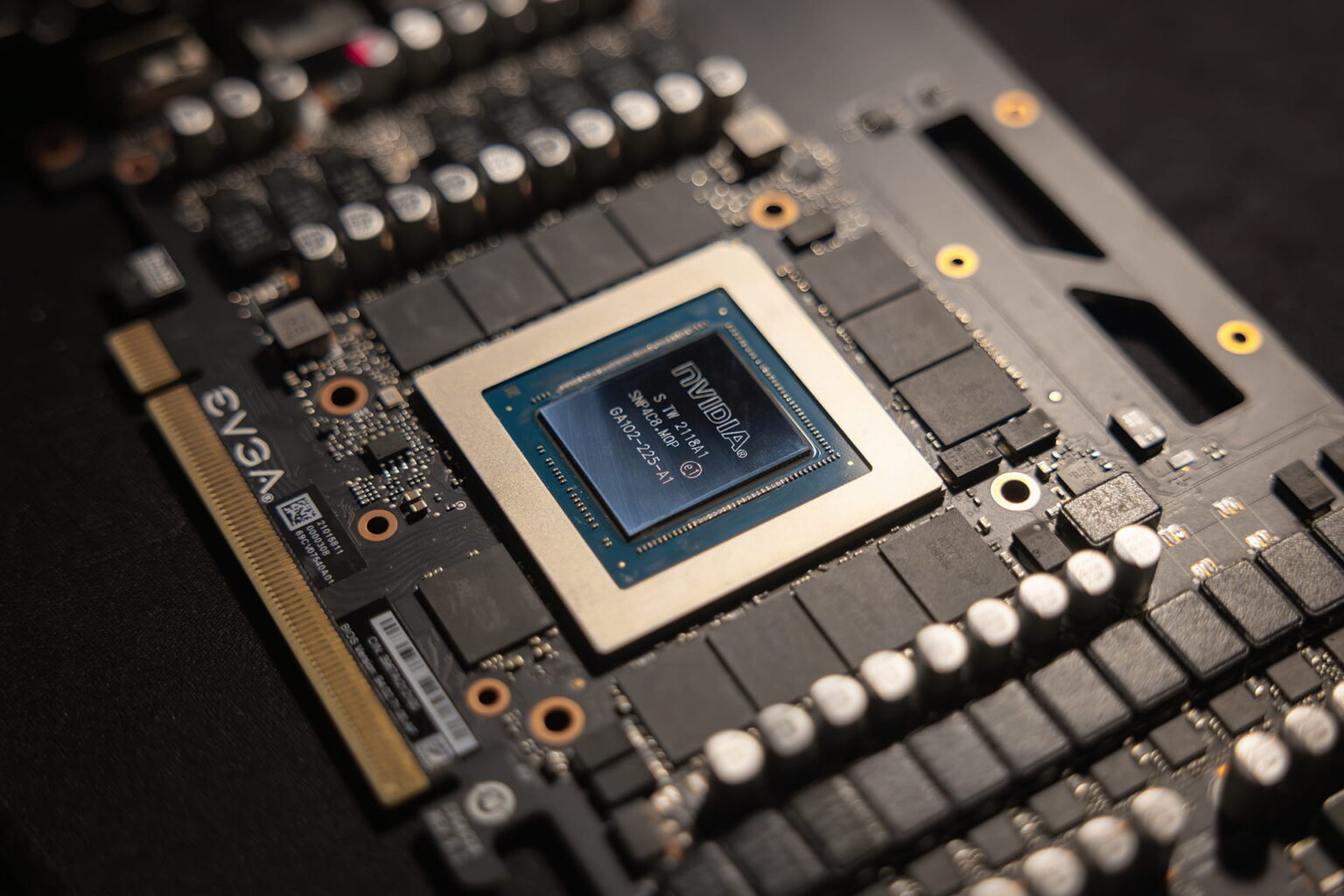
Chen was looking for servers fitted with eight units of a particular high-end graphics processing unit (GPU), referred to here as model X. At the end of 2025, the asking price for one of these servers in China was about RMB 4 million (USD 598,000). By September this year, quotes had nearly quadrupled to around RMB 15 million (USD 2.2 million). Over the following weeks, they climbed past RMB 20 million.
Demand for computing power helps explain the rise. Artificial intelligence companies around the world are expanding the capacity they use to train models and run them once deployed. In February, for example, Meta announced a multiyear agreement with the chipmaker behind model X, with plans to deploy millions of high-end GPUs in large data centers for training and inference.
The way servers change hands adds to the price. Word that a machine is available often travels through several brokers, each adding a markup. Even buyers prepared to pay the final quote may have little idea who has the equipment or when it will arrive. Several people working in the computing market described their dealings to 36Kr.
How an offer travels
The night before Chen went to the bonded zone, Lin stayed up until one or two in the morning tracking the shipment. He remembers making sure the equipment was available before going to bed.
“I checked over and over with the supplier the night before, and they said there would definitely be no problem. A little after seven the next morning, I started asking again. I was still asking through the morning and at noon whether everything was all right with the goods. The supplier kept saying, ‘They are there. The owner has already reserved them.’”
The assurances came to nothing. “I’ve bought equipment from this seller before. Obviously I had some reason to trust them, or I wouldn’t have gone back. But now I wonder whether they were just another broker,” Lin said. He suspected the person he had dealt with had little direct control over the model X machines.
At one end of a GPU server transaction is the owner of the equipment. At the other is a company buying servers for its own use or to rent out the computing capacity. In between are agents looking for buyers, brokers looking for machines, and procurement firms hired to buy on a client’s behalf.
Lin works for buyers, which can leave him several steps removed from the owner. “I have more connections on the buyer side, but I’m too far from the people who actually have the machines. I have very little control over them.” That distance may explain why repeated confirmations failed to secure Chen’s order.
Tight supply and rising demand are visible to everyone. The price increases that accumulate as an offer makes its way to a buyer are harder to see.
“When an owner puts out word that a batch of machines is going up for sale, the brokers closest to the owner immediately pass it on. Each time the message changes hands, someone adds a markup to the last broker’s quote. By the time it reaches the buyer, the price has gone up a great deal,” Lin said.
One skill buyers need in a broker is the ability to determine whether the person offering equipment actually owns it. “Can they tell you straight away what model they are selling and how much it costs?” Lin said. “If I ask a question and have to wait ages for an answer, or they agree to one condition and then another one suddenly appears, they probably aren’t the actual seller.”
This time, he said, he had misread the situation. “The person I dealt with couldn’t decide how to sell the goods and had to go back up the chain, one link at a time. That’s why the buyer waited so long for a definite answer.”
Most buyers would prefer to sit down with the owner, show proof of funds, and inspect the machines before completing a deal. But scarce supply gives sellers the upper hand. They generally want to check the buyer’s credentials and funds before revealing what they have.
In practice, a buyer may give a broker a standing price limit and leave the broker to watch for stock. When an offer appears, the broker asks for the seller’s business license and arranges a deposit to reserve the machines. A buyer still negotiating terms can miss the opportunity entirely.
Buyers can also be strung along, and some lose money. Lin described one common fraud. “They tell you they definitely have the equipment, sign a contract with you, and ask you to transfer a deposit. Once they have the money, they disappear.” That risk helps explain why some buyers insist on seeing machines already in stock.
“I can’t tell how much equipment is really on the market or whose quotes are genuine and whose aren’t,” Lin said. He suspects some people promising immediate availability still have to ask someone else where to find the machines.
He also treats reports of completed sales cautiously. “It sounds busy, as though a lot of deals are getting done. The number that actually gets completed may be much smaller than it sounds.” Higher prices have persuaded some buyers to hold off, he said.
Customers include AI model developers and large internet companies buying machines for training, as well as computing providers that sell or rent access to clusters. “Most of these companies don’t show up in person. They hire procurement agents to do the deal,” Lin said.
At prices above RMB 20 million, most large technology companies are unwilling to buy, according to Lin. He put the upper limit for major Chinese AI companies at around RMB 15 million for an eight-GPU model X server. He still occasionally hears that one leading model developer is looking for machines.
Buyers facing deadlines
By the end of June, China’s AI computing capacity had grown 177% year-on-year, according to China’s Ministry of Industry and Information Technology. The country had built 52 facilities with at least 10,000 accelerator cards each. Alongside model developers, companies that rent out computing capacity are major buyers of high-end servers.
Zhao Cheng, who deploys and maintains servers for buyers, pays close attention to which purchases actually close. “Most model developers have given up on buying,” he said, referring to quotes above RMB 20 million for an eight-GPU model X server. Most of the buyers he encounters are building clusters to serve their own customers.
“If I’m building a cluster, I may already have signed a contract with a customer committing to delivery within a certain period and setting out what I owe if I miss it. If the compensation costs more than the premium on the machine, I have little choice but to grit my teeth and buy it,” Zhao said.
A deadline can make the premium worth paying, provided the buyer can get the equipment in time. Zhao insists on speaking directly to the buyer because he earns his fee by deploying and maintaining the servers after the sale. “I might give a broker one chance to talk. If I still can’t speak directly with the buyer the second time around, I leave it there.”
Keeping those connections private is part of the business. Buyers have little incentive to reveal a source to others bidding for the same cards. “There’s one bowl of rice,” Zhao said. “It might be just about enough for five people. If ten or twenty people come to share it, there definitely won’t be enough.”
An older GPU, referred to here as model Y, still offers enough performance for many AI workloads. Buyers can seek an eight-GPU server on the spot market or apply for an allocation directly from the manufacturer. Zhao put the spot asking price at about RMB 6.5 million (USD 972,000) per machine. Buying through a manufacturer allocation could cost about RMB 2 million (USD 299,000) less.
The lower price comes with stricter eligibility checks. Some buyers Zhao knows urgently need servers but have been unable to meet requirements for proof of funds, data center space, or intended use. Their purchases have stalled, sending them back to the more expensive spot market.
An eight-GPU model Y machine costs roughly two-thirds less than its model X counterpart, yet buyers face the same difficulty establishing whether stock is actually available.
“Say I agreed to sell you a server for RMB 4.5 million (USD 673,000), and then the market price goes above RMB 6.5 million,” Zhao said. “I’d rather pay you the penalty and sell it to somebody else at the higher price. Even after the penalty I’d earn more than I would have on the original deal. Why wouldn’t I walk away?” A buyer with a reservation can still lose the machine.
Some sellers also bundle servers, according to 36Kr. To get a scarce model X machine, a buyer may have to purchase other servers fitted with model Y GPUs. “It’s like shopping at Hermes,” one buyer said. “You have to buy other things to get what you came for.”
“Being able to mass produce the chips doesn’t mean you can supply finished servers in volume,” Zhao said. Shortages of high-bandwidth memory (HBM) and limited advanced packaging capacity restrict how many high-end servers can be assembled. He estimated that relatively few ready-made modules for eight-GPU model Y servers remained worldwide. Even on an optimistic assessment, he believed they might cover only another six months of supply, putting further pressure on prices.
Manufacturers are adding capacity, but new facilities take time. SK Hynix said in October that supply had failed to keep pace with market growth, citing the technical demands of advanced processes and the time needed to build factories. It planned to bring its M15X plant to full capacity by year’s end to increase supplies of HBM4, its next-generation high-bandwidth memory.
At an earnings briefing that month, TSMC said it had nearly 20 factory projects underway worldwide, including advanced semiconductor manufacturing and packaging facilities. Equipment was in short supply, the company said, so capacity additions needed to be coordinated with suppliers well in advance.
Some companies have turned to rentals as model X purchase prices have risen. Public records reviewed by 36Kr indicate that monthly rent on a one-year contract had reached as much as RMB 190,000 (USD 28,400), putting the annual bill above RMB 2 million. Some large technology companies have even begun asking about prices for consumer graphics cards such as Nvidia’s RTX 5080.
Back in the bonded zone, Chen was still trying to carry out his boss’s order. He asked the seller to find one or two machines, enough for him at least to inspect the equipment. First, he was told to wait a little longer. Then came word that the machines couldn’t be released. Existing customers were after the same batch.
The purchase fell through. Chen asked whether he could get the machines the next morning. “You can’t,” the seller replied. “Give it a few more days.”
Chen Yuan, Lin Yue, and Zhao Cheng are pseudonyms used at the interviewees’ request to preserve anonymity.
KrASIA features translated and adapted content that was originally published by 36Kr. This article was written by Li Zhaofeng for 36Kr.
Note: RMB figures are converted to USD at rates of RMB 6.69 = USD 1 based on estimates as of November 13, 2026, unless otherwise stated. USD conversions are approximate and, where appropriate, rounded for ease of reference. They may not fully match prevailing exchange rates.