


China and the European Union (EU) have averted a trade war, reaching an “understanding” that Chinese exports of hybrid vehicles to the bloc will be halved in time after two-day talks between their trade chiefs in Beijing.
China’s Ministry of Commerce said on October 9 that both sides have “reached an understanding on hybrid vehicle trade in compliance with WTO rules,” without offering details following negotiations between Chinese commerce minister Wang Wentao and European commissioner for trade and economic security Maros Sefcovic.
The European Commission said later that the understanding was to “moderate” China’s exports of hybrids and plug-in hybrids, which “opens the prospect of cutting China’s exports by more than a half.”
“I believe that we achieved very good results,” Sefcovic said at a news conference in the Chinese capital. “We are talking about reducing exports from China to European Union over four years by several million cars.”
Sefcovic had demanded “tangible” steps toward reducing the EU’s daily deficit of USD 1.12 billion with China by October, which the commission had referred to as “a mountain of a challenge.”
Both sides have now agreed that China will allow the EU improved access through lower most-favored-nation tariffs from “car parts to olive oil and footwear totaling almost EUR 4 billion (USD 4.5 billion) in current export value, which would bring at least EUR 225 million (USD 252.3 million) in duty savings,” the commission said.
Regarding rare earth metals and permanent magnets, China will facilitate export licensing to the EU.
According to the Chinese statement, China would expand imports of medical devices from the EU and also facilitate procurement matchmaking meetings.
Last week, dozens of EU industry groups called for urgent action against unfair trade practices, but the most closely watched in these negotiations in Europe is the hybrid and plug-in hybrid vehicle sector.
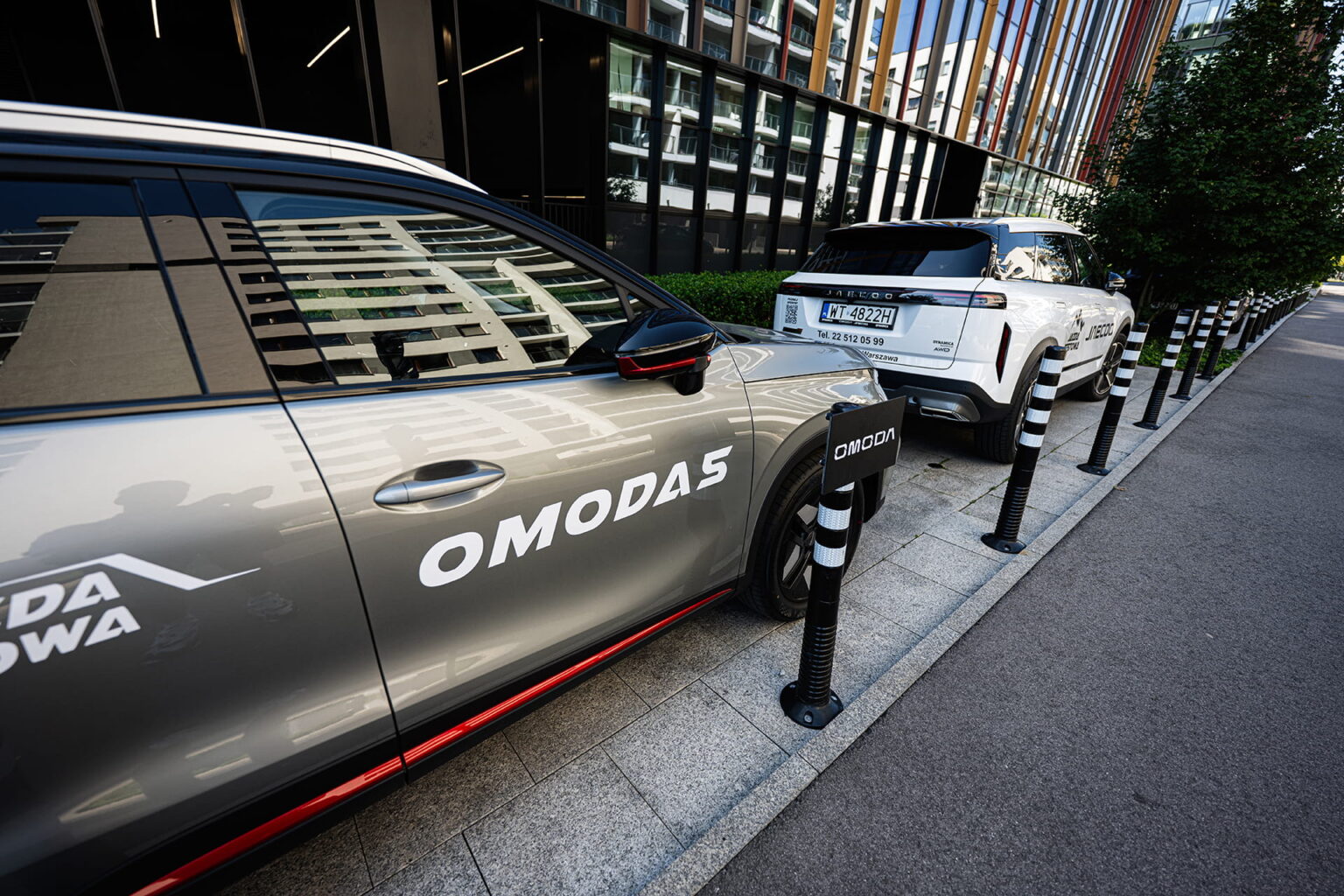
Europe is flooded with Chinese-branded electric vehicles despite anti-subsidy duties it imposed on those carmakers in October 2024. To avoid those tariffs, Chinese carmakers had pivoted to manufacturing and exporting hybrid vehicles to the EU. European leaders see this segment as the next big threat to its industry.
Chinese brands accounted for 14% of the EU’s hybrid electric vehicle market and 25% of the plug-in hybrid vehicles in the first half of this year, compared with 2% two years ago in both those segments.
“Today’s announcement can help facilitate the transition to a new era of Chinese presence in the European market in an orderly way and this is in the long-term interests of all parties,” the European Automobile Manufacturers’ Association said in a statement.
But one analyst pointed out that it was always Beijing’s goal to control about 15% of Europe’s hybrid market, which isn’t far off the negotiated level.
“One could interpret this as Beijing simply choosing to co-own a measure it knew was coming, at relatively low cost,” said Jacob Mardell, lead analyst at Sinification, a research organization that tracks policy discussions in China. “But at the very least, it signals that Beijing is starting to take the EU at its word.”
German Chancellor Friedrich Merz has been unusually outspoken about China in recent months, lamenting its combination of state subsidies, overcapacity, aggressive pricing and an undervalued yuan. China rejects claims of overcapacity and currency manipulation: On Thursday, its central bank denied ever engaging in “competitive currency depreciation.”
As such, the results of the talks that the Chinese Chamber of Commerce in the EU lauded as “a positive signal” may not be enough to appease European leaders. Experts said EU leaders may still call for tougher action at a meeting of the European Council on Thursday, such as the imposition of safeguards to limit any increase in imports that will harm the domestic industry.
“Ultimately, plug-in hybrid exports are a small part of the problem,” said Noah Barkin, a senior adviser at research and advisory firm Rhodium Group. “Even if that deal is not an overtly bad one from the EU’s perspective, is it enough to convince European leaders to hold off on other trade measures when they meet next week? I am not sure that it will be.”
Mardell cited missing details in areas such as chemicals, brandy, pork and dairy, and the lack of a timetable for rare earth metals.
EU and Chinese negotiators will hold the next meeting in March, and keep talking in the meantime, including a ministerial-level video conference in January.
This article first appeared on Nikkei Asia. It has been republished here as part of 36Kr’s ongoing partnership with Nikkei.
Note: EUR figures are converted to USD at rates of EUR 0.89 = USD 1 based on estimates as of October 16, 2026, unless otherwise stated. USD conversions are approximate and, where appropriate, rounded for ease of reference. They may not fully match prevailing exchange rates.