


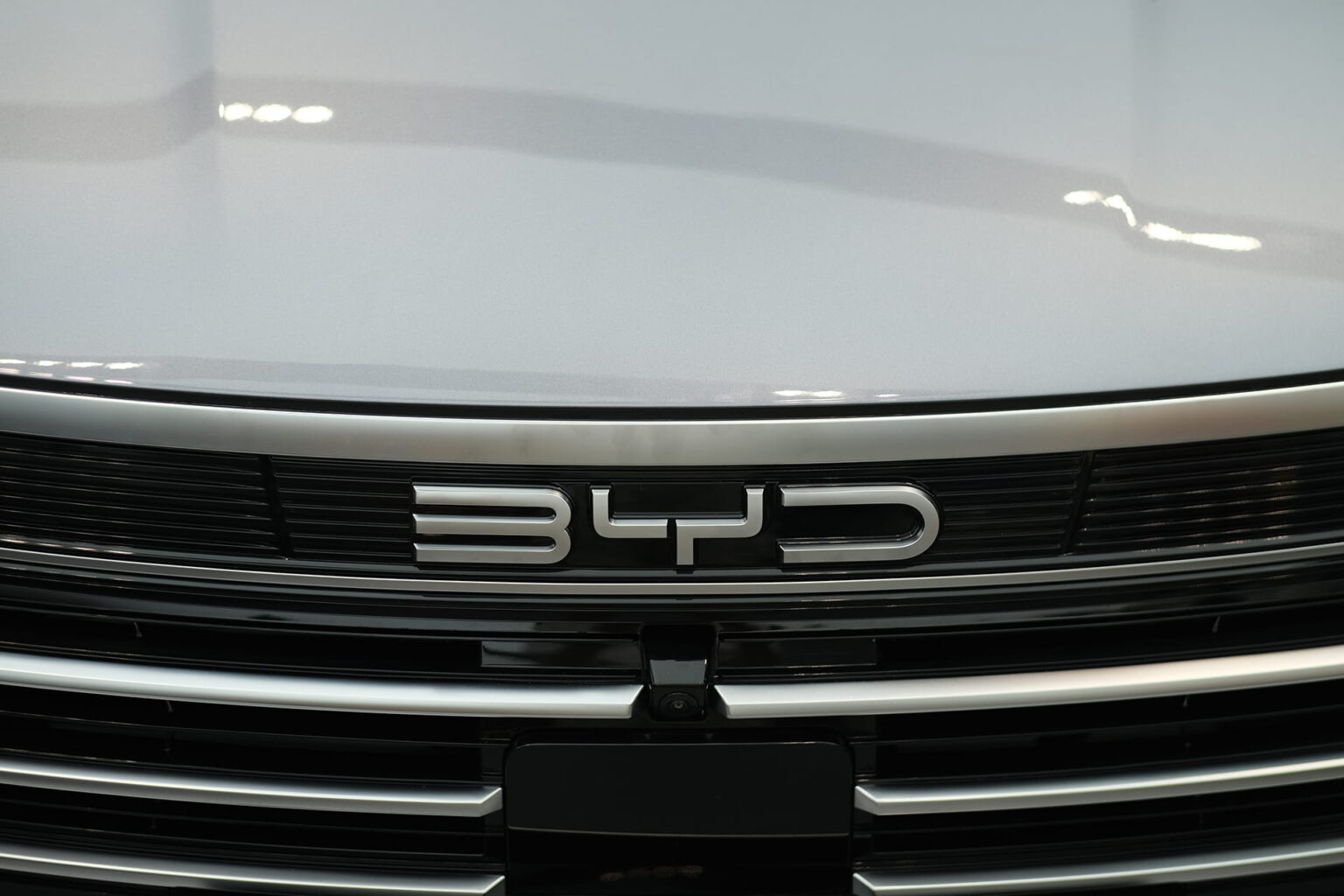
Chinese automakers are surging ahead in Myanmar, with BYD and at least three other companies tapping electric vehicle incentives to begin production in the country this year, creating obstacles for Japanese rivals.
East of Yangon, a facility is being set up by two of BYD’s main distributors. In August, the automaker assembled its first vehicle there, the Atto 3 SUV, using a production model known as SKD, or “semi-knock down,” in which parts are exported and reassembled elsewhere. Area residents reported a sharp rise in workers coming and going.
“Today, we stand at a historic intersection where global innovation meets Myanmar’s industrial ambition,” according to a social media post from the company that operates the factory.
In Myanmar, foreign investment and exports have been sluggish since the 2021 coup, creating a severe foreign currency shortage. The military government at the time banned imports of gasoline vehicles and removed tariffs on EV imports, including SKD kits, in an effort to curb foreign currency outflows due to fuel imports.
Fuel shortages and high prices continued due to the crisis in the Middle East even after the current pro-military civilian government took power following an election in April. Even more EVs came in from China, with new passenger EV registrations rising to 18,000 by the end of September, roughly tripling over two years.
EVs have become the driving force of the first-hand car market. Vehicle sales for 2026 through the end of September reached 13,715 units, beating the full previous year’s total of 12,474 units, according to automotive research firm Focus2Move. The share of EVs rose by 18 percentage points to 68%.
Still, the majority of EVs are coming in as parallel imports by businesses unrelated to major automakers. An influx of finished vehicles alone will not foster manufacturing or create jobs. In July, President Min Aung Hlaing told the government to aim for comprehensive assembly of EVs at home.
In June, Leapmotor, another Chinese EV maker, announced that it had produced 1,000 units between its B10 SUV and T03 compact car, which it began assembling in Myanmar this year. China’s Geely and Changan Automobile also began production here this year.
The common through line with these companies is an entry strategy of entrusting local partners with building factories and charging infrastructure, importing parts and assembling the vehicles. This lets the automakers mitigate political and economic uncertainties and profitability risks.
South Korean companies are using this strategy as well. In August, KG Mobility announced a partnership with a major local distributor to build and sell EVs.
Meanwhile, Japanese carmakers including Toyota Motor and Suzuki Motor, which have their own plants outskirts of Yangon, are struggling.
Toyota started up its plant in 2022, shortly after the political upheaval, and produces around 200 Hilux pickup trucks monthly. Toyota does not build or sell any EVs in the country.
Suzuki was early to local production in Myanmar. In 2019, the company sold 13,000 vehicles, which accounted for 60% of the country’s first-hand car market. Yet, it paused production in mid-2022, and now only produces around 140 vehicles monthly, including the Ertiga minivan.
This year, restrictions were tightened on component imports even in the special economic zone where both companies have plants. In a market where imports of finished vehicles are essentially blocked, both Toyota and Suzuki have been unable to make the most of their capability to produce gas-powered cars locally.
Japanese automakers have faced challenges in aligning themselves with the country’s EV-friendly policies. Myanmar’s EV business environment is said to be heavily intertwined with the interests of companies linked to the pro-military government and high-ranking officials. Investors and human rights groups are watching these relationships closely.
This article first appeared on Nikkei Asia. It has been republished here as part of 36Kr’s ongoing partnership with Nikkei.