

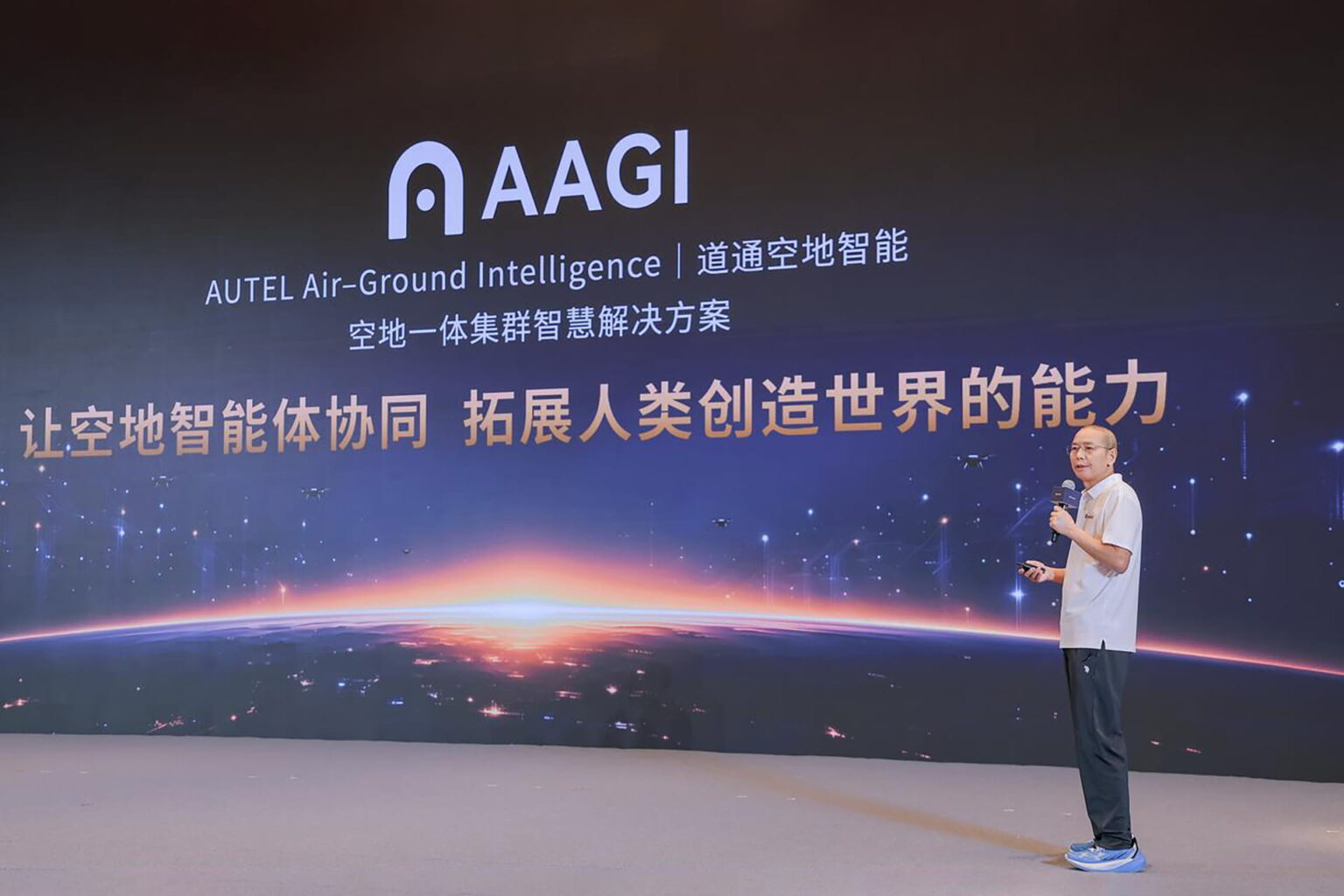
At a demonstration in Shenzhen, Autel Robotics deployed drones, uncrewed ground vehicles, robots, and automated docks to carry out a coordinated assignment. The demonstration accompanied the unveiling of Autel Air-Ground Intelligence (AAGI), a system developed in partnership with Daohe Tongtai and Skyfend. At its center is the AIP software platform, which supports applications ranging from security and industrial inspections to low-altitude airspace monitoring.
Wang Yuelu, CEO of Autel Robotics, described the approach as “coordination between digital agents and physical agents.” The company plans to provide standardized equipment, customize deployments for individual sites, and help operators integrate the systems into their daily workflows.
The need for such coordination is evident across industries. At power facilities and along highways, inspection crews often travel long distances to perform routine checks. Industrial parks and public safety agencies face similar demands. Even after identifying a problem, workers may need to relay findings across multiple systems before corrective action can begin. Introducing autonomous machines adds another layer of complexity: determining which machine should handle each task and how its findings should reach the appropriate personnel.
A drone can survey a site from above, while a ground vehicle observes it from road level. The machines have different mobility capabilities, computing resources, and communication constraints. If one must wait for instructions or data from another, an unreliable connection could delay the entire operation.
AIP is designed to address this by mapping the relationships among a customer’s sites, facilities, equipment, and tasks. It uses this information to distribute assignments among machines, while allowing human operators to confirm decisions and supervise critical steps.
The platform supports three applications targeting different operational needs:
- EIS 2.0 allows operators to issue instructions through conversational commands or a map interface. They can then monitor each machine’s location, camera feed, and task progress. Autel designed the application for security patrols, law enforcement, and emergency rescue operations, including those conducted in difficult terrain.
- Avant Hub 2.0 focuses on inspections across power networks, oil and gas facilities, highways, and industrial parks. It links images and location data to the relevant assets or road segments, then forwards findings to the customer’s work order management system.
- Skyshield 2.0 integrates detections, flight paths, alerts, and imagery from multiple sensors, helping personnel monitor sensitive airspace and determine when authorized intervention is necessary.
Across these applications, Autel and its partners aim to automate portions of fieldwork, particularly in environments where inspection and security personnel are stretched across large areas.
The company has also expanded its hardware portfolio to support these deployments.
Its upgraded Evo III drone series supports autonomous flight, environmental sensing, coordination with other machines, and third-party payloads. The Apex drone, with a payload capacity of around ten kilograms, can carry multiple payloads and coordinate with other aircraft.
For patrols covering large areas, the Dragonfish dock enables remote aircraft dispatch and automates takeoff, landing, and battery replacement.
Explorer Flex combines ground and aerial mobility, allowing it to roll or fly through buildings, underground facilities, and confined spaces. The Autel Nest 2 dock supports routine unattended operations.
The Ranger series includes the wheeled R1-W and bipedal X1, both designed for industrial park inspections, facility maintenance, public patrols, and emergency support.
Autel also outlined plans for the Pioneer series of uncrewed vehicles, the Vector drone, and the Titan 100 heavy-lift transport drone. These products are expected to be introduced in stages as development and testing progress.
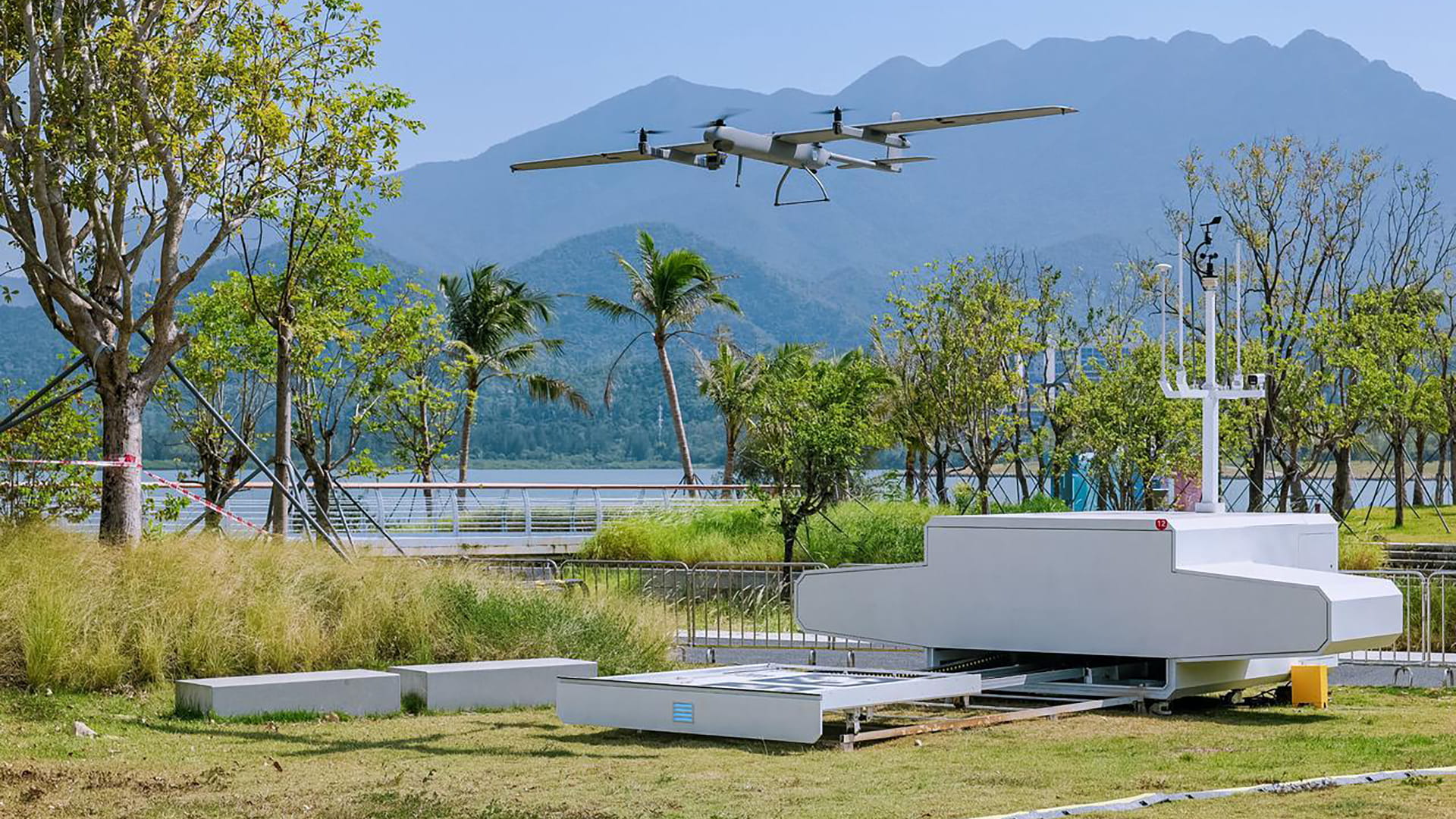
The three partners bring different capabilities to the system. Autel Robotics supplies the hardware, while Daohe Tongtai contributes artificial intelligence models for industrial operations and experience in the power, oil and gas, and transportation sectors. Skyfend specializes in low-altitude airspace security.
Together, they plan to develop and deploy the applications, adapting standardized hardware and software to each customer’s operating environment.
Field deployment engineers will handle site-specific configurations and integration with existing systems. Service teams will provide installation, training, operational support, and maintenance.
The partners also intend to retain tested procedures, operational rules, and equipment integrations within AIP for reuse in future projects. This could reduce repetitive development work and the time required to configure systems at new sites.
The more demanding test, however, will come after the initial demonstration. Machines must exchange information reliably, continue operating when connections are disrupted, and reassign work when individual units fail. Customers will also need to maintain these fleets over extended periods in real-world conditions.
Autel plans to sell its systems through direct projects and channel partners. It is also exploring a usage-based pricing model tied to the number of tokens consumed by its AI models.
KrASIA features translated and adapted content that was originally published by 36Kr. This article was written by Huang Nan for 36Kr.