



In 2004, Xu Longhua graduated from Xiangtan University with a degree in tourism management, a field unrelated to consumer electronics.
Two decades later, he is the founder of Wook, which sells phone accessories, small home appliances, and home improvement products through a distribution network reaching tens of thousands of mom-and-pop stores across Indonesia.
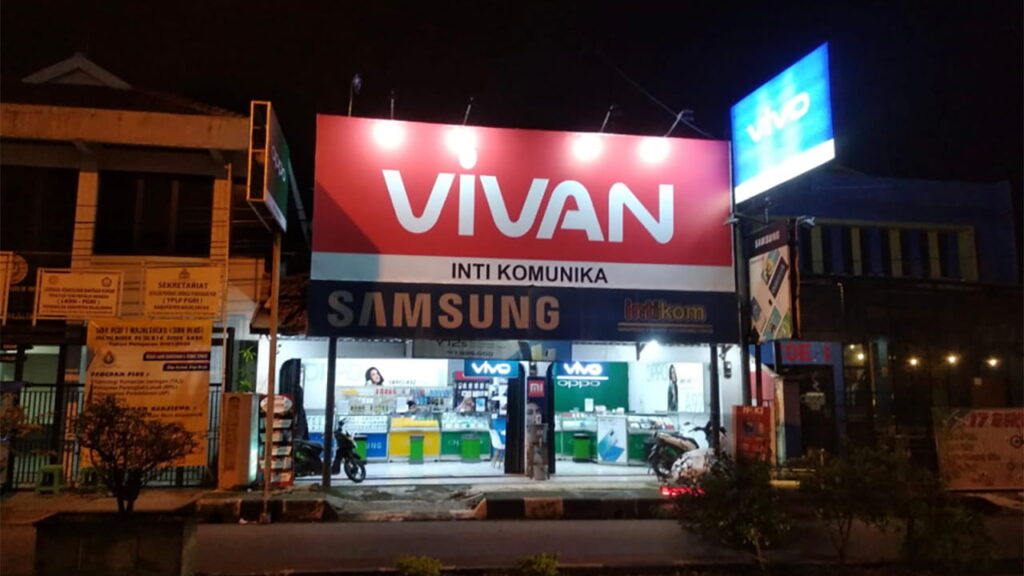
Wook’s business model is relatively straightforward. It procures products from Chinese suppliers, sells them under proprietary brands such as Vivan, Robot, Samono, and Rona, and distributes them through a network of local retailers. Its core category is 3C accessories, a term commonly used for computer, communications, and consumer electronics products.
Wook generated about RMB 1.2 billion (USD 178.1 million) in revenue in 2025, with 94% coming from Indonesia and 93.4% from proprietary brands. According to third-party industry data cited in its prospectus, it is Indonesia’s largest 3C accessories player by retail sales.
More important for its IPO case is how Wook got there.
In a Southeast Asian market where Shopee, Lazada, and TikTok Shop have established large online marketplaces, Wook has built much of its business around physical distribution. Its network includes more than 40,000 active distributors, 42 local branches, and nine warehouses, supported by a sales operation that has been developing in Indonesia for more than a decade.
That sets it apart from many Chinese cross-border sellers built primarily around online marketplaces.
Xu is now preparing to take that network to the capital markets. On August 14, Shenzhen Woke Technology filed another listing application with the Hong Kong Stock Exchange. It had previously filed on January 20, but that application lapsed after it did not clear the listing hearing within six months.
Before turning to Hong Kong, Wook had planned to list on the Indonesia Stock Exchange. It began preparing for an IDX listing in early 2024, then terminated the plan in June 2025. The company cited restructuring requirements and its conclusion that the Hong Kong Stock Exchange was a more suitable venue.
From an Indonesian IPO plan to a Hong Kong listing application, Wook has built an overseas expansion model around Chinese supply chains, local brands, and a large retail distribution network.
Its prospectus, however, also points to mounting pressure on profitability.
In the first half of 2026, revenue rose 22%, while operating profit was essentially flat. During the same period, Wook recorded an RMB 17.9 million (USD 2.7 million) foreign exchange loss, equivalent to about 72% of its net profit.
Wook has built most of its business in Indonesia. That has also left its earnings sensitive to movements in the Indonesian rupiah.
Profit growth weakens after a one-off gain is excluded
Wook generated revenue of RMB 908.4 million (USD 134.8 million), RMB 1.05 billion (USD 155.9 million), and RMB 1.22 billion (USD 181.1 million) in 2023, 2024, and 2025, respectively. Net profit for the three years was RMB 18.3 million (USD 2.7 million), RMB 20.4 million (USD 3.0 million), and RMB 48.0 million (USD 7.1 million).
On the surface, both revenue and profit rose throughout the period.
But the prospectus contains an important qualification. Wook’s 2025 adjusted net profit included an RMB 16.6 million (USD 2.5 million) gain from the disposal of an associate, alongside RMB 18.2 million (USD 2.7 million) in net foreign exchange losses.
Excluding the disposal gain, Wook’s adjusted net profit for 2025 was RMB 64.2 million (USD 9.5 million), down 17.9% year-on-year.
In other words, the company-reported 2.3% increase in adjusted net profit was supported by the one-off disposal gain. Without it, adjusted net profit would have declined.
The pressure continued into 2026.
Revenue reached RMB 699 million (USD 103.8 million) in the first half, up 22% year-on-year, while net profit came to RMB 24.8 million (USD 3.7 million). Operating profit, however, slipped from RMB 44.7 million (USD 6.6 million) in the first half of 2025 to RMB 44.6 million (USD 6.6 million).
Higher selling costs explain part of the difference.
Selling and distribution expenses rose 30.9%, from RMB 125 million (USD 18.6 million) to RMB 164 million (USD 24.3 million). Third-party e-commerce platform commissions nearly doubled, from RMB 22.9 million (USD 3.4 million) to RMB 44.4 million (USD 6.6 million).
Revenue growth, in other words, is being offset by higher selling costs and currency losses.
The rupiah has been another source of pressure.
Wook earns 94% of its revenue in Indonesia, while much of its procurement is tied to suppliers in China. That creates a currency mismatch when the rupiah weakens against the RMB.
According to the prospectus, the average monthly exchange rate of the rupiah against the RMB fell from about RMB 0.0445 per IDR 100 in January 2023 to about RMB 0.0384 in June 2026, a depreciation of roughly 13.7% over the period. In July, it declined further to RMB 0.0381, another 0.8% drop.
The effect is visible in Wook’s financial statements.
The company recorded a net foreign exchange gain of RMB 6.1 million (USD 905,514.7) in 2023, followed by net foreign exchange losses of RMB 2.0 million (USD 296,890.1) in 2024, RMB 18.2 million in 2025, and RMB 17.9 million in the first half of 2026.
The first-half 2026 loss was equivalent to 72.3% of Wook’s RMB 24.8 million in net profit for the period.
Wook has responded by entering into forward foreign exchange hedging arrangements with commercial banks. It has also used the China-Indonesia bilateral local currency settlement framework and completed a transition to RMB settlement in January 2026.
The company says in its prospectus that the rupiah’s recent depreciation has not had, and is not expected to have, a material adverse impact on its business.
The losses are nevertheless substantial relative to earnings. Wook recorded roughly RMB 18 million (USD 2.7 million) in net foreign exchange losses in both 2025 and the first half of 2026.
Currency movements also affect its reported selling prices.
Wook sets average selling prices, or ASPs, in Indonesian rupiah but prepares its financial statements in RMB. In the first half of 2026, the reported ASP of small home appliances fell from RMB 50 (USD 7.4) to RMB 46 (USD 6.8), while the ASP of 3C accessories declined from RMB 30 (USD 4.5) to RMB 29 (USD 4.3). The prospectus attributes part of those declines to the rupiah’s depreciation against the Chinese yuan.
Currency movements therefore affect more than the “foreign exchange gain or loss” line. They can also reduce reported unit prices and revenue after conversion into RMB.
Wook’s market position also requires some context.
Although it ranks first in Indonesia’s 3C accessories market by retail sales, according to data cited in the prospectus, its market share is 2.2%. The five largest players combined account for just 5.5%, suggesting the market remains highly fragmented.
By brand, Robot ranks first with a 1.4% share, while Vivan ranks sixth with 0.5%.
Wook also ranks sixth among Chinese cross-border companies in small home appliances, accounting for about 3.7% of China’s small home appliance exports to Indonesia. Across Indonesia’s overall small home appliance market, however, it ranks 15th by retail value, with a share of about 1.3%.
Its share of the home improvement and building materials market is smaller still, at roughly 0.2%.
Wook’s more defensible asset may therefore be its offline distribution network rather than its market share alone.
That also helps explain its plan to use part of the IPO proceeds to open 75 company-operated stores. The company is trying to convert distribution reach into stronger consumer-facing brands.
Distributor growth is slowing as platform costs rise
Wook’s Indonesian business remains primarily distributor-led, but growth in that network is slowing.
The number of newly added distributors fell from 13,814 to 10,226 and then 8,467 over the latest three full years, a decline of nearly 40% over two years.
Wook said it has been improving its distributor network and optimizing customer acquisition, with a greater focus on sales efficiency. It therefore characterizes the decline as part of an intentional shift in strategy.
Still, in 2025, Wook added 8,467 distributors and lost 8,864, resulting in a net decline of 397. It was the first annual net decrease during the period.
The definition of a distributor “decrease” also matters.
A footnote in the prospectus says the figure refers to distributors that placed orders in the previous period but did not place any during the relevant period.
The roughly 44,000 figure therefore represents active distributors that placed orders during the period, rather than the total number of distributors under contract.
The number fell to 36,342 in the first half of 2026. Wook notes that the figure has limited comparability with full-year data because the measurement period is shorter and some distributors place orders only in the second half.
That may explain part of the half-year decline, but not the net decrease recorded for the full year in 2025.
The economics per distributor are also modest.
Wook generated RMB 834.3 million (USD 123.8 million) in distributor sales in 2025. Dividing that figure by its 43,687 distributors produces average annual sales of roughly RMB 19,100 (USD 2,835.3) per distributor.
The prospectus provides another indication of the fragmented customer base. The vast majority of small and medium-sized retail customers purchased less than RMB 1 million (USD 148,445) annually, while only 89 customers recorded annual purchases of at least RMB 1 million at the end of 2025.
Wook has therefore built scale through a large number of relatively small outlets.
That structure limits customer concentration risk. Its five largest customers accounted for about 5% of revenue, while its largest customer contributed less than 2%.
The tradeoff is that growth depends in part on Wook’s ability to retain existing distributors and continue adding new ones. The number of newly added distributors has already fallen for two consecutive years.
Meanwhile, Wook’s revenue mix is shifting toward direct sales, particularly online. That channel is growing quickly and carries a higher gross margin, but it is also generating higher selling expenses.
Revenue from direct customers increased from 17.2% of total revenue in 2023 to 34.5% in the first half of 2026. The channel’s gross margin rose from 38.7% to 52.4% over the same period.
The gross margin on distributor sales, by contrast, fell from 33.6% a year earlier to 31.7% in the first half of 2026. The shift toward higher-margin direct sales helped lift Wook’s overall gross margin to a record 38.7%.
But selling costs rose alongside that shift.
Third-party platform commission expenses nearly doubled year-on-year in the first half of 2026. Wook also states in the risk factors section of its prospectus that further increases in platform commission rates, or changes to platform policies, algorithms, or fee structures, could raise costs and reduce profitability.
Commissions and promotional spending together show the scale of the expense.
In the first half of 2026, Wook paid RMB 44.4 million in commissions and RMB 37.3 million (USD 5.5 million) in promotional expenses, a combined RMB 81.7 million (USD 12.1 million). That was equivalent to about 34% of its RMB 241 million (USD 35.8 million) in direct-sales revenue.
The accounting treatment is important. Gross margin is calculated after cost of sales, while commissions and promotional spending are recorded as operating expenses. Wook’s gross margin can therefore improve even while rising selling expenses put pressure on operating profit.
That helps explain how revenue could rise 22% while operating profit remained flat.
The company’s product mix is changing as well.
Revenue from 3C accessories reached RMB 406 million (USD 60.3 million) in the first half of 2026, up just 2.0% year-on-year. Small home appliance revenue jumped 110.8%, from RMB 69.2 million (USD 10.3 million) to RMB 146 million (USD 21.7 million), while revenue from home improvement and building materials rose 56.4%.
At the brand level, Robot’s share of revenue fell from 51.5% in 2023 to 39.2% in the first half of 2026. Samono’s share rose from 4.9% to 21.6%.
Wook’s 3C accessories business is therefore becoming more of a base business, while small home appliances are driving a larger share of growth.
That presents a different competitive challenge. Wook ranks only 15th in Indonesia’s overall small home appliance market.
Meanwhile, revenue from licensed brands fell from RMB 87.3 million (USD 13.0 million) in 2023 to RMB 57.4 million (USD 8.5 million) in 2025 and then to RMB 16.2 million (USD 2.4 million) in the first half of 2026.
Revenue from the Relx brand dropped from RMB 19.4 million (USD 2.9 million) to roughly RMB 325,000 (USD 48,244.6), while Miniso revenue fell from RMB 23.8 million (USD 3.5 million) to about RMB 586,000 (USD 86,988.8).
Wook appears to have deliberately scaled back the business, increasing its reliance on proprietary brands.
The company does not manufacture products itself. It relies on original equipment manufacturers (OEMs) and original design manufacturers (ODMs) for supply. It had 327 suppliers in total, including 277 in China and 50 overseas.
Supplier concentration is relatively limited. Wook’s five largest suppliers accounted for 25.8%, 21.1%, 22.6%, and 23.3% of procurement from 2023 through the first half of 2026, respectively. Its largest supplier represented less than 8%.
Inventory has been moving in the opposite direction.
It rose from RMB 93.8 million (USD 13.9 million) in 2023 to RMB 203 million (USD 30.1 million) in the first half of 2026. Inventory turnover days increased from 55 to 65, 79, and then 82 days over the same reporting periods.
Inventory aged more than one year increased from RMB 3.4 million (USD 504,713.1) to RMB 12.9 million (USD 1.9 million).
Receivables turnover remained relatively short at four, seven, nine, and eight days, respectively. Distributors generally pay before goods are shipped, while payables turnover has remained around 60 days.
Wook’s working capital is therefore tied up primarily in inventory rather than receivables.
Alibaba-linked capital entered at Wook’s highest financing price
Beginning in 2017, Wook raised financing from Series A through Series D3. Its most recent secondary share transfer implied a valuation of about RMB 1.3 billion (USD 193.0 million).
The prospectus also records three secondary share transfers in 2021 and 2023 at RMB 12.06–12.61 (USD 1.8–1.9) per share. The implied valuation is calculated using the transaction price and Wook’s 90,784,340 shares.
The Series A investors have seen the largest mark-up in transaction pricing.
In June 2017, Shenzhen Danen, Vguang Internet Technology, Beijing Heima Tuoxin Venture Capital, and Yang Liming invested RMB 10 million (USD 1.5 million) in total at RMB 1.2 (USD 0.2) per share.
By January 2026, a secondary share transfer priced Wook shares at RMB 14.3 (USD 2.1) each, almost 12 times the original Series A price.
Before the IPO, Shenzhen Danen still held about 4.50% of Wook, Vguang Internet Technology held 3.47%, and Yang Liming held 1.84%.
Wook’s disclosed financing price peaked in 2023.
All three Series D rounds were priced at RMB 16.9 (USD 2.5) per share. No subsequent new equity financing is disclosed in the draft figures; later transactions consisted of secondary share transfers.
The January 2026 secondary transfer price of RMB 14.3 was about 15% below the Series D price.
An Alibaba Group-linked investor was among those that entered at RMB 16.9 per share.
Hangzhou Haoxing subscribed to Wook’s Series D2 round at that price and later acquired existing shares at RMB 12.06 (USD 1.8) per share. Its combined investment was about RMB 48.6 million (USD 7.2 million), giving it a 3.96% stake.
According to the prospectus, Hangzhou Haoxing’s general partner, Hangzhou Hanyun, is wholly owned by Alibaba Group, while its limited partner is Alibaba (China) Network Technology.
Other notable shareholders include Guangdong Lesso and GF Qianhe.
Guangdong Lesso, a wholly owned subsidiary of China Lesso Group Holdings, invested RMB 25 million (USD 3.7 million) in Wook’s Series D1 round in 2023 at RMB 16.9 per share and acquired another RMB 20 million (USD 3.0 million) of existing shares. It holds a 3.38% stake.
GF Qianhe, which acquired shares in August 2024, holds 1.84%.
Wook’s management team includes executives whose careers span consumer electronics, retail, software, education, and finance.
Xu Longhua, 46, is Wook’s founder, chairman, and general manager.
He earned a bachelor’s degree in tourism management from Xiangtan University in June 2004. From July 2003 to March 2010, he worked at Huizhou TCL Electric Appliance Sales for nearly seven years, ultimately serving as manager of its operations department.
From 2010 to 2014, Xu explored business opportunities in computer hardware, mobile phones, electronics, and other 3C products. He founded Wook in May 2014.
Xu later completed an executive MBA at the Cheung Kong Graduate School of Business in 2019. Since November 2024, he has been studying for a PhD in business administration through the school’s business scholarship program.
He also holds a role outside Wook. Since January 2019, he has served as general manager of a Hunan-registered company mainly engaged in selling rice noodle products.
Before the IPO, Xu indirectly held 44.06% of Wook through Qianhai Hailu, in which he owns 99.99%, and directly held another 4.86%. Together, those holdings give him control of about 48.92% of the company.
The remaining 0.01% of Qianhai Hailu is owned by his sister, Xu Fangchun. Wook’s prospectus devotes a page to explaining why Xu Fangchun should not be considered part of the controlling shareholder group.
Wang Feng, 49, is an executive director responsible for strategic procurement.
From February 2006 to May 2012, he worked as a senior specialist in the education and culture department of Qingyuan Shoetown Footwear, where he also edited an internal publication.
He explored business opportunities in the electronics industry from 2012 to 2014 before joining Wook. Wang is also Xu Longhua’s brother-in-law.
Yao Hongbin, 39, is an executive director responsible for IT systems.
His background is the most directly technical among Wook’s executive directors. From 2011 to 2014, he worked in a marketing department at Tencent. From 2014 to 2015, he worked as a software engineer at JD.com.
He joined Wook in February 2015 and serves as senior IT technical director. His remit includes the end-to-end digital platform that the prospectus describes as internally developed.
Wook’s R&D spending, however, declined from RMB 20.9 million (USD 3.1 million) in 2023 to RMB 14.4 million (USD 2.1 million) in 2025, falling from 2.3% of revenue to 1.2%.
Its R&D department has 35 employees, while its IT department has 20.
Over the same period, selling and distribution expenses increased from 18.4% of revenue to 23.4%.
The divergence suggests that spending has shifted more toward sales and marketing than R&D. For a company that presents digitalization as a competitive advantage, that balance is worth monitoring.
Dai Hong, 34, is an executive director responsible for accounting, investment, financing, and corporate governance.
She joined Wook on the day it was founded in May 2014, starting as the CEO’s executive assistant and treasury manager. Over the following 11 years, she progressed to the board.
Wook’s three independent non-executive directors bring backgrounds in academia, accounting, capital markets, and finance.
Tao Zhigang is a former University of Hong Kong professor who is now a professor at Cheung Kong Graduate School of Business and also serves as an independent director of China Lesso Group.
Leung Bik San is an accountant with experience at KPMG and KBW and chairs Wook’s audit committee.
Han Bin previously worked at the Hong Kong Stock Exchange and later became CFO of Qiniu.
All three were appointed on December 18, 2025, ahead of Wook’s planned listing.
Wook represents a less common model among Chinese cross-border sellers.
Rather than relying primarily on white-label products and online marketplaces, it has invested in brands, warehouses, field sales teams, and relationships with mom-and-pop retailers across Indonesia.
Of its 1,471 employees, 86.1% are locally hired overseas employees. In Indonesia, Wook operates 42 branches and nine warehouses covering more than 40,000 square meters. Warehousing and logistics costs account for about 4.7% of revenue.
Those physical assets, local staff, and retailer relationships make the model harder to replicate than a purely marketplace-led operation. They also create costs and constraints of their own.
More than 40,000 mom-and-pop retailers give Wook a distribution network that competitors would need time and capital to reproduce. But expanding that network remains a store-by-store process.
Generating 94% of revenue in Indonesia helped Wook establish a leading position in the country’s 3C accessories market. It also concentrated the company’s exposure to the rupiah.
Online direct sales have delivered gross margins above 50%, but commissions and customer acquisition costs have also risen.
Wook’s track record shows how Chinese supply chains can support the development of brands and local distribution networks overseas. Its IPO prompts the next question: once scale has been built, can Wook turn that footprint into a more durable and consistently profitable business?
KrASIA features translated and adapted content that was originally published by 36Kr. This article was written by Peng Xiaoqiu for 36Kr.
Note: IDR, RMB figures are converted to USD at rates of IDR 17746.36 = USD 1 and RMB 6.74 = USD 1 based on estimates as of September 3, 2026, unless otherwise stated. USD conversions are presented for ease of reference and may not fully match prevailing exchange rates.