


When Cylingo Group’s app was generating a nine-figure RMB sum in annual revenue and drawing over a million daily users, founder and CEO Ren Yongliang made a seemingly irrational decision: placing the app’s emotional companionship capabilities into a robot.
Cylingo is best known for Cece, a product from an earlier era of the internet. Launched in 2013, the app provides general mental wellness content and assessments, along with online emotional companionship. It previously raised Series B funding from Tencent. By 2025, Cece had accumulated more than 60 million users.
But relying solely on a 12-year-old online emotional companionship product was not enough to move the company forward in the artificial intelligence era, Ren felt. He saw a structural limitation in screen-based interaction.
Conversations through a screen are fragmented and constrained. They struggle to capture information from the physical world and cannot fully address the combined needs of parent-child companionship, emotional support for older adults, and everyday interaction at home.
Most mainstream smart devices, meanwhile, either create high barriers to interaction or offer little beyond simple, playful responses. The market still lacks an embodied device that can independently read the atmosphere in a household.
Ren saw that gap as an opening for emotionally intelligent hardware. While much of the industry was competing over biomimetic joints and choreographed movements, he believed families needed something different: an embodied companion capable of reading the room, knowing when to engage, and knowing when to step back.
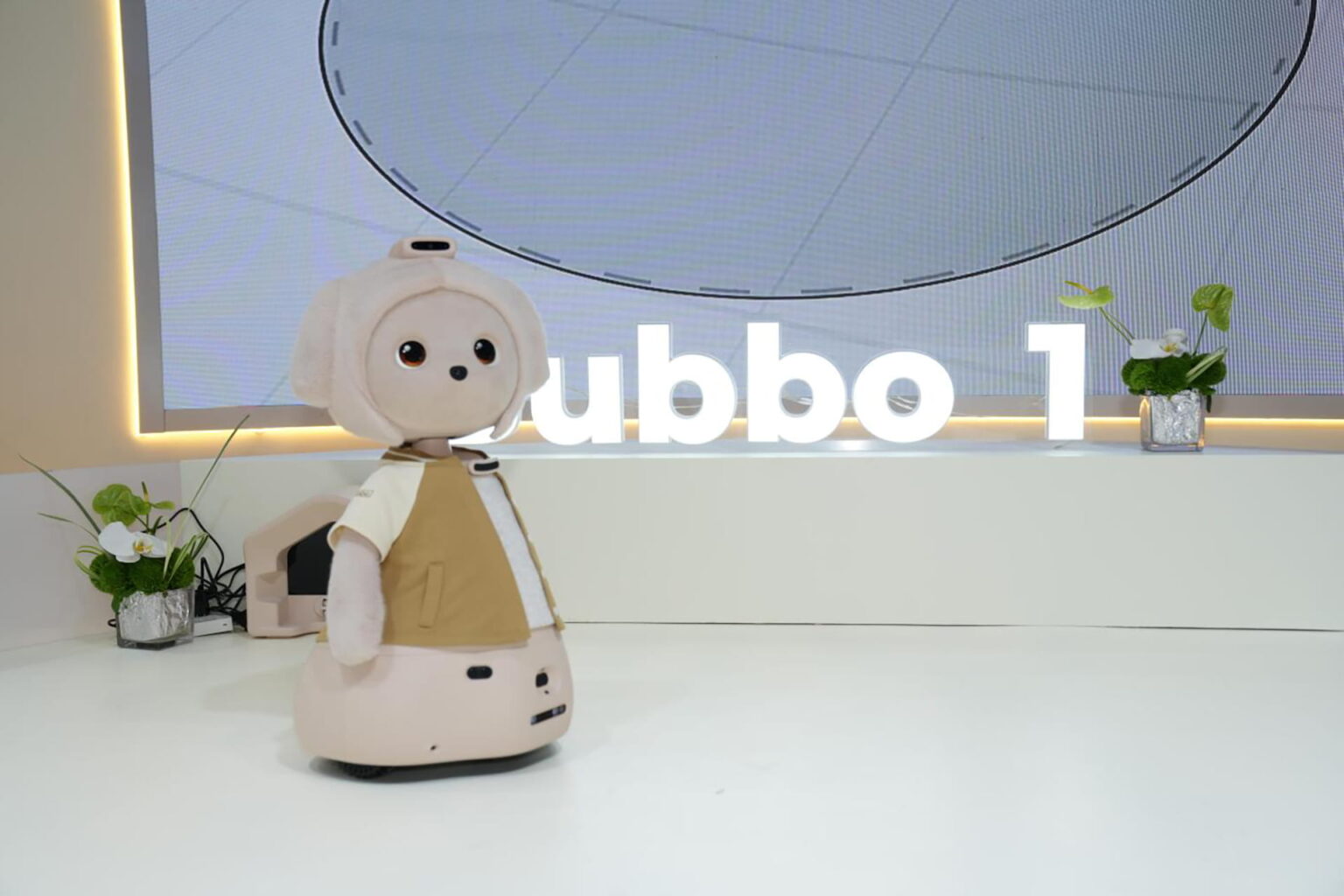
Cylingo offered the first in-person interactive demonstration of Buboo 1, its companion robot for the home, at this year’s World Artificial Intelligence Conference (WAIC).
When visitors stopped to watch, Buboo slowly approached and quietly started a conversation. When someone raised a hand to signal the end of the interaction, it withdrew to a corner and returned to standby mode.
Without a wake word, the robot completed several rounds of natural interaction by observing and responding to social cues.
Ren believes the industry is shifting away from electronic toys designed for demonstrations and toward intelligent home agents that convey a sense of presence. The next stage of competition, he said, will center on proactive multimodal perception, proprietary data from specific household scenarios, and models capable of retaining long-term emotional memories.
A robot that starts the exchange
Understanding Buboo begins with clarifying how it differs from most consumer robots.
Smart speakers, plush companion toys, and similar products generally follow the same interaction model: a user says a wake word, gives a command, and the machine responds.
That model works for fragmented use cases involving smartphones, automobiles, and other devices. But its weaknesses quickly become apparent when a product is placed in a home and expected to remain available around the clock.
When users forget to charge it, do not feel like speaking, or simply want to be left alone, the device may remain unused for long periods. Over time, it risks becoming little more than a dust-covered ornament.
Buboo is designed to break away from this command-triggered framework.
“Our first goal was to eliminate the wake word and enable the robot to initiate an interaction,” Ren told 36Kr. “A user’s facial expression, body movements, changes in physical distance, and other signals can all serve as meaningful inputs for Buboo. The system independently assesses the situation and determines how to respond.”
There is an important qualification to this “proactive interaction.” Buboo is not intended to start conversations indiscriminately or too frequently. It learns how different users prefer to interact and dynamically adjusts the frequency of its responses through an on-device memory model.
When a user tells Buboo, “I want to rest,” the system records the context of that interaction. If it later detects a similar situation, Buboo will become less likely to initiate a conversation.
Ren and his team believe this restraint is essential for a household robot. A device that remains in the home all day but repeatedly speaks, flashes lights, or displays notifications without regard for the situation would create a persistent psychological burden.
“It must know when to remain silent so that it can better respect the boundaries of an interaction,” Ren said.
This careful approach to interpersonal boundaries also defines Buboo’s intended role: a new kind of household companion that can read emotions and understand when to be present and when to withdraw.
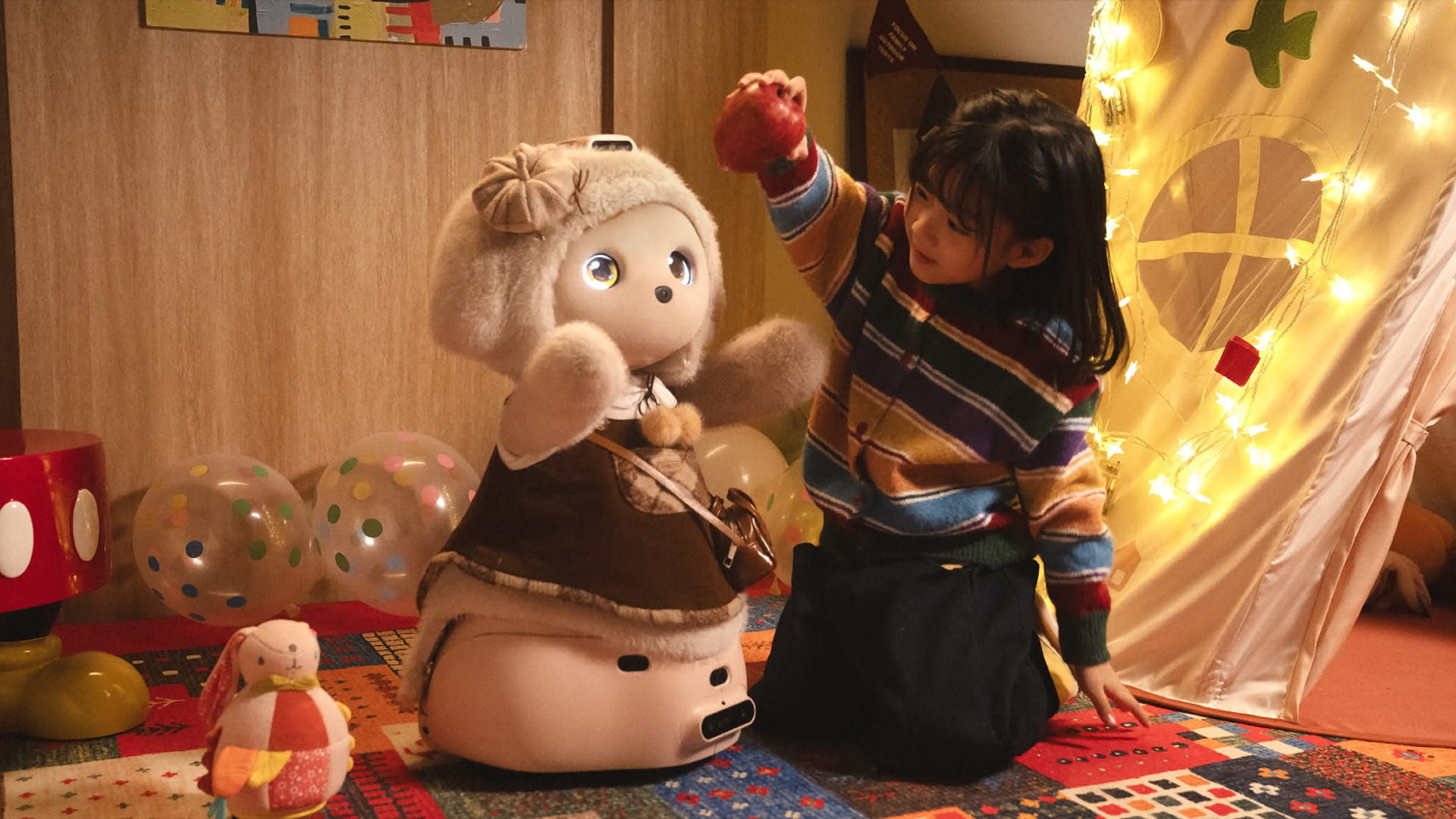
The same philosophy is reflected in the robot’s appearance. Buboo has a fully rounded body with no sharp edges. Its exterior is covered in soft, skin-friendly plush fabric, and its face features large, humanlike eyes.
It stands 65 centimeters tall, a specification the team did not choose arbitrarily. According to Ren, the team calculated that this was the optimal height for use in a home.
A height of 65 centimeters places Buboo roughly at eye level with a three-year-old child. If the robot were much shorter, objects on the floor and low furniture would repeatedly obstruct its field of view, reducing the completeness of the environmental information it could collect.
Its upright body gives it a wider field of observation, improving its ability to assess the positions of people and objects in the surrounding space.
But Ren believes enabling a robot to visualize the physical world is not enough. It also needs to understand what is happening in front of it. Who lives in the home? When has a visitor arrived? Is a child laughing because they are happy or because they are being mischievous? Is an older family member silent because they are tired or because they are feeling low?
These questions are too complex to resolve simply by connecting a general-purpose large language model to a voice interface.
Drawing on what it describes as a trillion-scale corpus of emotional-language data accumulated through more than a decade of operating Cece, Cylingo has developed a three-layer technical architecture for Buboo.
At the foundation is the Xinyuan large language model, which integrates a multi-agent architecture, retrieval-augmented generation, and long-term memory modules.
Its primary task is not to answer factual questions. Instead, it is designed to understand context, including whether a user is speaking in a hurried tone and why that person may be repeatedly mentioning the same word. These are situational cues that conventional models cannot easily learn from public text datasets.
The middle layer is the Cylingo multimodal large model. It covers visual reasoning, near- and far-field speech recognition, and humanlike speech synthesis. Its role is to translate the images, sounds, and distance information captured by the robot into semantic signals the system can understand.
The top layer is the Cylingo xyVLA embodied model, which connects the full sequence from seeing and understanding to acting.
In one representative scenario, a child runs up to Buboo holding a drawing but says nothing. The xyVLA layer first activates the visual module to identify the content of the picture. It then calls on the language model to generate an encouraging response.
Finally, the motion control module prompts Buboo to tilt its head, move closer, and respond in a humanlike voice. The entire sequence unfolds within a few seconds.
“Many people assume it is easy to make a robot speak,” Ren said. “But knowing when to speak, whom to speak to, and whether the response fits the immediate situation are the technical challenges the industry has generally struggled to overcome.”
The fundamental difference between Cylingo’s model suite and mainstream general-purpose large models lies in the data and context they are built to process.
General-purpose models are trained primarily on online text and lack three-dimensional context from real homes, including subtle facial expressions and body movements.
Buboo’s models, by contrast, are designed for real household environments. They can simultaneously process visual, emotional, and spatial information before producing a response, addressing some of the limitations that large language models face when deployed in homes.
A physical AI device for families
According to Cylingo, Cece has more than 60 million registered users, 80% of whom are women. More than one million people open the app each day to check their emotional state.
The product generates a nine-figure RMB sum in annual revenue for its parent company and has remained profitable, according to the company.
Since Cylingo established its robotics business, some observers have questioned why an internet company with steady revenue from online emotional services would enter the costly business of developing proprietary hardware.
Ren, however, noticed a clear pattern in the user lifecycle. Once users got married and started families, they opened Cece less frequently and spent less time on the app.
Online interaction could meet their need to talk through their emotions while dating. But after marriage, other emotional needs emerged, including gaps in companionship, anxiety around raising children, barriers to communication between generations, and the isolation experienced by older adults living alone.
Text-based interaction on a phone could not fully address these offline situations.
“Online intelligent agents address the need for one-on-one conversation,” Ren said. “But a family does not need another person to confide in. It needs an embodied companion that can participate in daily life, perceive emotions, and respond to subtle emotional needs.”
“That is the main reason we developed Buboo. It is a natural physical extension of Cece across the user lifecycle.”
Cylingo is transferring the emotional understanding it has accumulated over the years, including emotion detection, psychological support, and relationship insights, from a virtual environment into a physical AI device that can remain in the home around the clock.
Together, Buboo and the Cece app are intended to address users’ emotional needs as they move from dating to family life.
Based on its positioning as a physical AI device for the home, Buboo is currently being developed around three everyday household use cases.
The first is low-pressure language interaction. Unlike task-oriented K12 educational hardware, Buboo is intended to create a relaxed environment for early language exposure and routine parent-child conversations in a foreign language.
The second is sustained emotional support. Buboo incorporates the emotional companionship capabilities and emotion recognition technology accumulated through Cece.
It is primarily aimed at working parents and older adults living alone. Its intended uses include easing emotional distance between parents and children when working parents have limited time to spend with them, as well as addressing cognitive decline and social isolation among older users.
The third is a lightweight AI-powered visual recording feature. Users can trigger the camera simply by waving. Photographs are automatically converted into comic-style images and sent to the companion app.
Cylingo said all image data is processed locally on the device to protect the privacy of family members.
When users are away, the robot can also independently capture interesting moments involving older family members, children, and pets, and send them through the app. The feature is intended to reduce users’ anxiety about what is happening at home while they are away.
At WAIC 2026, the embodied intelligence sector had visibly split into two paths. One focuses on productivity applications such as factory production lines, logistics, and warehousing. The other concentrates on the home, emphasizing emotional companionship and communication across generations.
The second category is reaching an inflection point as it moves from toys toward embodied devices that appear more lifelike and present.
Cece addresses the desire to feel understood. Buboo is attempting to respond to the desire to feel accompanied.
The move may appear to be a departure from Cylingo’s existing business, but it is aimed at a more fundamental question: as society becomes increasingly atomized and emotional gaps widen within families, can a physical device provide a form of presence that is tangible, meaningful, and sustainable?
KrASIA features translated and adapted content that was originally published by 36Kr. This article was written by Huang Nan for 36Kr.