

How much should investors pay today for a company that might own an important layer of tomorrow’s technology stack?
In China, Unitree Robotics has offered one answer: quite a lot.
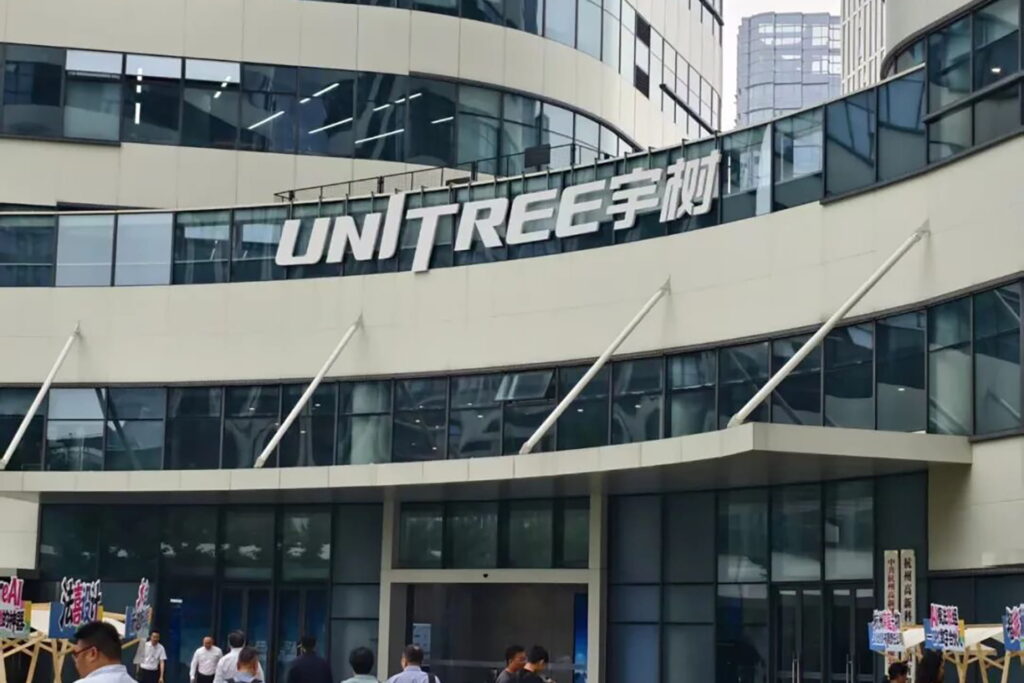
The humanoid robot maker went public in Shanghai on August 19 at a valuation of RMB 61 billion (USD 9.1 billion). That was already about 36 times its 2025 revenue of RMB 1.7 billion (USD 252.2 million), and 219 times its earnings.
One early investor estimated that a valuation of RMB 200 billion (USD 29.7 billion) after listing would be reasonable, with RMB 400 billion (USD 59.4 billion) possible in the short term.
That wasn’t far off. By the morning close on its first trading day, Unitree was worth RMB 357.5 billion (USD 53 billion), after its shares rose about 486%.
RELATED ARTICLE
It is easy to call that a bubble… But it’s a little more complicated than that.
It has spent a decade getting unusually good at the less glamorous parts of robotics: engineering products that can be manufactured, controlling costs, and building a supply chain around a category that barely existed when it started. That gives it something many newer startups still lack: evidence that difficult technology can be turned into products customers will actually buy.
An IPO can also turn one company’s valuation into everyone else’s benchmark.
A growing queue of Chinese companies developing emerging technologies is preparing to approach public markets. BrainCo, for example, which is commercializing noninvasive brain-computer interfaces, has reportedly filed confidentially for a Hong Kong listing.
These are very different businesses. But what links them is that investors have few established ways to price them. Current earnings only tell part of the story. Much of their value sits in expectations about markets that may take years to mature.
Unitree now sets a precedent for those expectations.
That can be useful. It can also be dangerous. One risk is that valuations rise much faster than companies can work through the slower business of product development, deployment, and commercialization. Robotics may eventually become a large market, but that does not mean every company with a large valuation today will get there.
Unitree’s surge, then, might not just be about robotics. It could also be an early test of how China’s public markets will price a new crop of technology companies whose promise is easier to see than their eventual earnings.
As more of them go public, that precedent is about to matter more.
Related readings
- Before Unitree started trading, investors were already debating whether it could be worth RMB 200 billion, RMB 300 billion (USD 44.5 billion), or more. Learn how those expectations took shape, and why classic valuation measures have become less useful.
- Winreal Investment backed Unitree before embodied intelligence became one of China’s hottest investment themes. Chairman Huang Jinping explains why experience still matters, and why rising valuations are no substitute for products that can work in the real world.
- Unitree’s debut has given investors a new benchmark just as more tech companies prepare to go public. BrainCo and DeepSeek show how that comparison could spread beyond robotics, and how scarcity, commercialization, and expectations may shape the valuations that follow.
Note: RMB figures are converted to USD at rates of RMB 6.74 = USD 1 based on estimates as of August 21, 2026, unless otherwise stated. USD conversions are presented for ease of reference and may not fully match prevailing exchange rates.