
China companies expand in the Middle East
Minieye to deploy autonomous vehicles in the Middle East
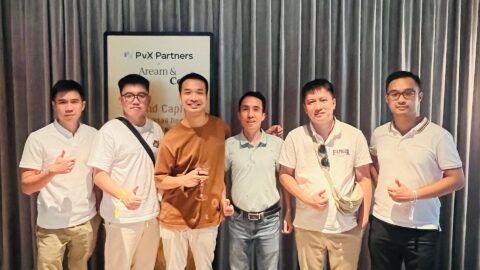
Minieye, a Chinese autonomous driving firm, has signed a memorandum of understanding (MoU) in Hong Kong with ewpartners (formerly eWTP Arabia Capital), marking a formal partnership focused on smart logistics and mobility solutions tailored for the Middle East.
Under the agreement, the two sides plan to deploy up to 1,000 Level 4 autonomous delivery vehicles across the region by 2030, with Saudi Arabia as a key initial market. The collaboration aims to explore scalable commercial operations, responding to rising demand for smart logistics solutions.
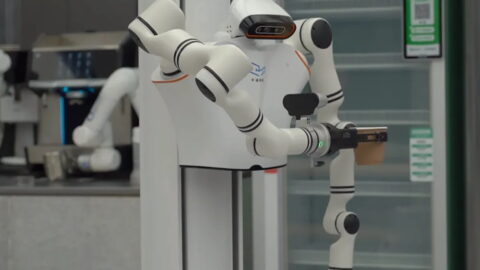
Minieye’s Xiaozhu driverless vehicle will be optimized for the Middle East’s high temperatures and sandy conditions, enabling use cases such as last-mile courier delivery, urban distribution, and retail logistics. Meanwhile, ewpartners will leverage its local network to support scenario deployment and regulatory compliance.
QIA anchors Eastroc Beverage’s Hong Kong IPO
On January 26, Eastroc Beverage finalized its cornerstone investor lineup for its Hong Kong IPO, with the Qatar Investment Authority (QIA) leading a USD 150 million investment.
The IPO attracted 15 cornerstone investors with total subscriptions exceeding USD 600 million, setting a record for Hong Kong-listed consumer companies. The deal also marked two firsts for QIA: its debut as a cornerstone investor in an IPO by a Chinese consumer-focused firm, and its first major allocation to China’s consumer sector.
Winona enters the Middle East
On January 27, Botanee Group announced that its flagship skincare brand Winona has officially entered the Middle East market, opening its first offline counter at Doha Mall in Qatar.
Winona has reportedly become the first Chinese functional skincare brand to complete product registration in Qatar, marking a milestone in its global expansion. Botanee attributed the successful market entry to its long-term investment in scientific research and regulatory capabilities, noting that all products have passed local market access requirements.
Redmi Note 15 debuts in Doha
Xiaomi has partnered with Safari Mall and Intertec Group to host the official launch of the Redmi Note 15 series at Safari Mall in Doha.
Positioned around flagship-level performance, durability, and affordability, the Redmi Note 15 series starts at QAR 759 (USD 206.7), with top-end configurations priced up to QAR 1,649 (USD 449.2). The launch further strengthened the retail partnership between the three companies, reinforcing their commitment to bringing high-value tech products to Qatari consumers.
Economic and policy developments
Dubai launches DIFC expansion in Zabeel
According to Arabian Business, Dubai has officially launched the expansion of the Dubai International Financial Centre (DIFC) in the Zabeel district, with a total investment of around AED 100 billion (USD 27.2 billion). The project is among the largest financial center expansion plans across the Middle East, Africa, and South Asia.
The DIFC Zabeel district spans roughly 7.1 million square feet, with total gross floor area reaching 17.7 million square feet. Once completed, it is expected to accommodate more than 42,000 companies and 125,000 professionals, with over one million square feet reserved for future technology and artificial intelligence development.
Dubai unveils the Gold District
Dubai has unveiled the Dubai Gold District, a dedicated cluster integrating gold, jewelry, and bullion trading, per Arabian Business. Developed by Ithra Dubai, the project consolidates retail, wholesale, and investment activities into a single zone, reinforcing Dubai’s status as a global gold and jewelry trading hub.
The district brings together more than 1,000 merchants and attracts buyers and traders from 147 countries, supported by hotels and tourism infrastructure designed to position Dubai as a global “city of gold.”
UAE Stargate project to exceed USD 30 billion
AGBI reported that total investment in the flagship Stargate data center project will exceed USD 30 billion, citing a statement by Omar Al Olama, UAE minister of state for AI. This represents a sharp increase from the initial USD 20 billion budget announced in early 2025.
According to Al Olama, the Stargate project located in Abu Dhabi will span approximately 19.2 square kilometers with a planned power capacity of five gigawatts. The initiative is said to reflect the UAE’s focus on large language models and data sovereignty, offering a form of “sovereign computing power” not driven solely by commercial returns. The first phase is scheduled for completion in the third quarter of 2026.
Hong Kong and UAE to cooperate on digital assets
According to Zhitong Finance, Hong Kong’s Securities and Futures Commission has signed an MoU with the UAE Securities and Commodities Authority to strengthen cross-border regulatory cooperation in digital assets.
The agreement marks the SFC’s first regulatory collaboration with an overseas authority covering regulated digital asset entities. Under the framework, both sides will establish mechanisms for consultation and information exchange related to cross-border digital asset activities, aimed at enhancing regulatory effectiveness, maintaining market order, and strengthening investor protection.
Dubai launches Dubai+ platform
Dubai has launched Dubai+, a new streaming platform operated by Dubai Media Incorporated, according to AGBI. Positioned as a family-friendly digital entertainment service for Arabic-speaking audiences, Dubai+ will compete with players such as MBC Group, beIN Media Group, OSN, Starzplay, and Netflix.
The platform focuses on locally produced UAE content, with particular emphasis on child-safe and family viewing. Dubai Media said it plans to continue investing in original local productions, strengthening Emirati storytelling as the region accelerates its shift from traditional television to streaming services.
Riyadh plans 300,000 new housing units
Saudi Arabia’s minister of municipal and housing affairs, Majed Al-Hogail, has said Riyadh plans to deliver more than 300,000 housing units over the next three years, reinforcing its position as a real estate hub, according to Saudi Gazette.
Speaking at the fifth Real Estate Future Forum, Al-Hogail said strong housing demand, ongoing infrastructure expansion, and regulatory reforms have been driving growth in Saudi Arabia’s property and real estate sector. As of 2025, mortgage lending reportedly reached approximately SAR 900 billion (USD 240 billion), accounting for around 27% of total bank lending.
Saudi Arabia introduces mining and industrial skills framework
Saudi Arabia has introduced a comprehensive skills framework for the mining and industrial sectors, per Arab News. Issued by the Ministry of Industry and Mineral Resources, the framework standardizes job roles and talent development across more than 500 industrial positions, 300 professional categories, 600 skills, and 900 occupational certifications.
Minister Bandar Alkhorayef said the framework will help strengthen workforce planning, training systems, and career pathways, enhancing industrial competitiveness.
Saudi FDI stock reaches SAR 1.05 trillion
Data from the Saudi Central Bank indicates that foreign direct investment (FDI) stock in Saudi Arabia reached SAR 1.05 trillion (USD 280 billion) by the third quarter of 2025, up about 10% year-on-year, according to Arab News. Total FDI rose 17% to SAR 3.2 trillion or around USD 800 billion.
Officials said the growth reflects the effectiveness of Saudi Vision 2030 in attracting long-term foreign capital, with an official target of USD 100 billion in annual FDI inflows by 2030.
Saudi Arabia launches national privatization strategy
According to the Saudi Gazette, Saudi Arabia has formally launched implementation of its national privatization strategy, following cabinet approval on November 25, 2025.
Announced by finance minister Mohammed Al-Jadaan, the strategy marks a shift toward execution and results, following years of institutional groundwork. Since 2018, Saudi Arabia has advanced around 200 privatization projects with a total investment of roughly SAR 800 billion. The government said the strategy aligns closely with its Saudi Vision 2030 goals, aiming to improve infrastructure quality, enhance public services, and expand private sector participation.
Saudi Arabia restructures Neom project
Saudi Arabia has begun a structural review of its flagship Neom project, with internal assessments underway following delays, cost overruns, and tighter fiscal conditions.
The review includes redesigning the linear city The Line, significantly reducing its planned length from the originally envisioned 170 kilometers and placing greater emphasis on existing infrastructure. Project representatives told the Arab media that Neom remains committed to national objectives and long-term value creation, but will move forward in phases with greater focus on market readiness and sustainable impact.
Saudi Arabia moves to strengthen gaming startups
Saudi Arabia has signed an MoU aimed at strengthening its video game startup ecosystem, according to Arab Press. The agreement brings together government agencies and investment partners to support early-stage studios, expand financing access, and accelerate commercialization.
Officials said gaming and digital entertainment are key pillars of economic diversification, supported by Saudi Arabia’s young population and policy backing.
Qatar steps up push for tech and innovation investment
According to The Peninsula, Qatar is building a more flexible regulatory framework to adapt to the fast-growing digital economy and attract high-quality investment in technology and innovation.
Speaking at the Doha Legal Forum, Qatar’s minister of state for foreign trade affairs, Admed bin Mohammed Al Sayed, said that Qatar has signed 189 bilateral and multilateral agreements in recent years, covering investment protection, economic cooperation, technology collaboration, and trade.
Invest Qatar to host startup pavilion at upcoming summit
Invest Qatar will host a “Startup Qatar” pavilion at Web Summit Qatar 2026, according to Gulf Times, showcasing the country’s expanding startup and innovation ecosystem.
Ali Alwaleed Al-Thani, CEO of Invest Qatar, said the summit has become a key platform for strengthening Qatar’s position as a global tech and innovation hub.
Vodafone to exhibit at Web Summit Qatar 2026
According to The Peninsula, Vodafone Qatar is participating in Web Summit Qatar 2026, held from February 1–4, at the Doha Exhibition and Convention Center, where it is hosting an exhibit showcasing next-generation connectivity and digital solutions for enterprise growth.
The exhibition includes an interactive component focused on startups and small and medium enterprises, demonstrating how integrated solutions can support businesses across different stages of growth.
QFC, ADGM, DIFC agree on cross-border data flows
The Peninsula reported that the Qatar Financial Centre (QFC) has reached mutual recognition of data protection adequacy with Abu Dhabi Global Market (ADGM) and DIFC. The milestone establishes a framework of mutual trust among the three financial centers for cross-border data flows, strengthening regional data protection standards and regulatory cooperation.
QFC data protection commissioner Daniel Patterson said the move will simplify international data transfers within the region, reduce compliance costs, and uphold a high level of rights protection and enforcement. He added that the initiative is expected to boost confidence in digital trade and reinforce the Gulf region’s position as a secure, innovation-driven platform for growth and investment.
This article was adapted based on a feature originally written and published by Al Shasia. KrASIA is authorized to translate, adapt, and publish its contents.