

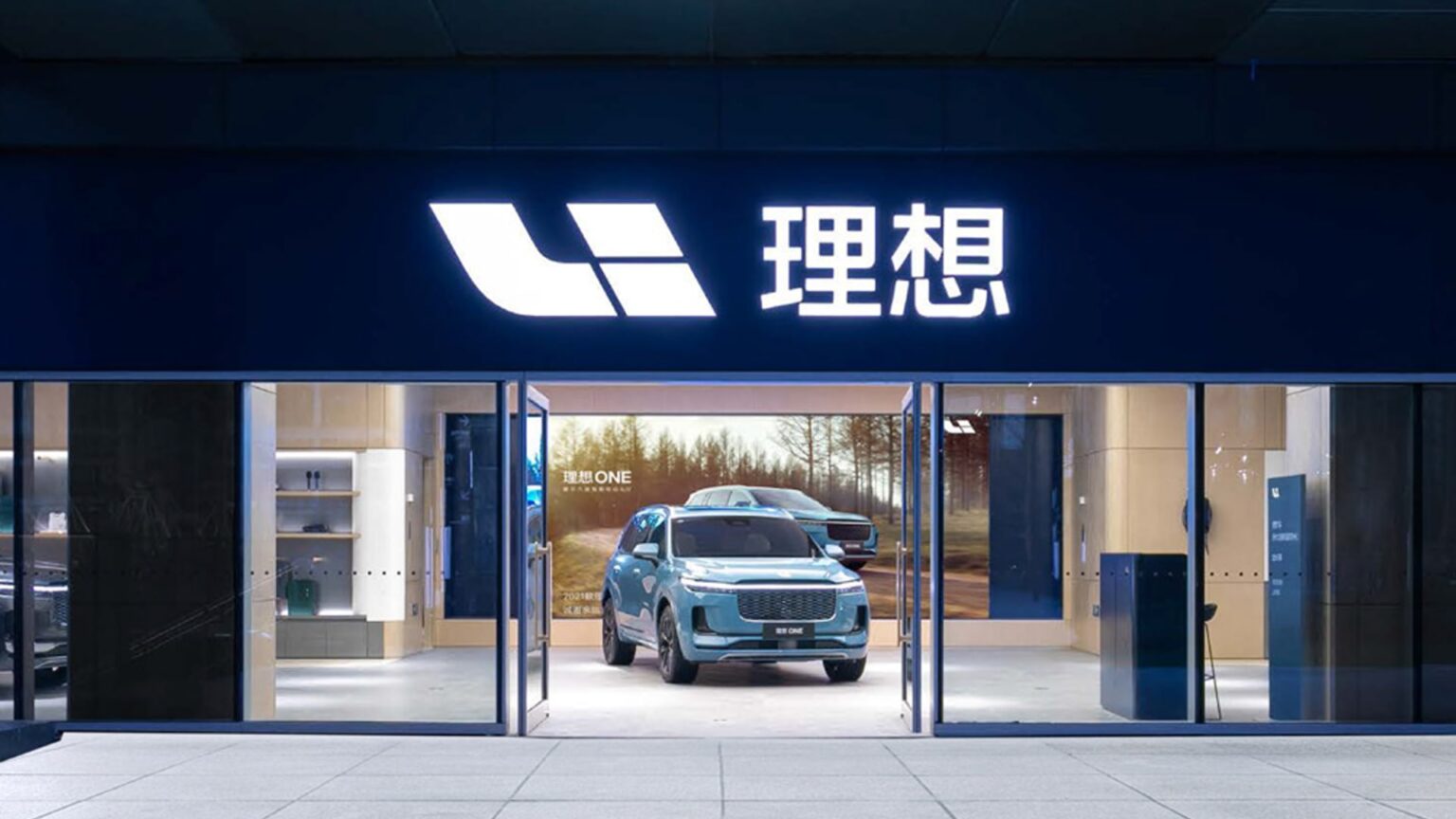
Li Auto is setting up an artificial intelligence R&D center in Silicon Valley, 36Kr has learned from multiple sources. The center will focus on smart driving technologies, and recruitment has been underway for several months.
According to a person familiar with the matter, Li Auto has long maintained a lean North American R&D team supporting chip development and other intelligent systems. “This time, the plan is to upgrade the Silicon Valley team into a full-fledged R&D center,” the source said.
36Kr understands that the new center will primarily focus on autonomous and assisted driving, with Li Auto seeking senior algorithm engineers with experience in advanced AI research.
Since October, Li Auto has completed channel and product rollouts in four overseas markets, including Egypt and Kazakhstan. Its global expansion strategy places similar emphasis on research. The company already operates R&D centers in Germany and the US.
With the addition of the Silicon Valley facility, Li Auto will run four R&D hubs worldwide. Its first overseas R&D center, in Munich, Germany, opened in January 2024 and focuses on advanced design, power semiconductors, chassis systems, and electric drive technologies. Domestically, the company operates R&D centers in Beijing and Shanghai, which are responsible for core technology development and vehicle engineering.
Home to Tesla, Waymo, OpenAI, and Nvidia, Silicon Valley remains one of the world’s densest concentrations of AI talent. For Chinese automotive companies, a presence in the region offers closer proximity to frontier research and experienced engineers.
Among China’s newer electric vehicle manufacturers, Nio and Xpeng established Silicon Valley operations earlier, Nio in 2014 and Xpeng in 2018. Li Auto’s later entry, with a focus on autonomous driving, reflects intensifying competition among Chinese automakers, as industry executives increasingly point to smart driving as a core area of focus next year.
That competitive pressure is rising across the industry. This year, Huawei launched ADS 4.0, its Level 3 autonomous driving solution for highway scenarios. Vehicles including the Maextro S800 and Aito M8 are now equipped with hardware capable of supporting Level 3 functions.
In March, Li Auto introduced its vision-language-action (VLA) model, which jointly models visual, linguistic, and motion data. By incorporating language modeling and reasoning chains, the system is designed to interpret complex driving environments, infer causality, and make decisions with less reliance on rule-based logic, potentially improving performance in unfamiliar scenarios.
On September 10, Li Auto began a broad rollout of the VLA model to users. CEO Li Xiang said on social media that the released version was a lite edition, with several key functions not yet activated.
Integrating large models into autonomous driving systems remains technically challenging. While the potential benefits are clear, reliable real-world performance depends on continued advances in algorithms, computing power, and data, validated through large-scale road testing.
China’s limited pool of engineers with experience spanning both large models and autonomous driving has made overseas hiring increasingly attractive. Against that backdrop, Li Auto’s move into Silicon Valley could prove strategically significant.
RELATED ARTICLE
Xpeng, whose core strength lies in assisted driving, has operated R&D centers in North America since 2018. Its teams in Silicon Valley and San Diego together number about 100 people. Even during periods of cost control, when hiring was restricted, the company retained the group.
That North American team has since become central to Xpeng’s driving technology development, handling algorithm work while China-based teams focus on requirements definition and testing.
In September, CEO He Xiaopeng allocated additional computing resources to the North American team to accelerate deployment of the company’s foundation model, which is being developed for in-vehicle use within the year.
The project is led by Liu Xianming, an executive Xpeng recruited from Cruise. According to company disclosures, the cloud-based foundation model has 72 billion parameters, is trained in the cloud, and is designed to transfer knowledge to a smaller model optimized for in-vehicle chips.
“The car-side model will likely have around seven to eight billion parameters, and internal expectations are high,” one person familiar with the project told 36Kr. By comparison, Li Auto’s deployed VLA model operates with roughly four billion parameters.
Xpeng’s sustained investment in North America has extended beyond vehicles. The company also operates a robotics team of about 20 people in the region. When Xpeng unveiled its first humanoid robot, Iron, in November, its share price rose, reflecting investor interest in its broader strategy.
At the start of 2025, Li Xiang outlined an updated corporate vision, saying Li Auto aims to become an “AI company” over the next decade. Business units have since reevaluated their operations through an AI-first framework. The VLA model marks an initial step, while the Silicon Valley center signals a deeper commitment.
Xpeng CEO He has said publicly that multimodal learning, world modeling, and long-horizon planning, capabilities often associated with artificial general intelligence (AGI), remain underdeveloped and may take years to mature or require fundamental breakthroughs.
As the smart vehicle framework continues to evolve, automakers face a narrowing margin for error. The ability to identify, absorb, and deploy new technologies may increasingly determine long-term competitiveness. That dynamic may help explain why China’s leading EV companies are converging on Silicon Valley, positioning themselves closer to one of the world’s most concentrated sources of AI innovation.
KrASIA Connection features translated and adapted content that was originally published by 36Kr. This article was written by Xu Caiyu for 36Kr.