



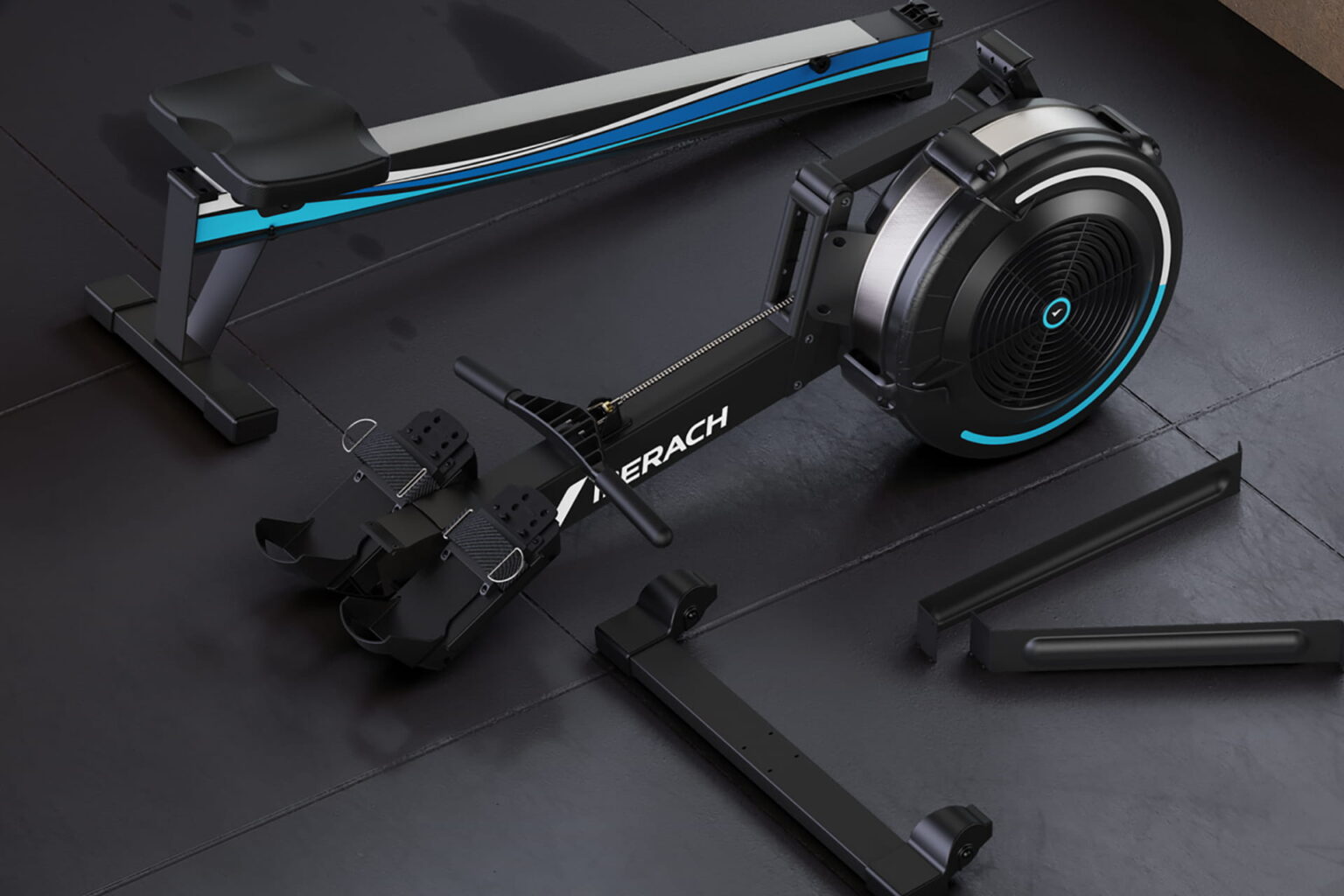
During Amazon’s Prime Day sale in 2023, shoppers bought nearly 5,000 rowing machines from a Hangzhou-based fitness brand that had entered overseas markets just two years earlier. Priced at USD 400, Merach’s NovaRow 950 was an early test of founder and chairman Luo Weibo’s belief that a Chinese equipment maker could compete in the US on design and performance.
For years, China manufactured much of the world’s fitness equipment, while American and European brands shaped the home workout experience, from exercise machines to the classes displayed on their screens. When Peloton’s market value plunged from its peak, many observers saw home fitness as a pandemic-era trend that had run its course. Yet Merach’s overseas sales have grown at a compound annual rate of about 75% over the past two years, according to 36Kr.
In 2026, Merach ranked first by market share on Amazon’s US site in stationary bikes, rowing machines, and elliptical machines. Its rowers also held leading market shares on several Amazon sites in Europe.

Why start with a USD 400 rower?
In China, Merach had already ranked first in sales of elliptical machines and massage guns on JD.com and Tmall. Rowers and stationary bikes were gaining traction, and annual gross merchandise value exceeded RMB 1 billion (USD 149.6 million). But China’s fitness equipment market was caught in a price war, while weak consumer spending after the pandemic added further pressure.
Rather than test lower-priced products in Southeast Asia first, Luo targeted US and European households willing to spend USD 200–600. The US is the world’s largest fitness equipment market, with a compound annual growth rate of about 10%, according to research by 36Kr. Luo reasoned that a product capable of winning over American buyers would have a better chance of succeeding elsewhere once adapted to local preferences.
Merach focused on cardio machines, which commanded higher prices and gave the company room to differentiate itself through quality, design, and workmanship. Buyers in this segment also placed greater importance on brands.
Rowers had already sold well in China. When Merach studied competing models overseas, it identified dated styling, inconsistent build quality, and insufficient resistance as areas for improvement. These became the design priorities for the rower that gained traction during Prime Day. Merach subsequently applied the same approach to elliptical machines, stationary bikes, and treadmills, while also targeting business customers.

The rower’s success also exposed a logistical challenge. Bulky fitness equipment is expensive to transport, both to overseas warehouses and from those facilities to customers’ homes.
Among the US delivery services Merach used, additional charges applied when shipments exceeded GBP 70 (USD 91.7) and GBP 130 (USD 170). European logistics providers had different thresholds. Merach retained molds for components such as instrument panels and motor covers while adjusting the dimensions and weight of other parts to meet local shipping requirements.
Overseas warehouses helped reduce fulfillment costs and shorten delivery times. In 2027, the company plans to establish its own offices in the US and Europe, hiring local employees to manage branding, distribution, and after-sales support.
Giving customers a reason to keep exercising
Luo describes a familiar pattern among home fitness buyers: an initial burst of enthusiasm, a few workouts, and eventually a machine left gathering dust. Without guidance, exercising at home can become repetitive. For manufacturers, losing contact with customers after a purchase also reduces the likelihood of repeat sales.
Merach has assembled an R&D team of more than 200 employees and invested several hundred million RMB in R&D. It developed the Merach app for artificial intelligence-guided workouts and established a gaming team to build an app that allows users to compete against one another in virtual recreations of real-world settings.
Its AI-powered coach, Mia, is already available. Another planned coaching product will use indicators including heart rate and fatigue to personalize individual workouts and longer-term training plans. Luo expects software to become a revenue stream in its own right as higher-end machines account for a larger share of sales.
Three years ago, Merach launched Xenjoy, a premium connected fitness brand targeting households and commercial buyers. Its equipment is now used in commercial venues and gyms operated by companies and public institutions. The Xenjoy team has also worked with the Training Bureau of the General Administration of Sport of China to research and develop equipment for athletes preparing for competition.
Luo sees further opportunities in China as younger consumers who grew up exercising gain purchasing power. Over the next three to five years, Merach intends to build on that demand domestically while competing overseas through a combination of equipment, coaching, and software. Part of that strategy involves developing a library of workout content for overseas users comparable to those offered by established international brands.
On TikTok, local creators demonstrate Merach’s equipment in homes resembling those of prospective buyers. Differences in home layouts and exercise habits inform both product adjustments and the content featured in live streams.
Merach works with specialist fitness creators and smaller accounts documenting home workouts. Through its TikTok Shop operations, the company has contacted more than 13,800 creators to date.
By Luo’s account, building a global brand begins with proving that customers are willing to buy a product. Refining the equipment and establishing a reputation come next. The final step is giving customers a reason to keep using it long after it arrives.
KrASIA features translated and adapted content that was originally published by 36Kr. This article was written by Feng Yaling for 36Kr.
Note: GBP, RMB figures are converted to USD at rates of GBP 0.76 = USD 1 and RMB 6.68 = USD 1 based on estimates as of November 26, 2026, unless otherwise stated. USD conversions are approximate and, where appropriate, rounded for ease of reference. They may not fully match prevailing exchange rates.