


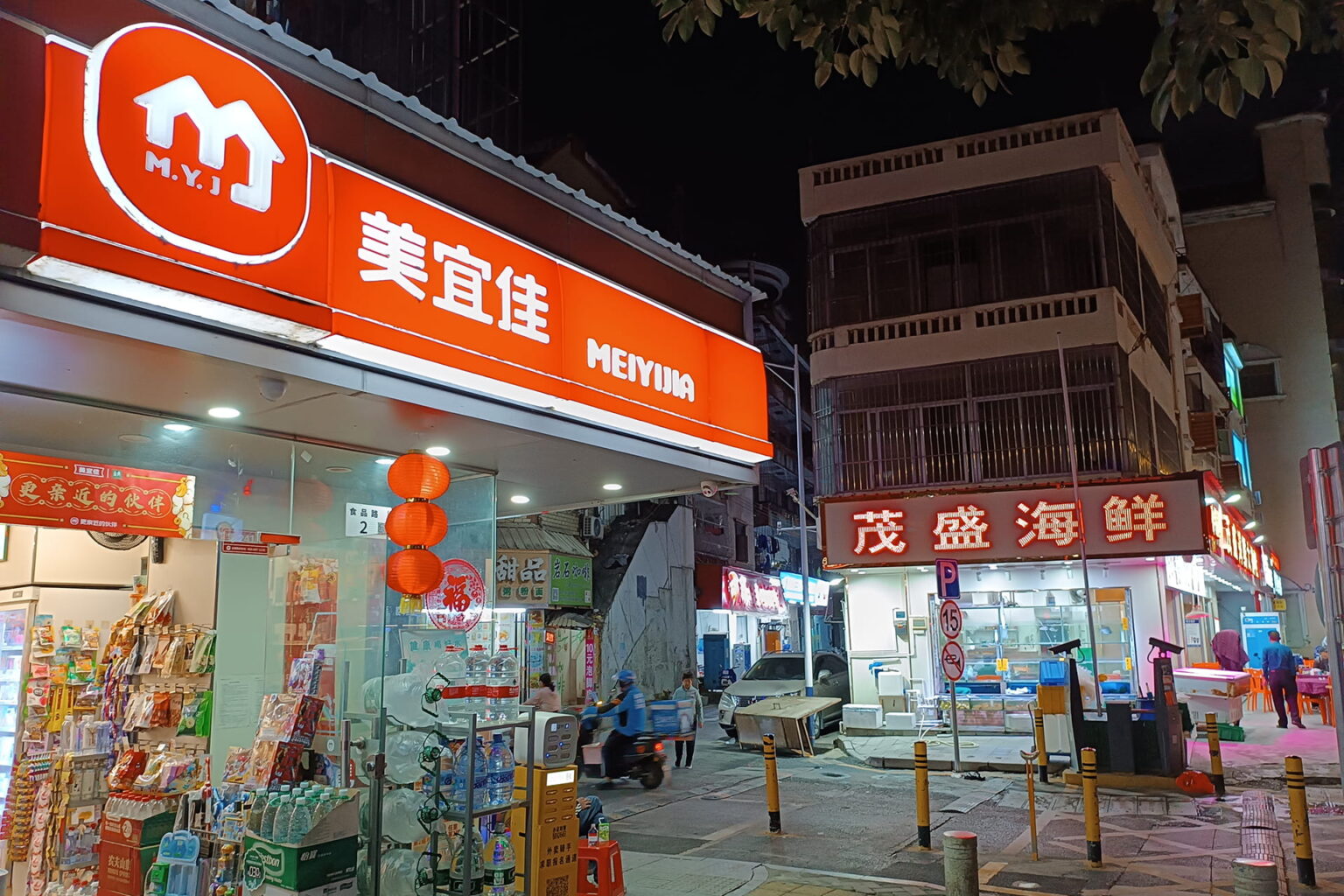
Chinese convenience stores are steadily losing customers, according to the latest industry data, as speedy and low-priced delivery apps redefine the very concept of convenience for consumers.
For the first half of the year, 72% of convenience store chains reported a decrease in customers compared to the same period in 2025, according to a survey conducted this summer by the China Chain Store & Franchise Association (CCFA). This is nearly double the 37% reporting declines in the previous year’s survey.
Half of the respondents reported a drop in sales and only a quarter reported a rise in net profit. The survey questioned 60 member companies that run convenience stores.
According to the CCFA, average daily customer traffic at convenience stores came to 284 last year, down nearly 20% compared to 2023, during the early days of the COVID-19 recovery.
Average customer spending fell by more than 20% compared with 2022. Daily sales per store dropped for six consecutive years through 2025.
Compared with Japan, the consolidation of convenience stores into large chains has not progressed as much in China. Many stores have not made improvements to operational efficiency, such as the introduction of self-checkouts.
While the government is encouraging wage hikes for employees, the management of chain stores and franchises is becoming increasingly strained.
China’s convenience store market has expanded along with the country’s overall economic growth and urbanization. By the end of last year, the top 100 chains had a network of 207,510 locations, or nearly quadruple the number in Japan.
Although convenience stores have marketed themselves as being close by and handy, a powerful challenger to that retail format has emerged in recent years.
“Going to a convenience store is a hassle. I have to walk there,” said a 37-year-old Dalian resident. Before the Covid-19 pandemic, she would stop by a convenience store to buy groceries and daily necessities, but nowadays she visits the shop less frequently, instead using instant delivery apps for food. She began using these services regularly after spending more time at home during the pandemic.
According to China’s Ministry of Commerce, the market for instant delivery retail services came to RMB 117.9 billion (USD 17.6 billion) in 2019, before the pandemic. It quadrupled in the following three years and is now expected to exceed RMB 1 trillion (USD 149.2 billion) in 2026.
To measure the level of convenience offered by instant delivery apps, Meituan, a leading option, was tested in mid-September in the city of Dalian in Liaoning. Orders included beverages, daily necessities and electrical appliances from different stores.
Beverages arrived the fastest. An order from a liquor store less than one kilometer from the appointed address in Dalian’s city center arrived in about six minutes. The delivery fee, including the priority delivery option, was just RMB 4.8 (USD 0.7), or less than a dollar. Daily necessities arrived in about 12 minutes from a drugstore more than two kilometers away, with a delivery fee of RMB 2.8 (USD 0.4) with the priority option.
The reason the instant delivery services are so fast and affordable in China is the vast number of gig workers. Including drivers for delivery and ride-hailing, the number of those workers across China is estimated at around 100 million, and they have become an integral part of the urban landscape.
The current economic downturn has been cited as a factor in young people entering this labor pool in droves after being unable to find their desired jobs after graduating from college.
Convenience stores are trying to recapture demand from instant delivery services by accepting orders via apps. But as of 2025, less than 40% of the companies surveyed by CCFA offered instant delivery.
By their nature, convenience stores have limited product selection due to their small floor space, making it difficult for them to compete with supermarkets and specialty stores in the instant delivery arena.
One way to win back customers would be to offer unique products that can only be purchased at a chain. But the sales ratio of private-label products in the Chinese convenience store industry is less than 5%, compared with the 40–50% sales ratio of private-label goods at Japanese convenience stores.
This article first appeared on Nikkei Asia. It has been republished here as part of 36Kr’s ongoing partnership with Nikkei.
Note: RMB figures are converted to USD at rates of RMB 6.70 = USD 1 based on estimates as of October 16, 2026, unless otherwise stated. USD conversions are approximate and, where appropriate, rounded for ease of reference. They may not fully match prevailing exchange rates.