


Several Chinese automakers have finalized suppliers and are preparing for mass production of electromechanical brake systems (EMB), several industry sources reported. Among them are Li Auto, Xpeng, Chery, and Huawei’s consortium of partner brands under the Harmony Intelligent Mobility Alliance. The first EMB-equipped models are expected to debut in the coming year.
Yet even before mass production begins, the EMB supply chain has already seen its first lawsuit.
On November 21, Bethel Automotive Safety Systems announced it had filed a lawsuit against Orient Motion, accusing the company of infringing multiple EMB-related patents.
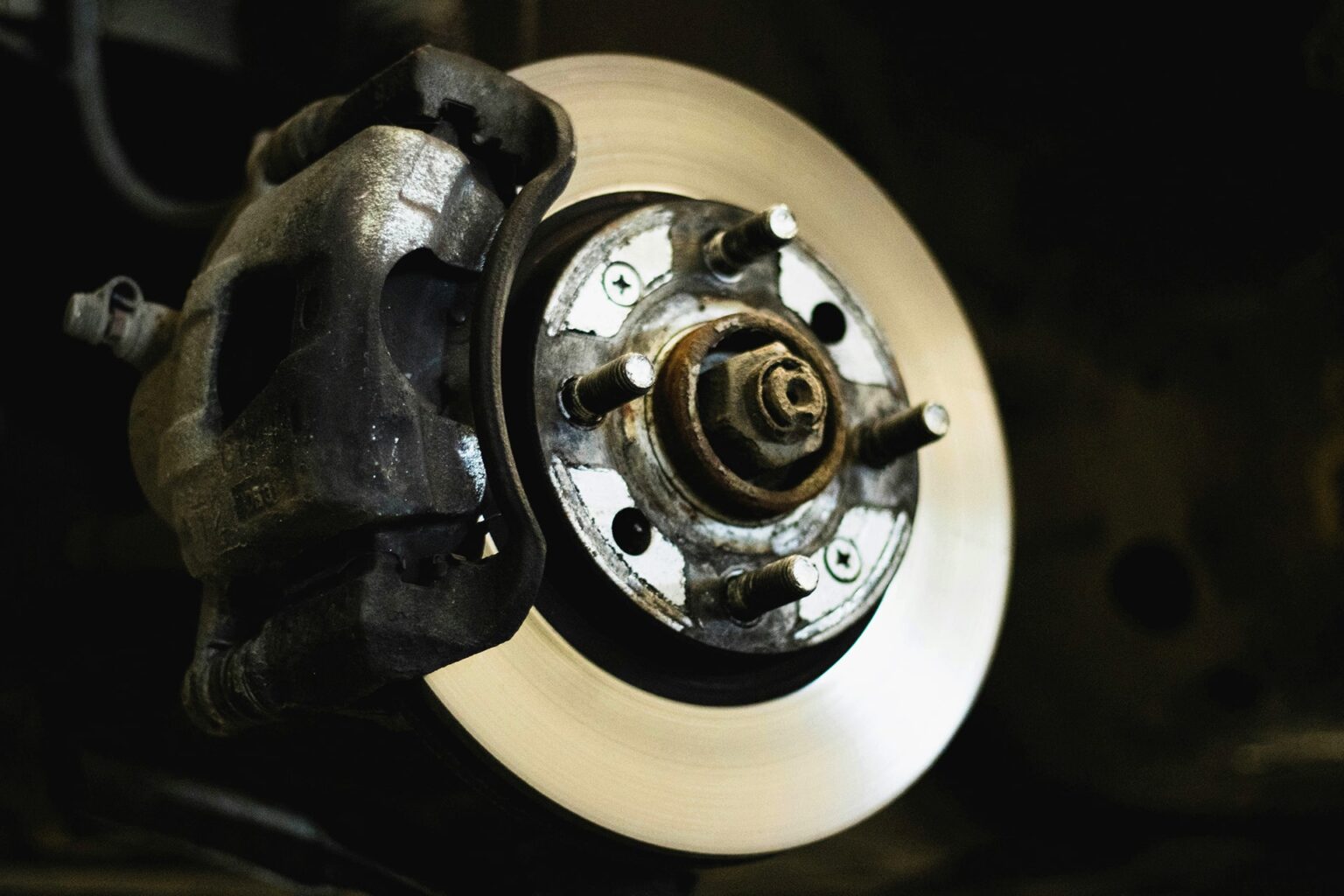
EMB represents the latest evolution of brake-by-wire technology. It removes the hydraulic connection between the brake pedal and caliper, replacing it with electronic signals and motor-driven actuation.
Orient Motion, founded in August 2023, is a newcomer to the brake-by-wire field. The company has completed four funding rounds, with Meituan becoming its second-largest shareholder through Hanhai Information Technology.
By contrast, Bethel, founded in 2004, specializes in automotive chassis systems and went public on China’s A-share market in 2018. Chery holds a 14.56% stake through a wholly owned subsidiary, making it Bethel’s second-largest shareholder.
In its announcement, Bethel disclosed that Orient Motion’s chairman, Yan Shifu, previously served as general manager at Bethel, where he oversaw the brake-by-wire business. Another Orient Motion director, Yang Kun, also worked at Bethel as head of technical solutions, managing the development of its brake-by-wire products.
Within a year of leaving Bethel, both Yan and Yang filed multiple EMB-related patent applications. Bethel claims these inventions are directly connected to work conducted during their tenure and therefore qualify as service inventions, meaning patent ownership should legally belong to Bethel.
IP disputes involving former executives launching startups are not new in China’s automotive sector. In 2018, Geely sued its former vice president, Shen Hui, alleging that after founding Weltmeister, he had illegally obtained and used Geely’s trade secrets related to chassis technology for new energy vehicles. The court ultimately ordered Weltmeister to pay Geely around RMB 640 million (USD 89.6 million) in damages.
Once a court determines that trade secrets have been infringed, defendants often face substantial penalties, imposing a heavy burden for startups that have yet to turn a profit. However, financial compensation is rarely the only objective. Behind many such cases lies a deeper struggle over market share and technological leadership.
At the center of Bethel’s lawsuit against Orient Motion is EMB, a core innovation within the rapidly expanding brake-by-wire segment and a key focus for high-end automotive brands.
Unlike traditional chassis systems, brake-by-wire technology transmits electronic signals instead of relying on mechanical or hydraulic connections. This approach not only simplifies complex brake lines but also allows tighter integration with vehicle control systems, enabling advanced autonomous driving functions.
According to insights cited by 36Kr from undisclosed investment firms, China’s brake-by-wire chassis market could reach RMB 150 billion (USD 21 billion) by 2030. In recent years, about six new entrants, including Orient Motion, have joined the field, collectively raising more than RMB 6 billion (USD 840 million). Their investors range from traditional automakers such as Chery, BAIC, and FAW to major tech firms like Meituan and Baidu.
Meanwhile, automakers such as BYD, Xiaomi, Nio, Huawei, and Toyota are accelerating their own brake-by-wire R&D.
In November 2024, Xiaomi revealed its development roadmap for chassis-by-wire systems, including hydraulic-free brake-by-wire, steer-by-wire with an adjustable steering ratio between 5:1 and 15:1, and a fully active suspension system. All remain in the pre-research stage.
BYD has filed patents related to steer-by-wire systems and has already achieved large-scale production of brake-by-wire products through its subsidiary, FinDreams Technology, under the One-Box label. It is now moving toward mass production of next-generation EMB systems.
Earlier this year, Nio became the first Chinese automaker to bring such technologies to market. Its ET9 model, featuring steer-by-wire and active suspension, has begun deliveries.
Steer-by-wire removes the mechanical link between the steering wheel and the tires. Driver input is transmitted electronically, reducing the steering range to just 0.6 turns lock-to-lock and enabling turns and U-turns without hand crossing.
Following the ET9’s debut, China revised its GB17675-2025 standard, which outlines basic requirements for automotive steering systems. The update sets new specifications for steer-by-wire technology and will take effect on July 1, 2026. Nio’s ET9 served as a reference model during the revision process.
The new framework is expected to encourage broader adoption of steer-by-wire systems, while 2026 is projected to mark the breakthrough year for EMB.
In May this year, China finalized standard GB21670-2025, which specifies technical requirements and testing methods for passenger car braking systems. Taking effect on January 1, 2026, the regulation provides clear policy support for EMB mass production.
Unlike hydraulic braking systems, EMB positions a motor directly on the caliper, using electronic signals to drive braking actions. This design eliminates hydraulic lines, increases integration, and improves precision. When scaled, EMB can shorten OEM (original equipment manufacturer) development cycles and reduce costs by about 30%.
More importantly, EMB’s precision and responsiveness make it an ideal actuator for advanced autonomous driving systems.
Globally, suppliers such as Bosch, Continental, and ZF Friedrichshafen already have EMB product lines. Earlier this year, ZF disclosed that it had secured EMB orders covering five million vehicles.
In China, companies linked to Great Wall Motor (GWM) and BYD have introduced their own EMB products. Bethel’s portfolio now includes traditional hydraulic systems, One-Box brake-by-wire products, and next-generation EMB solutions. New entrants like Orient Motion focus exclusively on advanced brake-by-wire technologies, including EMB.
According to 36Kr, companies at various growth stages—including Li Auto, Xpeng, GWM, and Chery—are racing to bring EMB-equipped models to market. Both Bethel and Orient Motion have secured initial customers.
Although regulatory clarity has opened the door for EMB commercialization, many technical standards remain to be finalized. The first companies to achieve mass production are expected to influence future industry benchmarks and gain a competitive edge. For startups, early mass production also validates technical capabilities and strengthens fundraising prospects.
“Orient Motion’s arrival has shaken up the market,” one industry insider told 36Kr. “It has driven EMB prices to the floor.”
EMB technology changes the structure of braking systems and raises technical requirements for certain components, making R&D and testing costly in the early stages. When produced at a scale of around 100,000 vehicles, each EMB unit still costs roughly RMB 1,000–1,500 (USD 140–210) more than a traditional hydraulic system.
“From giants like ZF to local players such as Bethel, everyone takes EMB very seriously,” the insider added. “Developing this technology requires major investment, so early quotes were naturally high, but Orient Motion has pushed prices to a new low.”
An R&D engineer at an OEM told 36Kr that most EMB solutions developed in China are technically comparable, with no clear leader in performance or safety.
Even as price wars appear to have cooled, OEMs continue to pressure suppliers to cut costs, and competitive pricing remains critical to winning new business.
Another source revealed that Orient Motion plans to begin mass production of its EMB systems in the first quarter of next year. Its aggressive pricing and timeline have already attracted attention from several automakers. “There’s no question that Orient Motion and Bethel are competing head-to-head for customers,” the source said.
The dispute between Bethel and Orient Motion captures the competitive dynamics shaping China’s rapidly evolving automotive technology sector. As the industry shifts from mechanical systems to software-defined vehicles, traditional supply chain boundaries are breaking down, creating new opportunities for startups to claim market share.
In this transitional moment, both established and emerging players are fighting to secure their place. Regardless of the lawsuit’s outcome, EMB’s arrival appears inevitable, and the dispute reflects the ambition and rivalry propelling China’s automotive supply chain beyond import substitution and toward setting global standards.
KrASIA Connection features translated and adapted content that was originally published by 36Kr. This article was written by Xu Caiyu for 36Kr.