



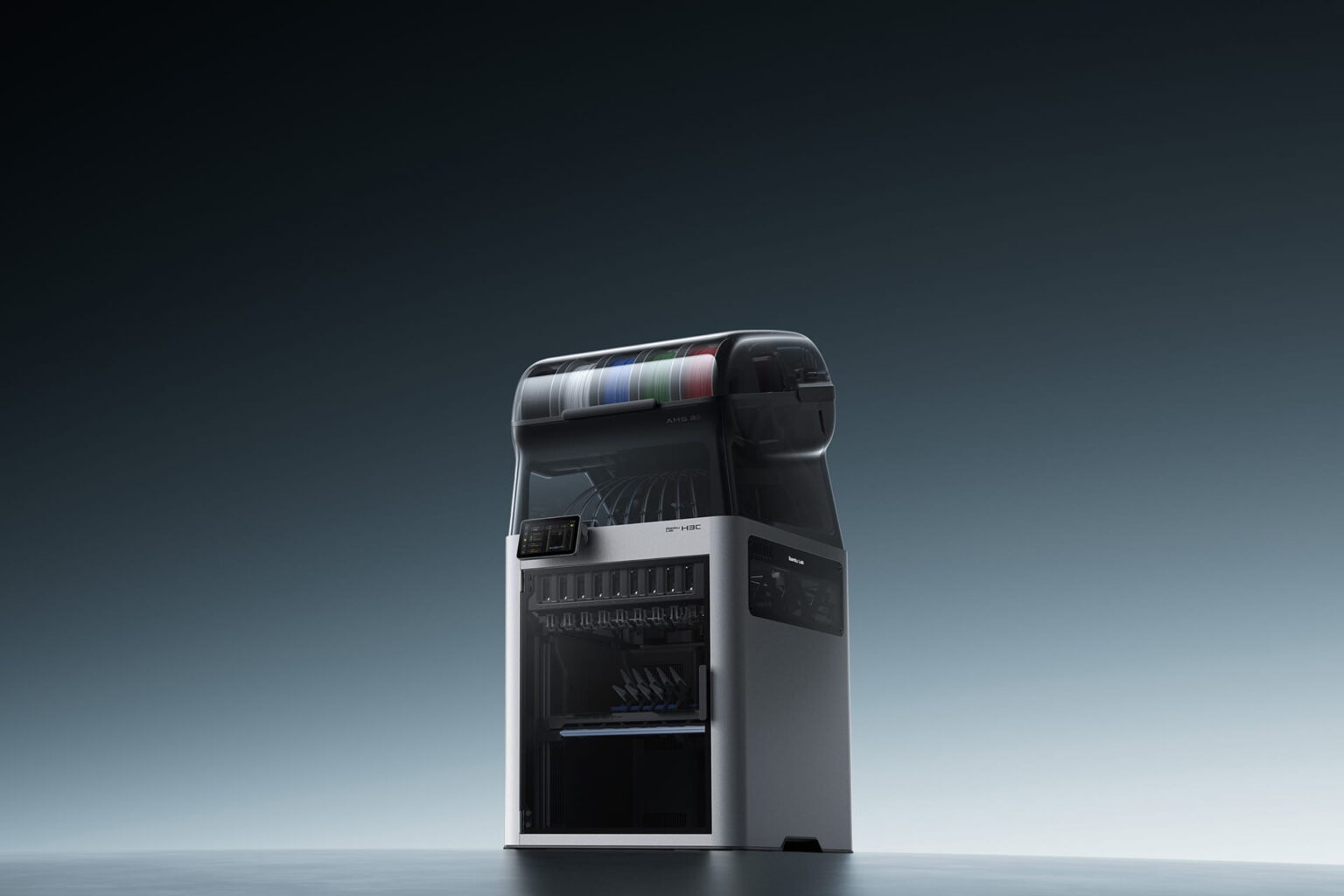
Bambu Lab launched the H3C, its third-generation flagship 3D printer, on November 3. The standard package starts at RMB 16,499 (USD 2,470) in China, with a launch discount of RMB 1,000 (USD 150).
The H3C is designed to address a familiar challenge in multi-material 3D printing: switching between filaments. Each time a design requires a different material, the printer must deliver the appropriate filament to the nozzle. To streamline this process, Bambu Lab combines its Swaptek nine-tool changer with a top-mounted AMS 3H filament management system and a FlexFeed extruder that supports two filament diameters.
Each of Swaptek’s nine print tools has a dedicated filament path and heater, allowing the next tool to preheat with its filament already loaded. According to Bambu Lab, switching takes as little as six seconds, eliminating the need to retract and cut one filament before feeding in another. The company puts material waste at just 38 milligrams per change.
Maintaining precision across these swaps presents another challenge. Each replacement nozzle must align with the previous one to keep printed layers consistent. Bambu Lab has reduced the weight of the toolhead assembly and introduced automatic calibration and micron-level adjustments to maintain alignment.
The H3C also reduces the space required for filament storage and handling. While earlier configurations relied on multiple separate AMS units, the AMS 3H sits atop the printer, storing, drying, and feeding filament from a sealed enclosure.
FlexFeed introduces a 2.85-millimeter filament path alongside the conventional 1.75-millimeter option. Thicker filament is less prone to buckling, allowing the extruder to apply greater force and push more molten material through the nozzle. Bambu Lab said the H3C can print thermoplastic polyurethane, or TPU, with a hardness as low as Shore 75A, a measure of material softness and flexibility.
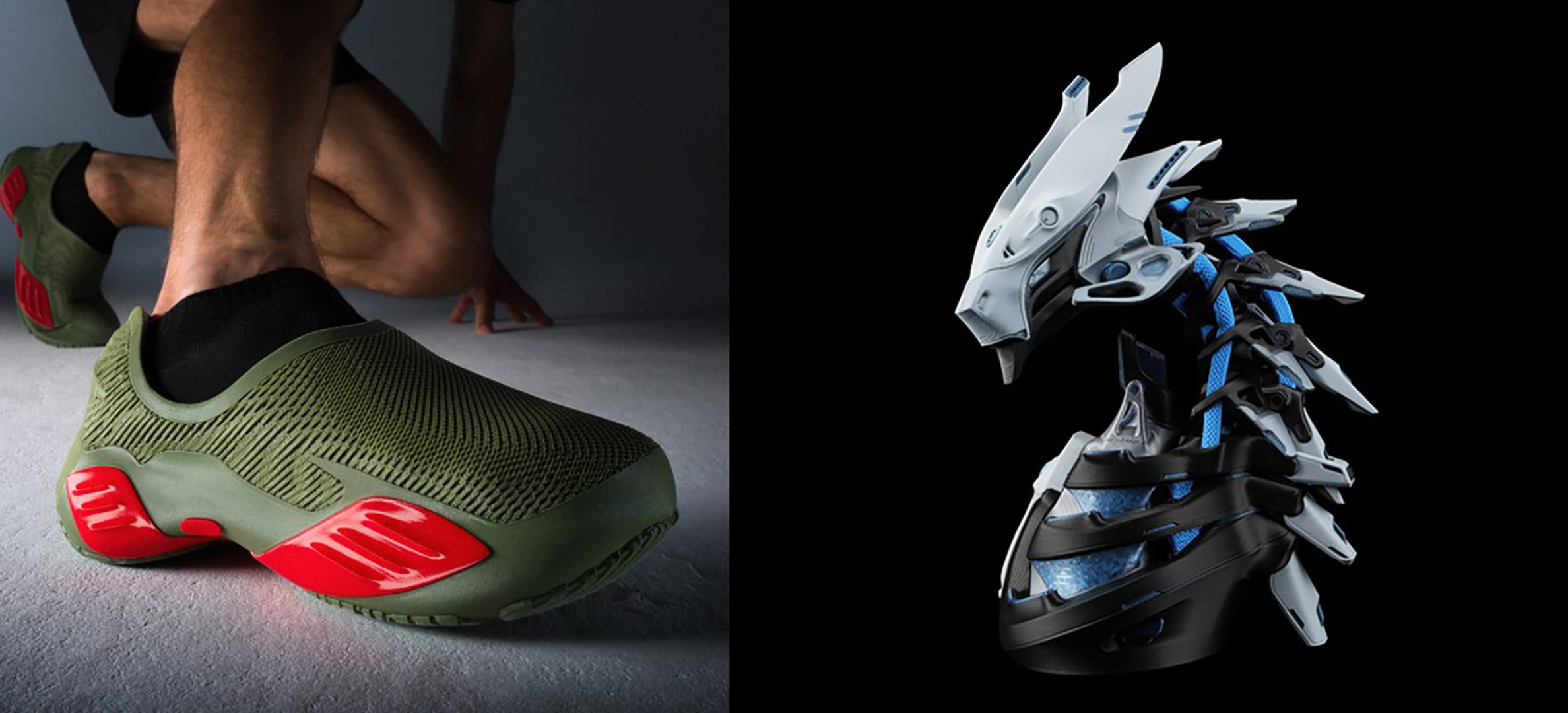
Consider footwear. A designer could print flexible cushioning beneath the foot alongside rigid structural supports, reducing the number of separate components that need to be assembled.
The H3C also supports color layering using cyan, magenta, yellow, black, and white (CMYKW), as well as different nozzle sizes within a single print job. Beyond 3D printing, it can automatically switch between tools for cutting, drawing, embossing, and cold foil stamping.
At RMB 1,500 (USD 224) more than its predecessor, the H2C, the H3C offers a broader range of materials and fabrication capabilities. For buyers accustomed to comparing desktop 3D printers primarily on speed and precision, the value of that premium may depend on how much the additional flexibility reduces material waste, manual intervention, and post-print assembly.
KrASIA features translated and adapted content that was originally published by 36Kr. This article was written by Peng Li for 36Kr.
Note: RMB figures are converted to USD at rates of RMB 6.69 = USD 1 based on estimates as of November 5, 2026, unless otherwise stated. USD conversions are approximate and, where appropriate, rounded for ease of reference. They may not fully match prevailing exchange rates.