



Mounting concerns over the profitability of artificial intelligence are weighing on Chinese stock markets despite homegrown AI being crucial to the country’s strategy of technological self-reliance.
China Merchants Securities International has warned investors of increasing volatility in AI-related stocks, advising them to “pay greater attention to defensive stocks in the sector.” The Chinese-affiliated brokerage has put on its buy list technology companies that have been overlooked amid the AI craze, such as NetEase, a leading internet and video gaming company.
Concerns about the earnings prospects of AI players are growing in China, following a selloff of US AI stocks driven by questions over whether their massive infrastructure investments will pay off.
The CSI Artificial Intelligence Index, which tracks major Chinese AI-related companies, has once fallen nearly 40% from its peak in June, led by state-backed semiconductor companies such as Cambricon Technologies, often dubbed “China’s Nvidia.”
Electronic components makers such as Eoptolink Technology have also seen their share prices drop. Having grown rapidly thanks to their roles in supply chains serving US technology giants’ AI data centers, these companies are now facing headwinds from the wavering US equity market.
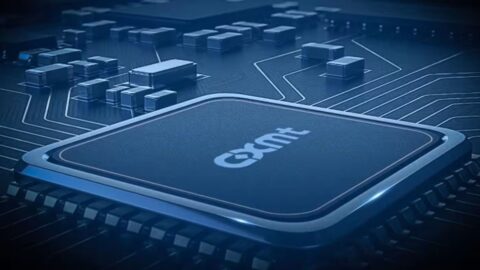
Shares of Chinese memory chip manufacturer ChangXin Memory Technologies (CXMT) have fallen 30% since late September, even after the state-backed buying picked up last month.
CXMT drew global attention after announcing a technological breakthrough last week that greatly boosts its chips’ memory density. Markets reacted by dumping shares of rival chipmakers, including Japan’s Kioxia Holdings.
But CXMT’s announcement failed to stem selling pressure. The drop in CXMT’s shares cost it its place as the China’s most valuable listed company following its blockbuster IPO in July.
Chinese President Xi Jinping is promoting a “self-reliance and self-improvement” strategy aimed at building supply chains that are less dependent on the US State-backed funds are trying to nurture high-tech companies, with AI among the sectors receiving priority support.
But this support presents a unique barrier to private investors seeking to bet on Chinese AI. “Chinese authorities intend to expand their AI globally, while maintaining control over it,” said Minoru Nogimori, a senior economist at the Japan Research Institute.
DeepSeek and other Chinese AI companies are seeking to expand their international footprint by offering low-cost models. As with the electric vehicle industry, where manufacturers seek to expand their global market share at all costs, profitability could become a secondary concern for China’s AI companies, Nogimori said.
The interests of policymakers seeking market-share growth could clash with investors’ demand for evidence of sustainable earnings. As the US continues to draw investment in its AI industry from around the world, China may not be able to match its rival’s financial resources.
The weakness in AI stocks has also spread to Hong Kong, where fundraising has recently hit record highs.
In January to September, a total of HKD 690.7 billion (USD 88 billion) was raised in the stock market, roughly up 60% from a year earlier. The figure has already exceeded the total funds raised in 2025; it is the largest amount for the nine-month period on record, according to Chinese research firm Wind.
Despite the IPO boom, the tension between China’s national strategy and market forces is already evident in Hong Kong. Since 2023, when a property downturn shook China’s stock market, Beijing has scaled back IPO approvals on the mainland to avoid a share glut, even as it continues to use Hong Kong as a key venue for equity fundraising.
AI-related companies account for most of the surge in fundraising activity. For example, fiber-optic component maker Zhongji InnoLight raised HKD 53.4 billion (USD 6.8 billion) through its Hong Kong listing in July, making it the city’s biggest IPO since Alibaba Group’s debut in 2019.
However, newly listed stocks are showing unusual weakness. IPOs typically attract strong investor interest but nine of the 14 companies that have gone public since September ended their first day of trading below their offer prices. That is due in part to declining AI stock valuations as well as growing concerns about an oversupply of new share issues.
Last month, Jiangsu Slender West Lake Culture and Tourism postponed its planned HKD 277 million (USD 35.3 million) listing on the Hong Kong Stock Exchange, which had been scheduled for October 30. The state-owned travel agency cited “several factors, including the prevailing market conditions,” for its decision.
“In the short run, market conditions may delay companies’ decisions to go public,” said Raymond Cheng, chief investment officer for North Asia at Standard Chartered. Moonshot AI and DeepSeek are reportedly planning IPOs in Hong Kong and Shanghai, respectively.
Stock price declines are also slowing the flow of capital from mainland China that has helped underpin the Hong Kong market. Such flows accounted for 21.4% of trading by value on the Hong Kong market in the April-June quarter, down 5.2 percentage points from its peak in July-September of 2025.
Equity investors say Chinese authorities have attempted to lure foreign capital back to Hong Kong by creating a boom atmosphere in its market through an injection of funds from the mainland. But friction between China and the US is hampering Beijing’s effort to attract investment from the West.
“I don’t think that we are going to see big funds in the US come … back to buy China [companies]. They had bought Alibaba, Tencent in the past, but that’s not going to happen [again],” said Bo Zhuang, global macro strategist at US investment manager Loomis, Sayles & Co.
This article first appeared on Nikkei Asia. It has been republished here as part of 36Kr’s ongoing partnership with Nikkei.
Note: HKD, RMB figures are converted to USD at rates of HKD 7.85 = USD 1 and RMB 6.68 = USD 1 based on estimates as of October 29, 2026, unless otherwise stated. USD conversions are approximate and, where appropriate, rounded for ease of reference. They may not fully match prevailing exchange rates.