


In tech, there was little ambiguity about 2025’s defining trend: embodied intelligence.
Data from CVSource shows that 168 companies in the embodied intelligence sector secured funding in 2025, raising RMB 32.9 billion (USD 4.6 billion) in aggregate, a year-on-year increase of 291%. The financing boom continued into 2026. In January alone, nearly 20 new deals in China’s embodied intelligence sector were disclosed, and nine-figure RMB rounds became increasingly common.
In 2025, embodied intelligence, framed as a future-facing field, was included in policy recommendations tied to China’s 15th five-year plan, which called for promoting embodied intelligence as a new driver of economic growth. More recently, the Ministry of Industry and Information Technology said it would use humanoid robots as a focal point to accelerate the broader sector’s development.
Even so, doubts began to surface beneath the optimism. Talk of a “winter” or a market bubble started to circulate. Technical approaches had yet to converge. Commercial pathways remained difficult to close, and viable application scenarios were still hard to define. As valuations climbed, some observers began to predict a downturn.
Others disagreed.
“That’s definitely not the case,” Zhang Wei, founder of LimX Dynamics, told 36Kr. “I don’t think 2026 will be a winter [for the embodied intelligence sector] at all,” Zhang said. “We’ll see proof-of-concept validations across many segmented scenarios. They may not scale immediately, but by 2027, I believe they will. I’m very optimistic about that.”
Among emerging players, LimX has stood out as an unusual contender.
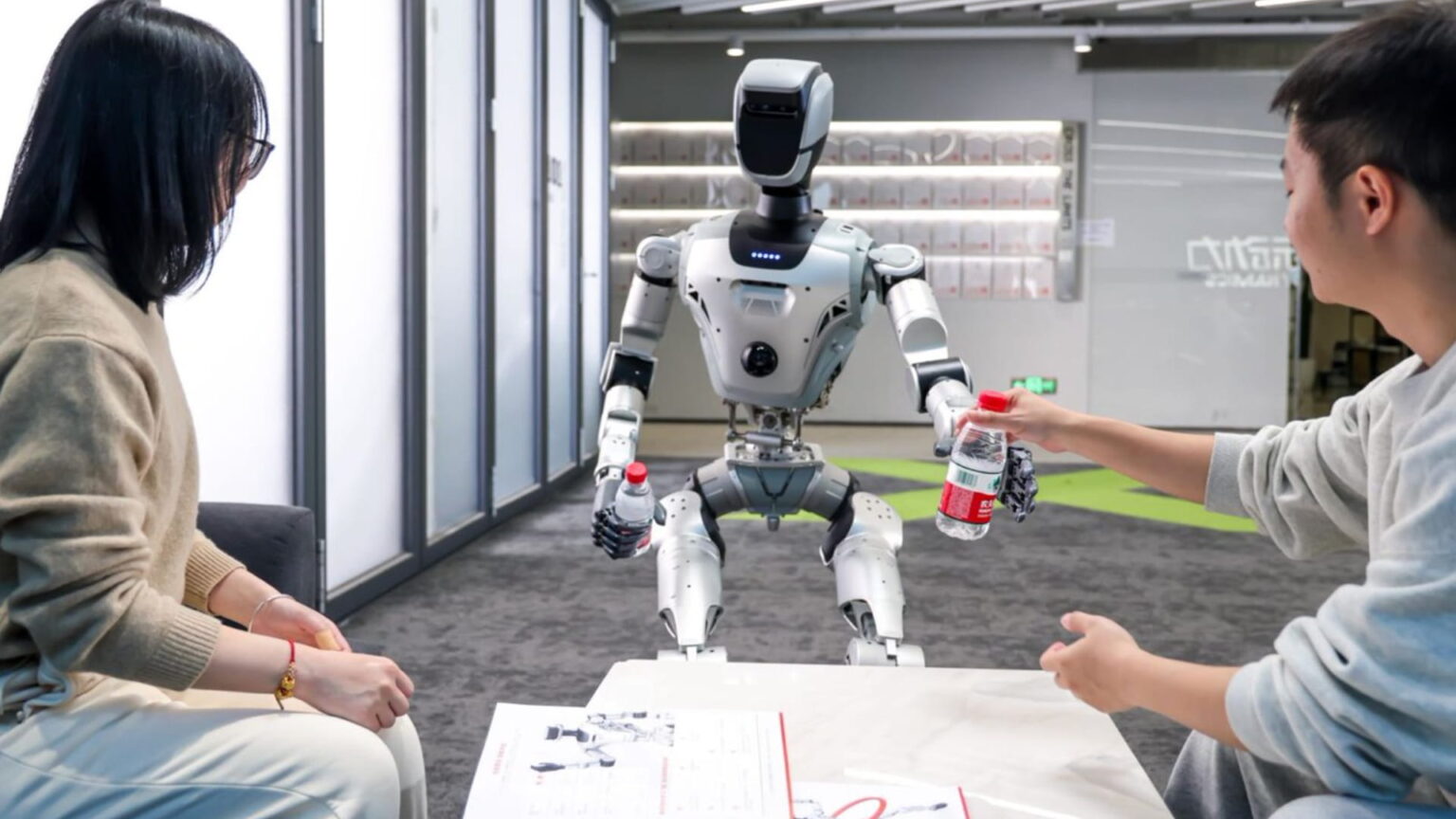
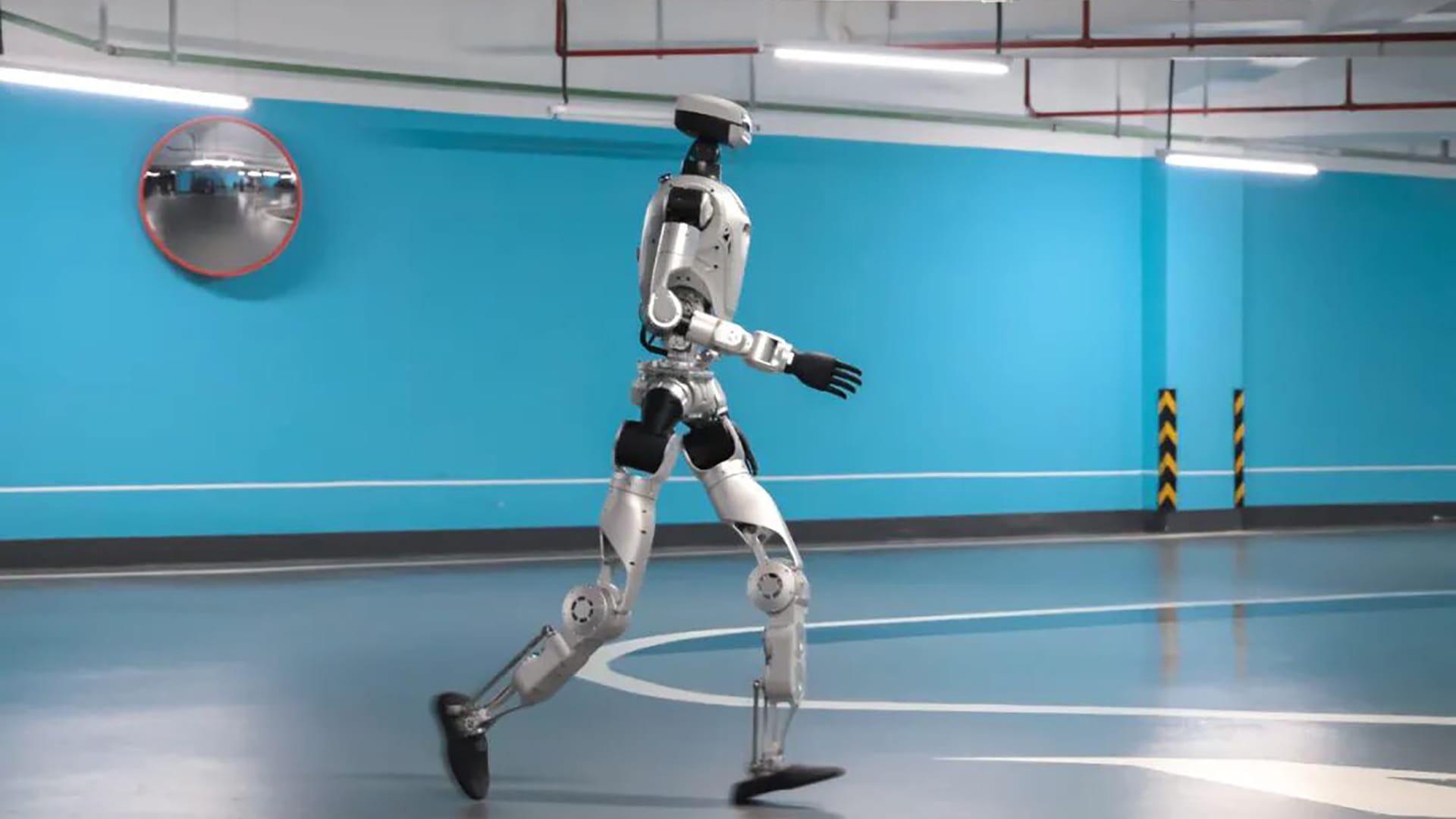
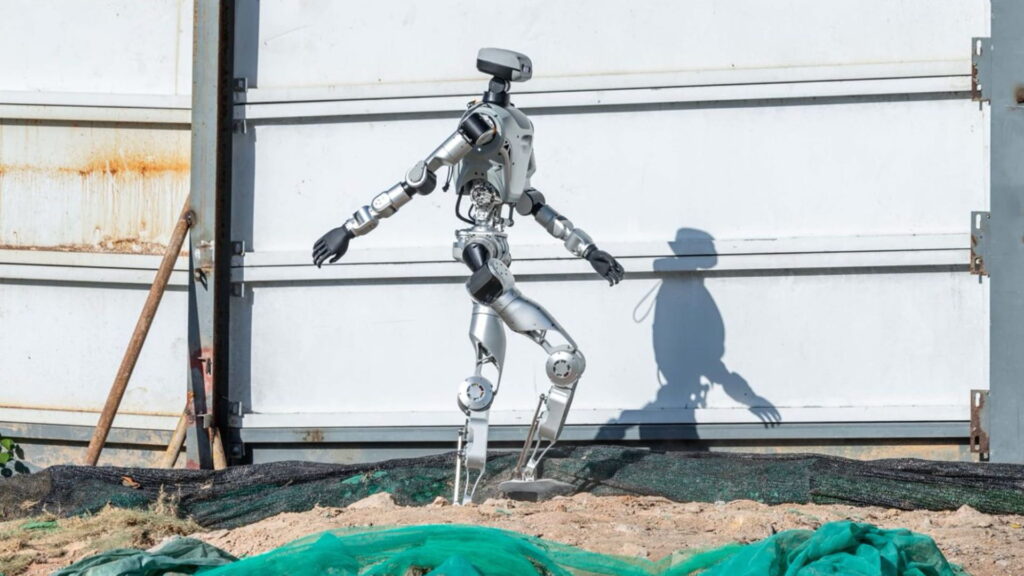
Earlier this year, during a research tour of Guangdong by Li Qiang, premier of China’s State Council, LimX was among the invited companies. Zhang demonstrated the company’s humanoid robot, Oli, climbing stairs, a straightforward on-site illustration of LimX’s work on real-time motion generation and its integrated cognitive-motor control framework.
Less than two weeks later, LimX formally released the technology and named it Cosa, positioning it as an agent-native operating system designed for robots operating in the physical world.
One way to think about Cosa is as a humanoid robot’s nervous system. By fusing cognition with motion control, it is meant to help robots plan and execute actions in tandem.
Zhang believes that 2026 will be the year humanoid robots begin taking on real-world use cases, with agent-native operating systems serving as a key enabler. In his view, the industry should shift from isolated model performance to system-level agent capabilities. Along that path, he said LimX has delivered an original breakthrough.
Equally striking is Tron, the company’s multi-form embodied robot released last December.
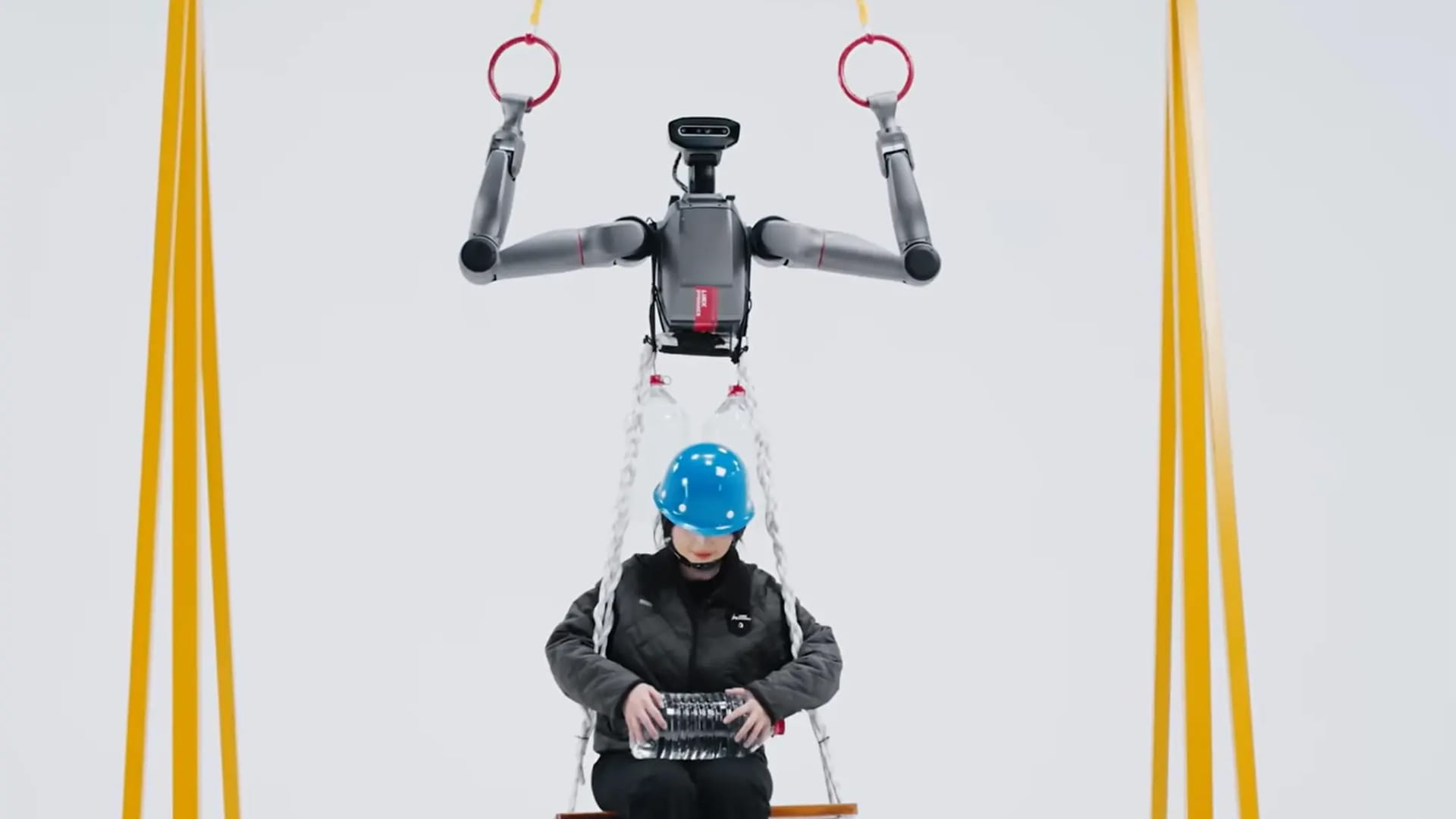
As the field grows crowded with increasingly similar designs, Tron aims to differentiate through a modular build. Developed on a single robotic base, it is designed to switch between dual-arm, bipedal, and wheeled-leg configurations, while also supporting reconfiguration into humanoid and quadruped forms. The idea is to push as much generality as possible into one platform. By lowering the cost and barrier to testing real-world deployment scenarios, LimX said Tron reduces the friction of experimentation.
From Tron to Cosa, LimX presents itself as a company oriented around foundational bets, prioritizing new technical ground over iteration and price competition.
After LimX’s recent completion of a Series B funding round totaling USD 200 million, 36Kr spoke with Zhang about how he views the company and the embodied intelligence sector.
Unlike the founder archetype rooted primarily in academia, Zhang comes across as focused on how technology businesses operate in practice. He speaks readily about products, competition, and industry dynamics, often with optimism and humor. He also returns repeatedly to the idea that innovation and real-world impact are shared priorities across the LimX team.
In the conversation, Zhang detailed LimX’s work in general-purpose robotics through Tron and Cosa, and its progress integrating cognition and motion. He also laid out two technical variables he believes will shape embodied manipulation in 2026: first-person video data and post-training. He weighed in on debates including whether 2026 will be a “winter” for embodied intelligence, whether headline-grabbing orders are sustainable, where moats can form, and what embodied robot companies should ultimately be building.
The following transcript has been edited and consolidated for brevity and clarity.
36Kr: LimX recently released Cosa, which it describes as an agent system for humanoid robots. How do you define this concept?
Zhang Wei (ZW): The name “Cosa” is actually short for “cognitive operating system for agents.” It’s an operating system built around agents and designed specifically for robots. It manages the models, skills, memory, and even emotional states within a robot, enabling it to actively reason and autonomously carry out tasks in the real world.
Take, for example, the water fetching task we demonstrated with our humanoid robot Oli. After receiving the instruction, even if the robot is interrupted midway by a new task, it can autonomously judge priorities. After reasoning through the situation, it will first finish fetching water before moving on. This is made possible by the tight integration between high-level cognition and real-time motion execution.
36Kr: What does an agent-native operating system like Cosa mean for the sector?
ZW: In 2026, the sector will shift from focusing on individual model capabilities to focusing on system-level embodied agent capabilities. This marks a transition from technology demos to product-driven user experiences, and we aim to take the lead by making that step.
I believe future operating systems, including those for phones and computers, will all become agent-native. For humanoid robots, this is not optional. Their operating systems must be agent-native by design. Cosa was built specifically for humanoid robots.
36Kr: What kind of technical stack is required to build Cosa, and where do the real barriers lie?
ZW: First, you need a foundational system capable of generating full-body motion in real time. I want to emphasize that this is a foundation, not a collection of pre-scripted movement policies. The robot must be able to generate arbitrary whole-body actions on the fly. That’s the cornerstone of everything else.
Second, you need a higher-level skill layer that tightly integrates cognition and motion. This layer aligns navigation, obstacle avoidance, mobile manipulation, stair climbing, and other complex behaviors with the underlying real-time motion generation capability. It’s the bridge that allows cognitive intelligence to reach and affect the physical world.
Third, you need an embodied agent architecture that is agent-native at its core. This architecture is responsible for designing, scheduling, integrating, and managing all models, skills, tools, memory, personality traits, and even emotional states, enabling true autonomous reasoning.
36Kr: You’ve mentioned “real-time motion” and “cognitive-motor integration.” What do those actually refer to?
ZW: Real-time motion refers to systems that can generate movement commands continuously as the robot operates. Most robots today perform actions like dancing or acrobatics using pre-programmed sequences or fixed strategies. They are like actors reciting memorized lines. If something interrupts them mid-performance, the whole sequence fails.
Our approach is fundamentally different. The robot generates motion in real time. You can ask it to perform actions it has never explicitly trained for, and it can still execute them. This capability is essential if vision-language-action (VLA) models are ever going to work on humanoid robots. If the “brain” wants to grab a cup in a way it has never seen before, it cannot stop and retrain from scratch. It needs to be able to request an action, and the body must be able to execute it immediately.
36Kr: Tron has also attracted a lot of attention. Its base form is quite unusual. Why did LimX choose this design?
ZW: If you look at robots on the market today, they generally fall into a few categories: wheeled robots, bipedal bots, robotic arms, or quadruped robots. Tron represents a completely new category. You could think of it as a foundation robot.
It can adapt to a wide range of scenarios. Do you need a single arm or two? Wheels, legs, or a hybrid? Tron serves as a general-purpose embodied platform. By swapping different end effectors and modules, you can assemble the form you need.
After Tron was released, the reaction both in China and overseas was intense. It even sparked discussions about competitiveness between China and the US. Tron may be one of the very few robot categories defined by a Chinese company.
Personally, I believe that if you need robots in multiple forms, a single Tron-style base can satisfy most of those needs.
36Kr: Tron looks completely different from most robots on the market. Why go down such a different path?
ZW: We were trying to solve a very practical problem: the cost of exploring real-world scenarios is extremely high.
Right now, if you want to test different scenarios, you might need to buy a wheeled robot, a legged robot, and a robotic arm. That can easily cost hundreds of thousands of RMB. You test a scenario, find it doesn’t work, and the money is gone.
The underlying idea is for one base to serve multiple forms. Want to test logistics? Install dual arms. Need to handle rough terrain? Switch to legs. Want speed? Add wheels. The forms change, but the core capabilities are reused. You don’t need to buy a completely new robot every time.
And this isn’t just a demo machine. It has real payload capacity. It can do real work. Our hope is that Tron becomes the standard tool for scenario exploration, something you can take into real environments to validate whether a scenario works.
36Kr: With many robot forms already on the market, was it necessary for LimX to create a new one?
ZW: We don’t obsess over form. We focus on how a problem should be solved.
Right now, many robots look almost the same. Companies are competing on specifications and price. But if China wants to lead in embodied intelligence, it can’t just follow existing paths. Someone has to define something new.
Tron came out of that thinking. We didn’t copy an existing category. We started from real needs and rethought what a robot should look like. The result is something genuinely different.
Innovation isn’t about being different for its own sake. It’s about recognizing when old paths no longer work. If China wants leadership in this field, imitation and internal competition won’t get it there.
36Kr: In 2025, Chinese embodied intelligence firms raised over RMB 20 billion altogether. In this bullish market, what do you look for when choosing investors?
ZW: We prioritize investors who can provide real support along the industrial chain and in concrete application scenarios. Going forward, we’ll work with Stone Venture to deploy robots in the Middle East and expand overseas markets. We’re also collaborating with Zhongding to build production lines and enhance manufacturing capacity.
With long-term shareholders such as Alibaba, Lenovo, China Merchants Group, and SAIC Motor, we’ve been exploring proof-of-concept projects around embodied technology and real-world scenarios.
36Kr: From your conversations, do you think investors’ focus on embodied intelligence projects has changed over the past year?
ZW: Investors are gradually placing more emphasis on real-world deployment. Early on, they look at technology. Later, they care much more about commercial validation. That’s a good thing. From day one, we’ve positioned ourselves as a product-oriented company. We started with technological innovation, but our identity has always been product-driven.
RELATED ARTICLE
36Kr: What’s the difference between being product-oriented and technology-oriented?
ZW: I think professors who become founders face significant disadvantages. The transition is substantial. Based on my experience, it involves several shifts in orientation, moving from academia to technology, then to engineering, product development, and finally commercialization.
36Kr: What distinguishes each of those stages?
ZW: Academic orientation is about publishing papers and proposing new ideas. Technology orientation is about being proud of having cutting-edge or best-in-class technology. Engineering orientation focuses on making technology stable and reliable. Product orientation is about creating user value and building something people actually want to use. Commercialization orientation is about closing the loop and achieving sustainable profitability.
In the early market, academic and technical advantages can still attract funding. But from the start, we positioned ourselves around products and commercialization. We pursue technologies with commercial value and deployment potential. That’s why we built the Tron series and invested heavily in integrating cognition and motion.
36Kr: Some domestic players have grown much faster in terms of valuation. Does that create pressure for LimX?
ZW: High valuations are a good thing. It means the market is big. We also have tremendous value ourselves. The pressure doesn’t come from peers. It comes from our own urgency to solve real user needs.
There are still too many problems in embodied intelligence that haven’t been solved. Deployment hasn’t happened at scale. This isn’t a market where everything is already in place and companies are just competing on price. The opportunities are large, and everyone is still figuring things out. Crowding around the same ideas won’t get you anywhere.
36Kr: Many companies claim their robots have already landed real orders. How much of that is sustainable, and how much is just burning money for attention?
ZW: We care more about what’s behind the orders. Have the scenarios been validated? Are customers actually using the robots? Can repeat purchases happen? Those things matter more than headline numbers.
Signing a framework agreement is easy, but that’s just the start. We do have solid orders ourselves, but we haven’t talked about them much publicly.
36Kr: So LimX isn’t particularly eager to publicize its orders?
ZW: It’s not that we’re avoiding it. We just think our time is better spent focusing on products and scenario validation. These are early days, and most players are still experimenting. We want to do our own work well first.
36Kr: With so much money put toward embodied intelligence, some investors have become increasingly pessimistic. If decks alone can no longer raise money, some people say 2026 will mark a “winter” for embodied intelligence. Do you agree?
ZW: Not at all. If you can’t raise money with just a deck anymore, that’s not a winter. That’s a return to normal.
Projects that never should have been funded are no longer getting funded. That suggests the market is becoming more rational. For teams doing real work, this is positive.
I’m optimistic. I don’t think 2026 will be a winter at all. I think it will be the first year of embodied intelligence deployment. We’ll see proof-of-concept validations across many segmented scenarios. They may not scale immediately, but by 2027, I believe they will.
36Kr: As competition tightens, what do you see as LimX’s moat?
ZW: There are several layers. First is technology, though I don’t like starting from a purely technical perspective.
Think about smartphones. Is the moat really that no one else can build the technology? Ultimately, the moat is product competitiveness: how much value you deliver to users, your scale in the market, and the size of your user base. Those are the real barriers.
In embodied intelligence, early on people tend to anchor moats in technology, whether it’s cognition or motion. But it has to land in products and business.
At the technical level, our advantages are threefold. First, our real-time motion generation capabilities, especially in full-size humanoid robots, are relatively advanced. Second, building on that, we’ve accumulated experience and made progress integrating cognition with motion. Third, we have in-house hardware design and manufacturing capabilities.
This full-stack capability lets us move faster toward productization and deployment, rather than stopping at demos.
More importantly, it’s our product choices and positioning. LimX’s bipedal humanoid robots will not go into factories. If customers want to deploy them in factories, we’ll support that, but we won’t pursue it ourselves.
We serve people, not production processes. We target commercial scenarios first, and eventually households. We focus on helping people and augmenting human capabilities. That strategic choice defines everything we do.
36Kr: LimX’s direction and choices seem relatively niche within the embodied intelligence field.
ZW: Embodied intelligence and humanoid robots are huge concepts with broad deployment possibilities. What we’re building are general-purpose robots.
For any single scenario or task, you don’t need a humanoid robot. In logistics or elsewhere, you can often find a more efficient specialized solution.
Specialized robots rely on deep hardware-software integration to maximize efficiency in a specific scenario. General-purpose robots follow different logic, and there are two forms of “generality.”
One is general hardware plus software applications, similar to the smartphone model. You don’t change the hardware, you expand functionality through software. A single body plus one application may not seem cost-effective. But when you add two, three, or five applications, you reach an inflection point, and capabilities start to compound.
That’s the logic behind Cosa. It’s an operating system with memory, cognition, perception, and skill orchestration. It differs from a traditional computer OS. A computer OS manages hardware resources for computing needs. A robot OS manages everything from limbs to motors to produce motion that changes the physical world. It needs dialogue, language, interaction, and multiple agents. Ultimately, it becomes agent-native.
The second form of generality is a universal base that can be recombined and adapted for different task scenarios while maintaining efficiency. That’s the premise behind Tron. For example, in logistics sorting, you can configure Tron with dual arms. Over time, a general base capability accumulates across many scenarios.
If you walk through the World Robot Conference, you’ll see countless robots of all shapes and sizes, many of which feel similar. Tron offers a different possibility. It suggests robots don’t have to look the way they do today.
From that perspective, Tron has historical significance. Years from now, when people look back, I believe Tron will be one of the robots remembered by its era.
36Kr: Looking ahead to 2026, what breakthroughs do you expect in embodied intelligence?
ZW: 2026 will be the first year when embodied intelligence begins serving real-world scenarios. Technically, there are two major variables.
The first is video-based learning. We started focusing on learning generalizable manipulation capabilities from video data in 2024. In early 2025, we released VGM. Teleoperated real robot data is inefficient and cannot scale. That’s why the field has returned to video data, especially first-person video.
I often describe data as “ore” and intelligence as “gold.” Data is everywhere. What matters is whether you can refine it. Training directly on real robot data is the most primitive form of refinement.
The second variable is reinforcement learning. VLA models are nearing the end of their pre-training phase for embodied intelligence. The field is entering the post-training era.
Post-training is similar to RLHF (reinforcement learning from human feedback) for large language models, but in embodied intelligence it is even more important. Pre-training data in this field is scarce. Once a model has basic generalization capabilities, it must enter real-world scenarios quickly, collect data continuously, and improve through real-world reinforcement learning.
The goal is to form a flywheel between foundation models and scenario data. You can’t wait until everything is perfect. The flywheel has to start in real environments.
36Kr: Competition for talent in embodied intelligence is fierce. How does LimX attract and retain top talent?
ZW: Culture and values, not money alone.
Market compensation is rising, and you have to meet reasonable standards. But many people care more about what they can learn here, what they can build, and whether they can do something meaningful. People care about technical challenges, room to grow, and real accomplishment.
Money is the baseline. What matters more is the technical environment, learning opportunities, and the chance to build something together. Competing purely on compensation is a primitive approach. I still have work to do here, and this year we’ll focus heavily on building culture.
36Kr: What traits do you value most when hiring?
ZW: Reliability, intelligence, ambition, and a desire to grow. Curiosity and openness are also essential. Otherwise, past experience can become a liability for a startup rather than an asset.
36Kr: You’ve worked in both China and the US. From your perspective, what are the differences?
ZW: In embodied intelligence, the US doesn’t have an advantage. The path from concept to deployment is long. It involves product design, mass production, manufacturing, users, and markets. China moves faster across that chain.
Pure artificial intelligence without hardware may still favor the US. But anything involving hardware, China will move faster.
36Kr: If you had to set goals for LimX in 2026, what would they be?
ZW: For humanoid robots, the goal is to remove the remote controller and validate product-market fit in several scenarios. We’ll launch new products and build a distinctive product matrix.
On the technical side, agent-native operating systems are the priority. We want Tron to become the general-purpose base for embodied intelligence research and deployment, something like what Nvidia’s computing platform is to AI.
KrASIA Connection features translated and adapted content that was originally published by 36Kr. This article was written by Xiao Xi for 36Kr.