


Lightelligence has passed a listing hearing at the Hong Kong Stock Exchange and disclosed its prospectus on April 12. China International Capital Corporation and Guotai Haitong are acting as joint sponsors.
The listing would position Lightelligence as the first publicly traded company focused on optical computing for artificial intelligence.
In 2017, the year the company was founded, its founder, Yichen Shen, published a cover paper in Nature Photonics as both first and corresponding author. The paper proposed and validated the feasibility of using light in deep learning computation, an advance widely regarded as a milestone in optoelectronic hybrid computing.
Lightelligence has since developed a portfolio of products and solutions centered on optical interconnect and optical computing, built on its proprietary optoelectronic hybrid chip technology. The company said these offerings are designed to address constraints in power consumption and memory while improving scalability and cost efficiency.
According to Frost & Sullivan, Lightelligence is the first company to achieve commercial-scale deployment of optoelectronic hybrid computing. It also holds one of the largest patent portfolios in the field. As of March 23, the company had accumulated 410 patents, including pending and granted filings. More than half of these patents can be applied across both optical interconnect and optical computing, forming a shared technical foundation for its product development.
Lightelligence’s business is organized into two main segments: optical interconnect and optical computing.
Optical interconnect refers to integrated solutions that use optical signals to connect computing devices. These solutions can enhance computing performance within a single server or node, known as scale-up, or link multiple servers into clusters, known as scale-out. Compared with traditional electrical interconnects, optical approaches offer lower latency, higher bandwidth, and improved energy efficiency.
Frost & Sullivan said Lightelligence launched LightSphere X, an optical circuit switching product, in 2025. The company describes it as the first distributed optical circuit switching solution for GPU supernode interconnects, reporting that it can increase model flops utilization by more than 50%, thereby reducing the total cost of ownership for computing workloads.
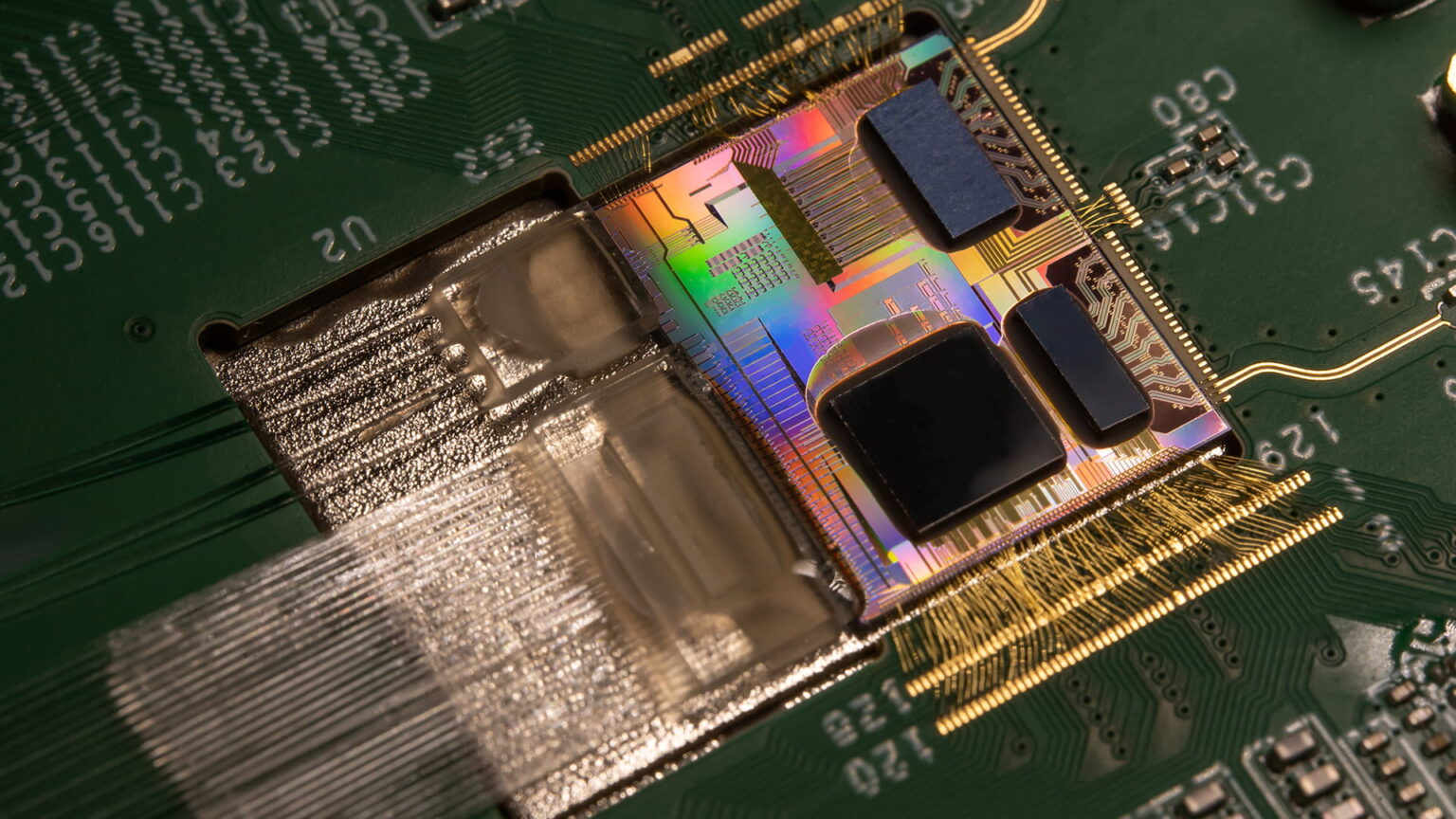
Optical computing involves processing data using photons rather than electrons. Lightelligence’s optical processors incorporate photonic linear computing units to accelerate computation. The company said these units are less constrained by semiconductor process limitations and can deliver low latency and high throughput.
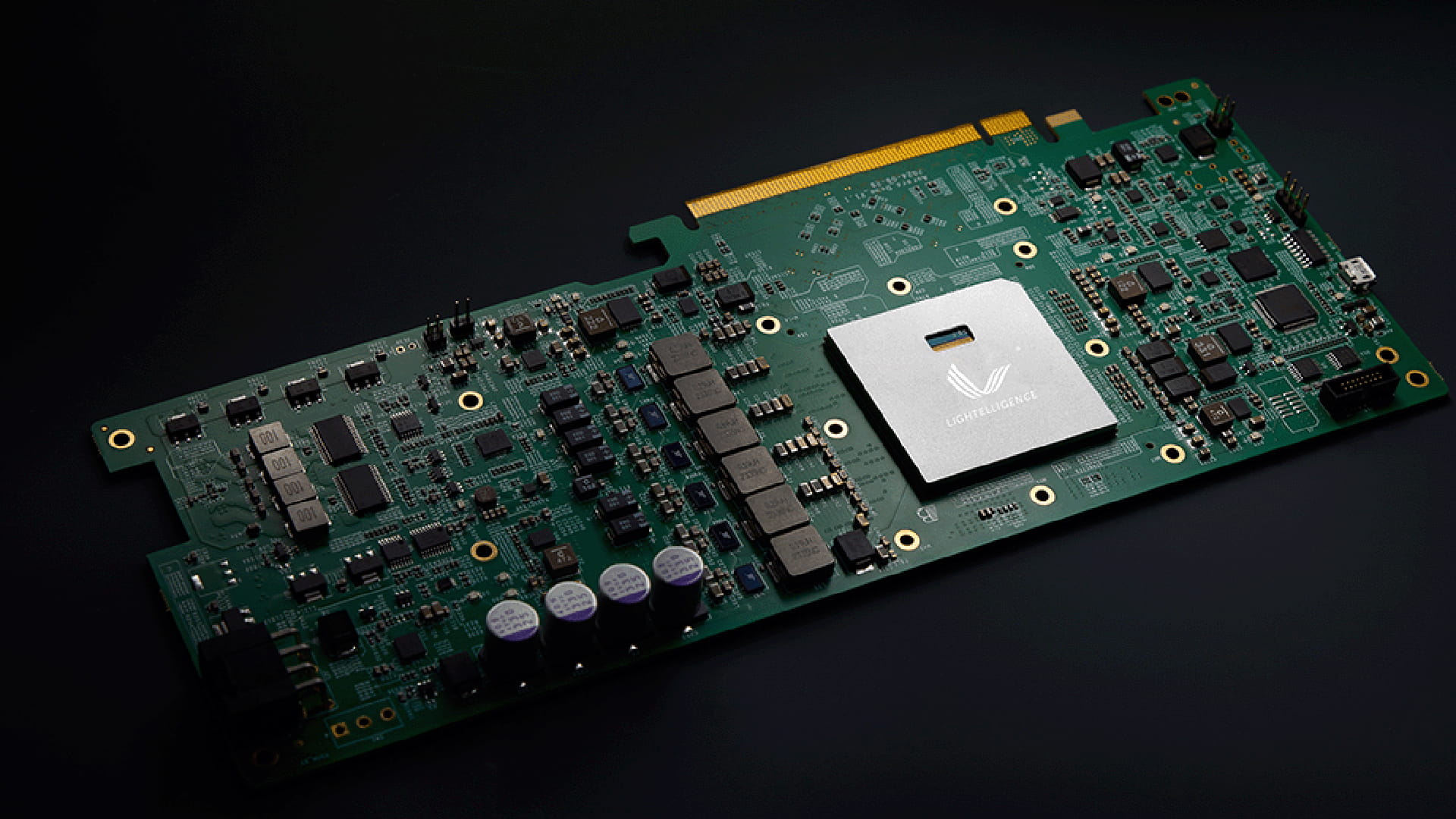
Frost & Sullivan said Lightelligence has introduced several products in this category, including OptiHummingbird, described as the first optoelectronic hybrid computing accelerator card based on an on-chip optical network, and Pace 2, described as the first such accelerator card using 3D through-silicon via packaging.
As of December 31, 2025, Lightelligence reported 44 commercial customers, supporting GPU clusters with several thousand cards and delivering an average increase of more than 50% in model flops utilization. Frost & Sullivan said that by 2025 revenue, the company ranked second in China’s scale-up optical interconnect market, while its cumulative optical computing chip shipments ranked first globally.
Financially, Lightelligence reported revenue of RMB 38 million (USD 5.6 million) in 2023, RMB 60 million (USD 8.8 million) in 2024, and RMB 106 million (USD 15.5 million) in 2025, representing a compound annual growth rate of 66.9%.
Optical interconnect solutions account for the majority of its revenue, with scale-up products driving growth. Revenue from these products reached RMB 47 million (USD 6.9 million) in 2024 and RMB 75.6 million (USD 11.1 million) in 2025. Frost & Sullivan said Lightelligence ranked first among China’s independent scale-up optical interconnect solution providers by revenue in 2025, with a market share of 88.3%.
Since its founding, Lightelligence has completed multiple funding rounds backed by investors including Matrix Partners China, Tencent, China Mobile Capital, and CRHC Fund, among others.
As of its final pre-IPO funding round in April 2025, the company was valued at RMB 7.8 billion (USD 1.1 billion).
In its prospectus, Lightelligence said it plans to use the IPO proceeds primarily for R&D, including further development of its optical interconnect and optical computing technologies, as well as for commercialization and general corporate purposes.
This article was adapted based on a feature originally written by Stone Jin and published on IPO Zaozhidao. KrASIA is authorized to translate, adapt, and publish its contents.
Note: RMB figures are converted to USD at rates of RMB 6.83 = USD 1 based on estimates as of April 15, 2026, unless otherwise stated. USD conversions are presented for ease of reference and may not fully match prevailing exchange rates.