


Huawei disclosed revenue of more than RMB 880 billion (USD 123.2 billion) for 2025 at the 2026 Guangdong High-quality Development Conference, according to SCMP, signaling a continued recovery despite US sanctions.
Howard Liang, the company’s chairman, revealed the figure on February 24 at the provincial government event. He said Huawei maintained steady operations and continued to provide globally competitive products and services.
The 2025 total marks Huawei’s second highest annual revenue on record, behind the RMB 891 billion (USD 124.7 billion) reported in 2020. In 2024, the company generated more than RMB 860 billion (USD 120.4 billion).
Interim results show Huawei recorded operating revenue of RMB 427 billion (USD 59.8 billion) in the first half of 2025, up about 4% year-on-year. Based on the full-year figure of more than RMB 880 billion, the second half contributed at least RMB 453 billion (USD 63.4 billion), indicating stronger weighting in the latter part of the year.
A rebound in smartphones was a key driver of the company’s latest performance.
According to Omdia, mainland China’s smartphone market declined 1% year-on-year in 2025, with shipments totaling 282.3 million units. Huawei shipped 46.8 million units, reclaiming the top position with a 17% market share. Vivo followed with 46 million units, while Apple shipped 45.9 million units.
Market leadership was less clear at a more granular level. In the fourth quarter, shipments reached 76.4 million units. Apple led with 16.5 million units shipped, while Huawei ranked fourth with 11.1 million units, closely trailing Oppo and Vivo.
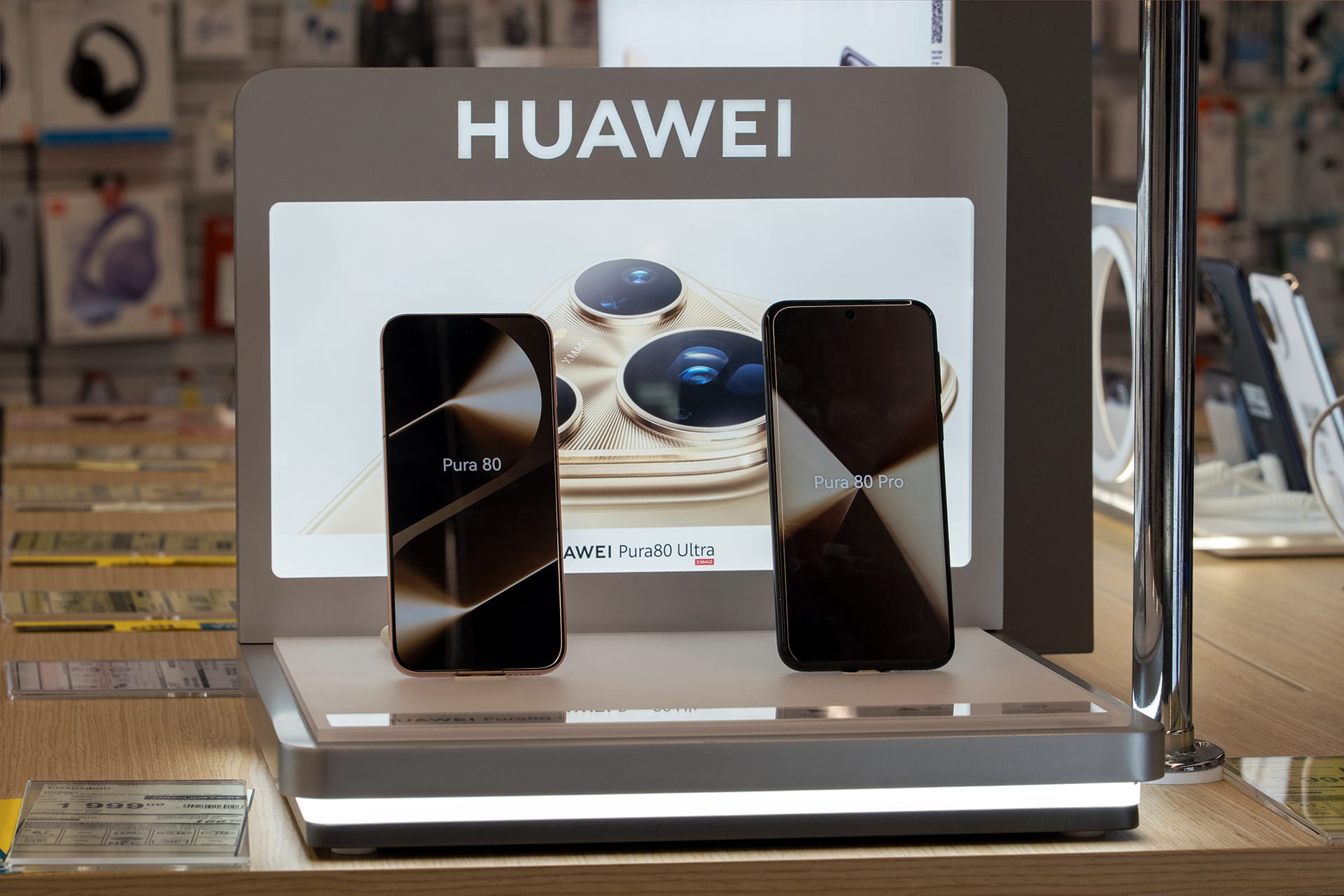
The full-year results nonetheless marked Huawei’s first annual lead in mainland China since 2020, when US sanctions restricted its access to advanced chips and the Android operating system.
Huawei’s proprietary operating system, HarmonyOS, has also gained traction. According to Liang, more than 40 million devices are now running HarmonyOS 5 and HarmonyOS 6, supported by over 75,000 applications and services. HarmonyOS has been adopted across industries including finance, power, energy, transport, and telecommunications.
Beyond consumer devices, Huawei has stepped up its push into artificial intelligence infrastructure. Liang said at least 43 mainstream large AI models have been pre-trained on Huawei’s Ascend chips, while more than 200 open-source models are compatible with the Ascend ecosystem. The company has positioned its in-house chip platform as a domestic alternative amid ongoing US export controls.
The latest disclosure suggests Huawei is stabilizing its core businesses while accelerating investment in operating systems and AI chips, with second-half momentum lifting full-year revenue to near-record levels.
Note: RMB figures are converted to USD at a rate of RMB 1 = USD 0.14 for reference, unless otherwise stated. Company disclosures may apply different exchange rates.