


Dreame’s entry into the chip race is becoming increasingly multifaceted. In addition to the previously reported Tianqiong chip series, NXMind, a chipmaker incubated by Dreame, outlined several additional chip development programs at this year’s Appliance & Electronics World Expo.
Fu Haiyang, head of NXMind, told 36Kr that the results of these five chip initiatives are intended not only for Dreame’s internal use but may eventually be offered to external partners.
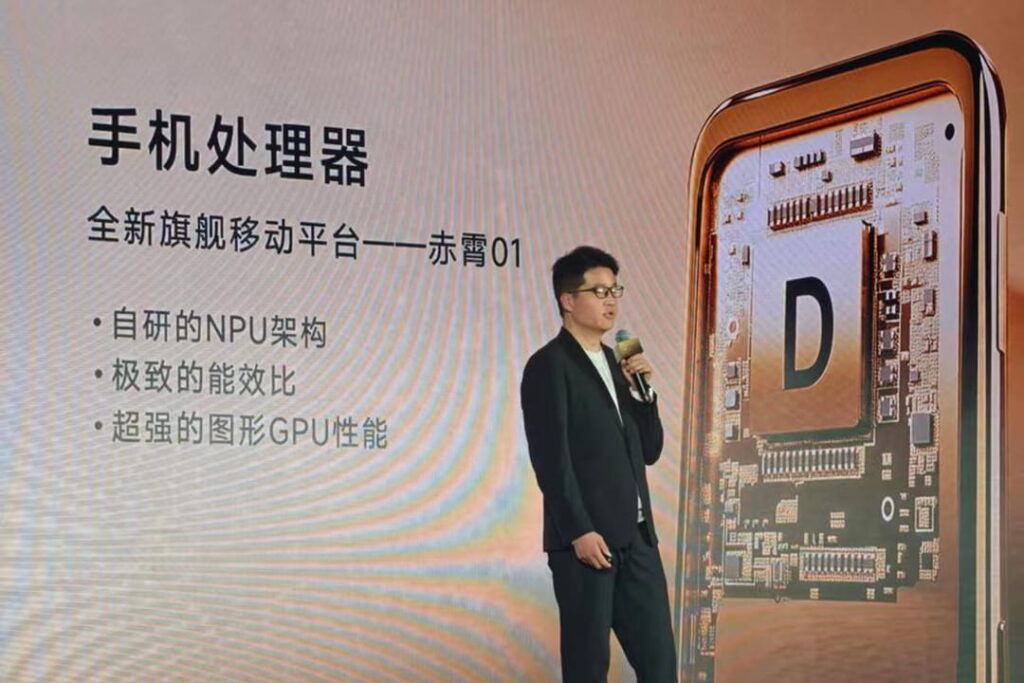
According to information shared at the launch event, one initiative involves a smartphone system-on-chip (SoC) called Chixiao 01, designed with an emphasis on improved graphics performance. The processor will support full-scene ray tracing at 120 frames per second at 1.5K resolution.
The Chixiao 01 will also feature a proprietary neural processing unit architecture capable of delivering artificial intelligence computing power of up to 200 TOPS (tera operations per second). By comparison, Qualcomm’s latest flagship processor, the Snapdragon 8 Elite, offers around 80 TOPS of AI computing performance.
NXMind is also developing an integrated autonomous driving chip designed for Level 4 self-driving systems. The company aims to deliver computing power of 2,000 TOPS per chip, roughly three times the capability of most mainstream smart driving chips currently on the market. That target would position the product in direct competition with Nvidia’s flagship autonomous driving platform, the Drive Thor series.
According to the company, the chip will integrate Dreame’s technological capabilities in areas such as computer vision and LiDAR (light detection and ranging), and will be manufactured using a two-nanometer process node.
NXMind is simultaneously developing a processor for personal computers. The chip is expected to deliver computing power of 1.5 petaflops and will feature a unified memory architecture that supports multi-device interconnection and networking.
These efforts join the Tianqiong chip series, which is designed to support robotic vacuum cleaner control. According to Fu, Tianqiong chips will use a heterogeneous computing platform that combines multi-core CPUs, dedicated NPUs, and an independent microcontroller unit. The chip will be manufactured using a 22-nanometer process and is expected to debut in Dreame’s robotic vacuum cleaners scheduled for release in the second half of this year, enabling the machines to navigate more complex environments with greater precision in obstacle detection and avoidance.
As previously reported, NXMind is also developing the Yaotai series of space computing modules designed for deployment in computing satellites. The company aims to achieve industry-leading reliability, lifespan, performance, and stability.
The long-term goal is to build a space-based supercomputing cluster consisting of up to two million computing satellites, roughly twice the size of Elon Musk’s SpaceX Starlink constellation.
Despite the scale of its ambitions, however, sources told 36Kr that among the five chip categories announced, only the general robotics chip has so far entered the tapeout and mass production stage.
Another person familiar with the matter told 36Kr that Fu, the head of NXMind, does not have a prior background in the semiconductor sector, and Dreame’s chip team currently numbers only a few hundred people.
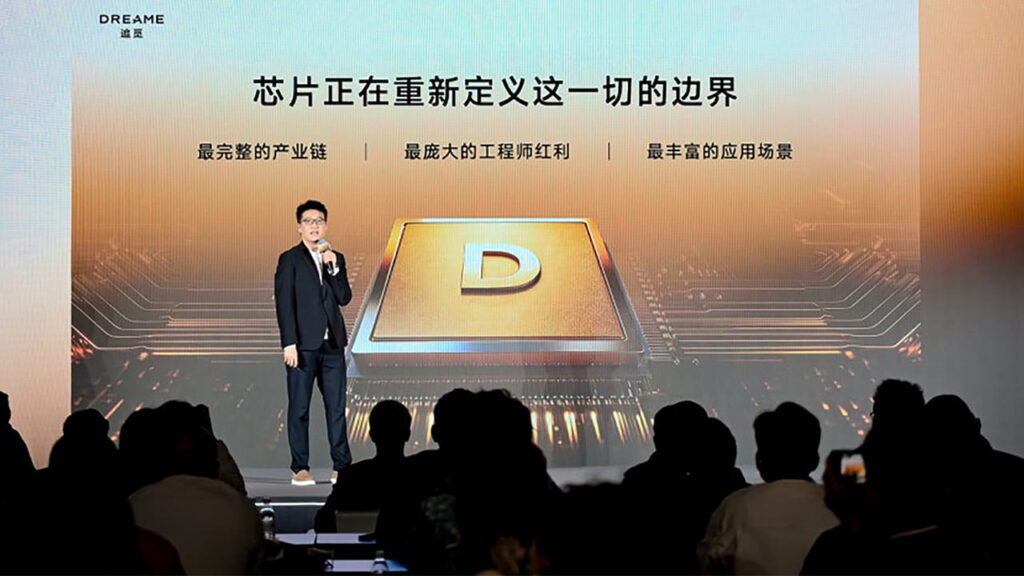
Chipmaking is a capital-intensive and highly competitive business. NXMind is targeting several areas simultaneously, including robotics SoCs, smartphone processors, autonomous driving chips, and space-based computing infrastructure, in an attempt to provide foundational computing power across industries such as robotics, smartphones, automotive, and aerospace.
At the same time, these efforts are intended to support Dreame’s broader product ecosystem.
One advantage for Dreame lies in its downstream presence. Its established robotics hardware products and ecosystem provide an existing market for some of these chips, while its core business continues to generate relatively stable cash flow.
Even so, overtaking global incumbents across five vastly different semiconductor segments at the same time remains an uphill challenge for most companies to achieve alone.
KrASIA features translated and adapted content that was originally published by 36Kr. This article was written by Qiu Xiaofen for 36Kr.