

After years of producing office chairs, desks and other home furnishings as a contract manufacturer, China’s Sunon is ready compete in the US under its own brand.
Counting Ikea and Uline among its customers, the plan follows tens of millions of USD in investment aimed at serving the world’s largest consumption market and is being touted as a strategic upgrade despite rising geopolitical risks.
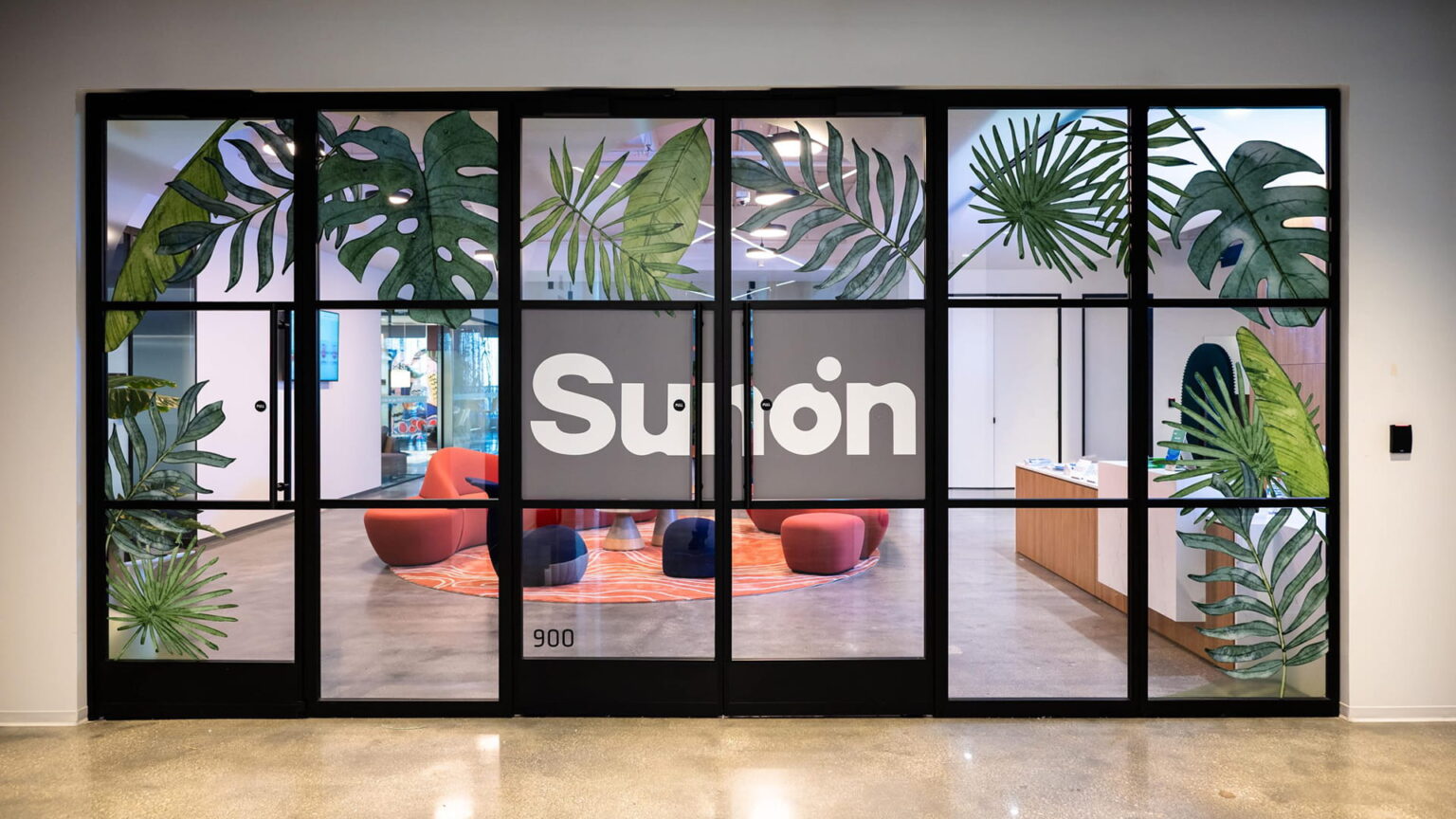
Sunon plans to double production at its Monterrey, Mexico, factory this year for the North American market, while adding two new showrooms in the US to complement its current ones in Chicago and Dallas, Kelly Guan, vice president of Sunon USA, told Nikkei Asia in an interview.
The company’s investment is paying off as it was selected to provide furniture for semiconductor firm Monolithic Power Systems’ global offices.
Looking ahead, we are very confident to compete with local American brands,” Guan said, pledging four-week delivery for large-scale projects from Monterrey, which will also add a steel factory to increase the range of products it manufactures.
Sunon’s strategy reflects a broader shift in Chinese manufacturing. After years of supplying US brands as contract producers, Chinese companies are increasingly moving up the value chain by establishing their own presence in the US market. The transition allows them to capture higher margins amid slowing growth and intense price competition at home.
The company said it generated USD 60 million in revenue from the US market last year, accounting for roughly a third of its international business, and aims to grow American revenue by 50% this year. Overall, it recorded sales of RMB 3.7 billion (USD 536.3 million) in 2025.
Chris Pereira, founder of iMpact, a consulting group for Chinese businesses expanding internationally, said the pivot toward brand-building is driven by shrinking profit margins and rising labor costs in China. While Chinese brands have leveraged e-commerce platforms like Amazon and TikTok Shop to reach American consumers, many are opting to establish a physical presence in the US to build brand awareness and trust.
“I think it’s clear that the ‘brand moat’ of most Western brands is currently eroding in the face of Chinese competition around the globe,” he said.
Sunon traces its origins to 1991, when founder Ni Liangzheng and three partners rented a village house in Hangzhou, near Shanghai, to begin manufacturing. The company later expanded to produce furniture for interior designers and office fit-outs for clients including WeWork, Tencent, TikTok, and Alibaba.
About a decade ago, it began designing its own products and selling to consumers, initially targeting Southeast Asian markets before gradually expanding to the Middle East.
Just before the Covid-19 pandemic, coworking space company WeWork ordered more than 400,000 desks, chairs, and pedestals, becoming one of Sunon’s first major US clients.
“It isn’t sustainable to remain a manufacturer for other brands,” Guan said.
The US market size has its appeal. Guan noted that more companies are encouraging employees to return to the office, alongside rising office leasing activity.
But Sunon faces a harsh reality: The lucrative market also exposes the company to commercial and political risks amid US-China geopolitical tensions. Companies from the world’s second largest economy have faced hostility in the past, as anti-Chinese sentiment spiked in 2019. iMpact’s Pereira said many Chinese brands fail in the US because they underinvest in localization, cultural adaption, and regulatory understanding.
Competition is also intense, with the US home to established household brands including Herman Miller and Steelcase. Guan acknowledged such headwinds, adding that goods produced by Chinese firms are often perceived in the US as lower quality or cheap imitations, and that establishing a brand in the US has presented challenges.
“Besides market prejudices against us, there are also some cultural differences between [Chinese and Americans],” she said.
To overcome this, the company has set up a research and development center in the US and continues to invest heavily in understanding US customers’ tastes. Guan said Sunon is working with local designers to create products better suited for the market.
“Americans just don’t like other designs, even European designs,” she said.
Adding to the company’s challenges, tariffs have increased import costs. Under the current US tariff regime, a 10% levy applies to all imports. Furniture made in China faces rates of up to 70%, while products from Mexico are subject to 25% tariffs, including additional levies on office furniture made with steel.
To reduce future exposure to US policy swings, setting up a factory in the country is “an imperative,” Guan said, though no formal plan has been finalized. She added that any US facility would not include a wide range of processes or production lines due to higher overheads, more than double those in Mexico due to labor and material costs.
“US manufacturing remains a key chapter in our long-term playbook,” said Jessica Rembert, Sunon USA’s brand marketing manager. “We’re not just looking for a building; we’re looking for the right strategic moment to pull the trigger.”
This article first appeared on Nikkei Asia. It has been republished here as part of 36Kr’s ongoing partnership with Nikkei.
Note: RMB figures are converted to USD at rates of RMB 6.90 = USD 1 based on estimates as of March 25, 2026, unless otherwise stated. USD conversions are presented for ease of reference and may not fully match prevailing exchange rates.