

Chinese electric vehicle makers are scooping up idle production lines across the world, intensifying their overseas push as Western competitors pare back output of gasoline cars and need to shed excess capacity.
Stellantis, which owns the Fiat, Peugeot, and Jeep brands, recently announced plans to share its production facilities in Spain and France with Chinese partners Leapmotor and Dongfeng Motor, respectively. Geely is planning to take over and reboot a spare production line at Ford’s Spain factory, according to a person familiar with the matter.
The deals illustrate Chinese and Western carmakers’ divergent fortunes in the industry’s transition to electric.
Chinese automakers could grow their global market share to 35% by 2030 from 25% in 2025, thanks to low-cost China-made batteries, UBS analysts estimated earlier this year. “Non-Chinese OEMs (original equipment manufacturers) may suffer from structural market share loss,” they wrote in a research note.
Analysts believe the localization of EV manufacturing in overseas markets is Chinese companies’ response to foreign governments’ protectionist measures.
“That’s a way to let local interested [parties] feel that they’re getting a cut,” said James Kan, Asia Pacific industrial research head at BNP Paribas. “It’s important when Chinese OEMs want to grab more global market share.”
Zhu Jiangming, founder of Leapmotor, whose battery-powered vehicles face 30.7% punitive tariffs imposed by the European Commission, said at the Beijing Auto Show last month that the company will locally source parts such as bodywork and interior components to support production at Stellantis’ factory in Spain.
A draft regulation proposed by the European Union in March requires EVs to have 70% of their components, excluding batteries, produced within the region to qualify for government subsidies.
Leapmotor will soon start building cars at another Stellantis plant in Brazil, it said at an earnings call this month. Brazil is expected to raise tariffs on imported EVs to 35% in July from the current 25%.
While localizing production helps get around tariffs, it could raise costs and compliance risks for Chinese automakers.
“I’m actually a little amused when I [see] all these Chinese companies buying production facilities in Europe, because the Chinese are also gonna find out how difficult it is to do business [here],” Harald Hendrikse, European automotive research analyst at Citigroup, told investors at an online briefing earlier this month.
“The Chinese are gonna employ very expensive European labor. They are gonna be mandated to use European supply chains in terms of meeting the European local content rules as well as meeting European regulations.”
Chinese EV leader BYD only recently moved beyond a labor scandal in Brazil that had dogged the company since late 2024.
BYD, which acquired and renovated an abandoned Ford factory in South America’s largest economy, was accused of subjecting construction workers to “slavery-like” conditions by local labor officials. In April, it was added to, then quickly removed from, the country’s so-called labor abuse “dirty list.”
The world’s bestselling EV maker is considering opening a second factory in Latin America, with the takeover of a dormant facility among the options, a person with direct knowledge of the matter said. BYD is also in negotiations with Stellantis and other European carmakers on potential deals to buy plants in countries such as Italy, executive vice president Stella Li told Bloomberg in an interview.
Industry insiders said that Chinese auto groups are keeping greenfield investments in reserve, should foreign carmakers demand high prices for their underutilized production lines.
“Purchasing existing production capacity is a time-saving solution, since building a factory from scratch requires tons of extra preparation work,” an executive at a leading Chinese carmaker said. “But we will calculate the tradeoffs between [foreign carmakers’] asking prices, total costs, efficiency, and consumer demands in local markets.”
Elvis Cheng, head of Xpeng’s northeastern European operations, said during the “Future of the Car” summit that it is in talks with VW and other carmakers about purchasing a factory to meet growing demand on the continent, while adding that it is also considering building its own European plant because VW’s factories were “a little bit old.”
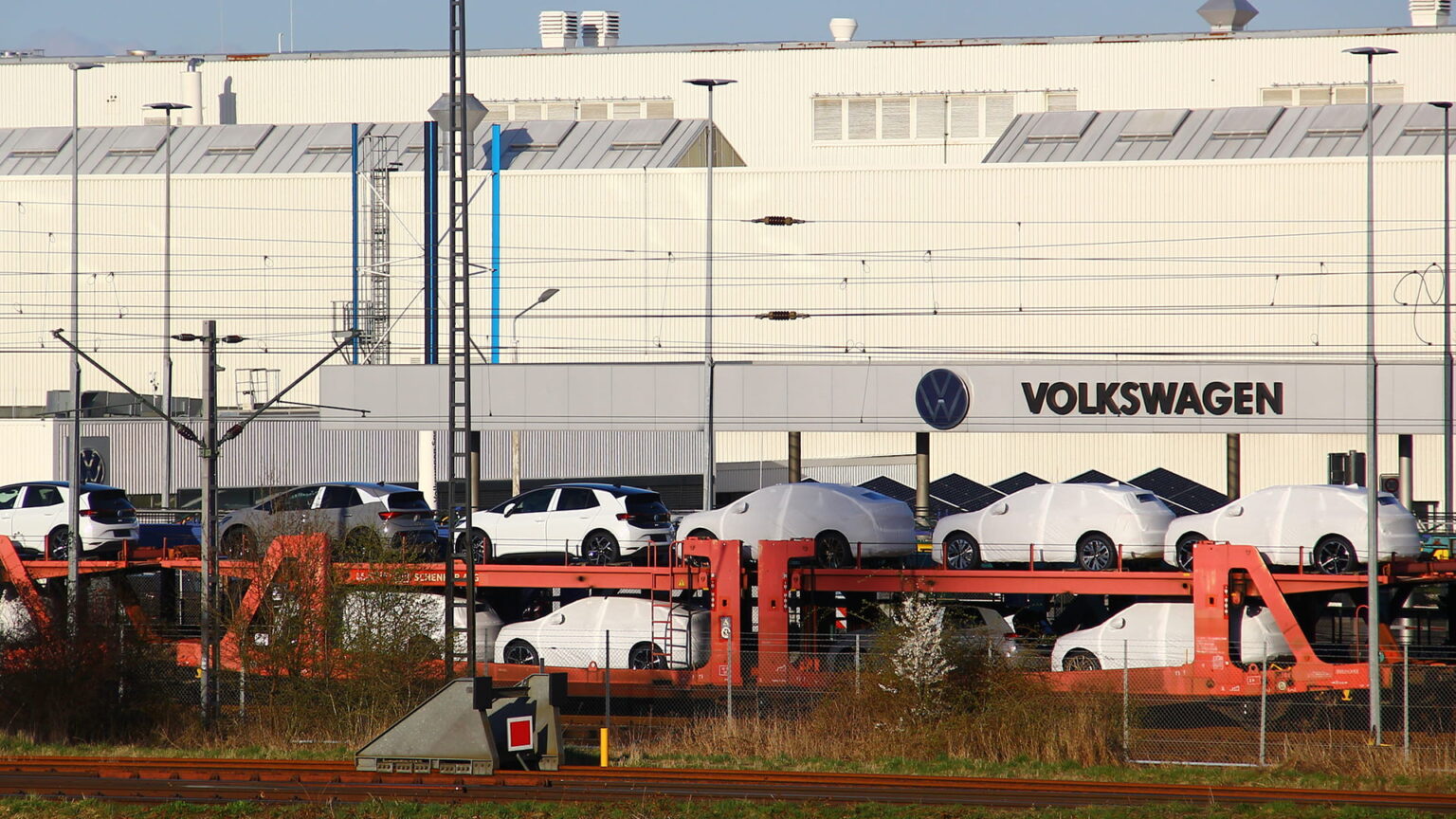
Struggling with sluggish demand and profit drops, Volkswagen CEO Oliver Blume said last month that the company is seeking to cut its global production capacity to nine million cars per year, from 12 million earlier this decade. VW will explore the possibility of “opening this for partnering with our partners in China,” said Blume in an earnings call.
On May 20, Blume told an assembly of workers that there are “currently no plans or discussions with Chinese manufacturers,” Reuters reported. At the same time, he conceded: “We still have excess capacity at our plants in Europe and Germany. We need to address this in order to remain competitive.”
Some are hopeful that reviving deserted internal combustion engine car plants will not only inject momentum into Chinese EV companies’ global expansions, but also tackle overcapacity.
Last year, Geely vowed not to build any new car factories.
Founder Li Shufu said at a public event that Geely will “aim for pragmatic cooperation and resource integration,” which could “improve efficiency in utilizing excess capacity among peers.”
“We can participate in global competition with a friendly attitude, win applause from international counterparts and build a good brand image for China’s automotive industry as it goes overseas,” he said.
This article first appeared on Nikkei Asia. It has been republished here as part of 36Kr’s ongoing partnership with Nikkei.