

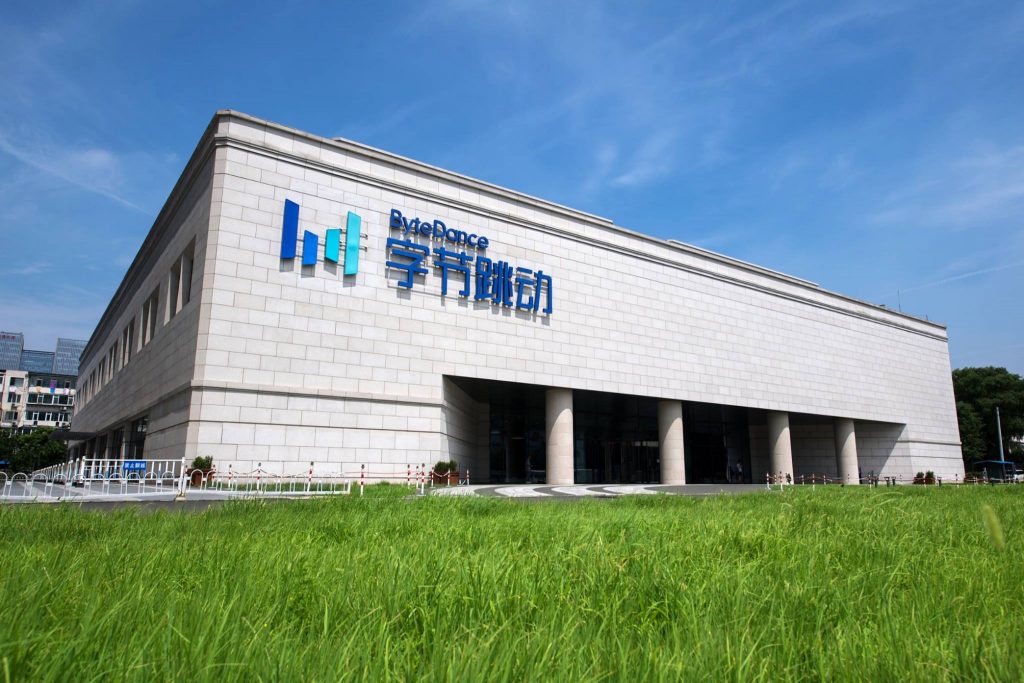
ByteDance’s artificial intelligence drug discovery unit has begun the process of spinning off and raising independent financing, according to people familiar with the matter.
ByteDance will retain a controlling stake in the new company after the spinoff, the people said. The AI drug discovery unit’s team, algorithms, technology platform, and existing pipeline assets will be transferred into the new entity. The business will also continue to receive computing power support from Volcano Engine.
Founded in 2021 and led by Kai Liu, the unit has about 50 core members, sources told 36Kr. The team includes AI-for-science (AI4S) talent, algorithm specialists, and pharmaceutical experts. Since its launch, it has worked across foundation model research, platform development, and commercialization.
ByteDance’s team previously responsible for protein structure prediction models has also been folded into the AI drug discovery team led by Liu. The related algorithm and model teams have completed their integration and will continue advancing foundation model research in the field. A small number of employees have left.
The progress of ByteDance’s AI drug discovery unit has given the company a basis to pursue the spinoff financing.
ByteDance has produced several technical outputs in AI drug discovery. In 2025, its AI4S team released the molecular structure prediction models Protenix and Seedfold. In 2026, it released Protenix-v1 and Protenix-v2, building open-source structure prediction capabilities for biomolecular systems such as proteins and ligands.
In protein design and prediction, the team launched PXDesign and other tools for designing protein binders.
ByteDance has also launched Anew Labs, an AI-powered platform focused on real-world drug development.
According to Anew Labs’ website, the team has released research including AnewSampling, AnewOmni, AnewFEP, AnewSynth, and scNext. These projects cover areas such as protein-ligand dynamic structure prediction, all-atom molecule generation, free energy calculation, synthetic feasibility prediction, and virtual cells. The platform has also launched early-stage drug pipelines.
In April, Anew Labs disclosed its IL-17 small-molecule program for the first time at the annual meeting of the American Association of Immunologists. According to the disclosure, it was the first reported case globally of using small molecules to block three IL-17 family dimers, or paired protein complexes. IL-17 is an important pathway in autoimmune diseases such as psoriasis and ankylosing spondylitis. Antibody drugs have already clinically validated the simultaneous inhibition of two key inflammatory cytokines.
As ByteDance’s AI drug discovery work has matured, the company is trying to move the effort from scientific research toward industrial application. It has integrated related internal teams and is preparing to test commercialization.
Commercializing AI4S remains difficult.
AI4S businesses have long validation cycles and complex development processes. Drug discovery, for example, spans model R&D, wet-lab experiments, and clinical validation. That requires specialized talent and an organizational model that differs from ByteDance’s internet businesses.
People familiar with the matter said the spinoff is intended to establish an independent structure better suited to the business. ByteDance hopes the adjustment will help it attract top talent and further integrate foundation model capabilities, algorithms, and pharmaceutical expertise.
The broader drug development sector is also under pressure to improve efficiency.
Over the past two decades, global pharmaceutical companies have continued to increase R&D spending. IQVIA, a healthcare data and clinical research services provider, expects global spending on medicines to reach about USD 2.3 trillion by 2028.
The market is large, but the core problems of new drug development, including high costs, long cycles, and high failure rates, have not fundamentally changed. This has created demand for AI tools that could improve parts of the process.
AI4S research is also accelerating, with models becoming more capable of addressing complex scientific problems.
AlphaFold, Google DeepMind’s protein structure prediction model series, offers one example. The first generation demonstrated feasibility. AlphaFold 2 expanded protein structure prediction at scale, with predicted structures for about 200 million proteins. AlphaFold 3 then extended beyond single-protein prediction to model more complex interacting systems. The progression shows how AI is becoming increasingly relevant to drug design.
If protein structure prediction remains a fundamental research question, multimodal molecular generation models that have emerged in recent years are addressing a more direct pharmaceutical challenge: drug design. That suggests AI drug discovery is gradually moving from research toward industrial application.
ByteDance has been investing in AI4S for years. Around 2020, it began exploring areas such as AI drug discovery, molecular simulation, and computational biology. Since then, it has built teams covering first-principles calculations, quantum chemistry, molecular dynamics, materials simulation, and molecule generation for energy and drug applications.
After ByteDance established Seed, its foundation model research team, AI4S became part of the company’s frontier technology strategy.
A person close to the spinoff said this is ByteDance’s first attempt to commercialize AI4S. The person added that the company is placing significant internal emphasis on the effort, in the hope that more independent decision-making can help it find a viable path in the field.
KrASIA features translated and adapted content that was originally published by 36Kr. This article was written by Zhou Xinyu for 36Kr.