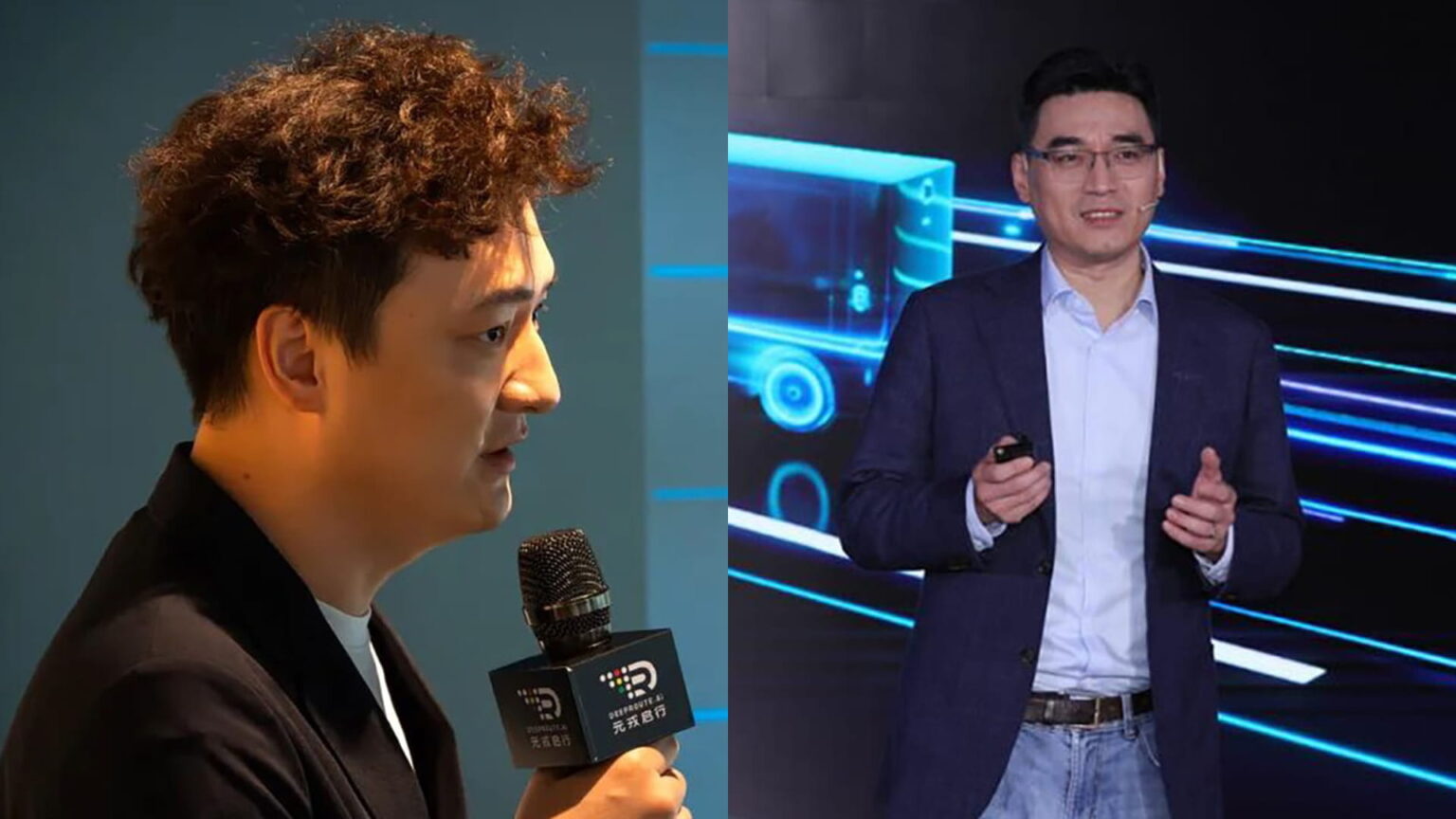
Two Chinese autonomous driving companies, QCraft and DeepRoute.ai, have confidentially filed listing materials with the Hong Kong Stock Exchange and are aiming to go public in Hong Kong before the end of this year.
According to 36Kr, citing unnamed sources, DeepRoute.ai had submitted its listing documents by late 2025, about two months earlier than Momenta.
In Hong Kong, an IPO typically moves through several stages, including filing review, a hearing, roadshows, and bookbuilding, before shares begin trading. Under smooth conditions, the process usually takes six to nine months. That timeline suggests QCraft, DeepRoute.ai, and Momenta could form a cluster of IPO candidates in the second half of this year.
According to 36Kr, citing multiple investors, Momenta is expected to seek an IPO valuation of more than RMB 100 billion (USD 14.5 billion), while QCraft’s latest valuation is estimated at USD 1.5–2.0 billion. Its expected IPO valuation remains unclear.
“Everyone wants to get listed before [Tesla’s] FSD enters China,” one industry insider said. Put more bluntly, if these companies wait much longer, they may lose even the chance to be priced at all.
Pushing to scale before consolidation
After the downturn of 2019, the financing surge of 2021, and the fight over mass production in 2024, the competitive landscape in smart driving now appears largely settled. The companies still in contention all hold sizable orders from multiple automakers.
Momenta has built ties with domestic and foreign automotive groups including SAIC Motor, Mercedes-Benz, BMW, Audi, and Dongfeng Nissan. DeepRoute.ai, meanwhile, counts Great Wall Motor and Leapmotor as its two core customers. QCraft’s client base has also expanded from Li Auto to automakers including Chery and Geely.
At the same time, demand is undergoing a structural shift. Smart driving is moving from an optional feature to a standard one. By 2026, urban navigate-on-autopilot (NOA), had reached vehicles priced at RMB 150,000 (USD 21,774.2), and even some models in the RMB 100,000 (USD 14,516.1) range.
That shift gives these companies a clearer path to closing the commercial loop in their financial statements through technology output, mass production deployment, and revenue recognition. A business case that autonomous driving companies have promoted for years is becoming more visible in reported results. For algorithm suppliers such as Momenta, DeepRoute.ai, and QCraft, going public when financial performance is strongest and order conversion is high may offer the best chance of securing stronger valuations.
That window may not stay open for long. Cao Xudong has argued that competition in automotive assisted driving will end in 2026. Li Auto CEO Li Xiang said in 2025 that the industry would reach an autonomous driving inflection point within three to five years. In other words, consolidation may be approaching.
For smart driving solution providers, the next phase will depend on scale, including data scale, mass production deployment, and the ability to lock in customers. Companies that can enter more vehicles, move into mass production faster, and expand into more cities are more likely to build a self-reinforcing cycle.
That scale requires sustained spending on R&D and mass production delivery. Large models are demanding more resources, while the costs of computing power and closed-loop data systems continue to rise.
Not every company can continue spending at that pace. The funding structures of Momenta, DeepRoute.ai, and QCraft point to the same shift: new capital is now coming mainly from strategic investors and automakers, while primary-market appetite for autonomous driving has cooled sharply.
Leading companies can still rely on support from automakers and reserves from earlier fundraising rounds to sustain spending. Midtier players, however, started with thinner cash cushions, and the industry’s price war has made conditions worse. “They probably have only one or two years left,” one source told 36Kr. That helps explain why these companies are increasingly eager to use an IPO to open a secondary market financing channel and support R&D spending.
Automakers have already shown how that model can work. Leapmotor, for example, gained access to the secondary market even though its IPO performance was underwhelming. With that foothold, it expanded its fundraising options and used the credibility of the public market to improve its leverage and profile, widening the gap with rivals.
That urgency has increased as the capital window shifts. Since Pony.ai went public, the path for US-listed Chinese stocks has become far narrower. Combined with broader macro uncertainty, financing options have tightened significantly. Momenta, long rumored to be pursuing a US IPO, has now turned to Hong Kong instead.
A more immediate challenge may be the market’s changing preferences. As global investor attention shifts toward embodied intelligence and humanoid robots, autonomous driving companies are facing tougher scrutiny in the secondary market. Their window to enter the capital markets may be narrowing.
As the technology converges, companies search for a new valuation story
Among the companies now racing to go public, one emerging view is that valuation no longer tracks technical strength as closely as it once did.
The valuation gap among Momenta, DeepRoute.ai, and QCraft may appear to reflect differences in scale and market position. At a deeper level, though, it also reflects financing paths shaped by different market windows.
Momenta completed several financing rounds near the top of the cycle and tied itself to leading automakers, helping establish a valuation benchmark early. DeepRoute.ai and QCraft, by contrast, pushed ahead with mass production in a much tighter market and adopted a more restrained fundraising pace.
Once the industry moved into the end-to-end paradigm, however, those gaps began to narrow. The dominant approach has largely converged: large models sit at the core, with a unified network handling perception, prediction, and decision-making in a single loop. Within that framework, differences in core capabilities no longer appear wide enough on their own to justify sharply different valuations.
Smart driving technology no longer offers enough room for a valuation premium by itself. Companies now need new pricing anchors.
A more revealing comparison may be the valuation gap between autonomous driving companies and general foundation model companies. Based on data as of March 31, 2026, the combined market capitalizations of Black Sesame Technologies, Pony.ai, and WeRide still trailed that of MiniMax, a company less than five years old.
In the eyes of capital markets, autonomous driving is increasingly treated as a vertical application with relatively high certainty, but a limited ceiling. General foundation models, physical artificial intelligence, and embodied intelligence, by contrast, still point to a broader field of possibility.
That shift in investor preference is forcing autonomous driving companies to rewrite their stories.
One path runs deeper into the technology stack.
Momenta is moving from pure software toward the chip layer, emphasizing integrated software and hardware capabilities. The strategy resembles that of Horizon Robotics: taking part in chip definition and delivering a full stack that covers computing, sensing, and control, rather than selling driving software alone.
The other path is outward, toward broader applications.
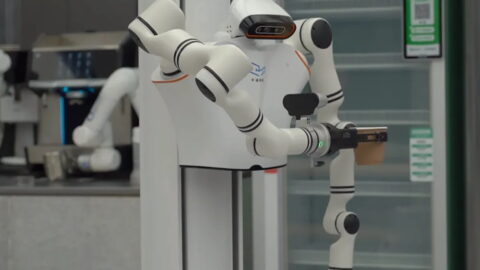
Both QCraft and DeepRoute.ai are leaning into a physical AI identity. In that framing, smart driving is no longer the destination, but an entry point into intelligence for the physical world.
At Nvidia GTC 2025, DeepRoute.ai CEO Maxwell Zhou proposed the concept of “RoadAGI,” an attempt to frame autonomous driving as one path toward artificial general intelligence. According to people familiar with the matter, DeepRoute.ai has also begun expanding into broader applications, including robotics.
Yu Qian, chairman and CEO of QCraft, has expressed a similar view, arguing that autonomous driving is the best gateway to physical AI. Once driverless technology becomes reality, he said, it could evolve into general intelligence for the physical world as a whole.
At heart, these companies are trying to do the same thing: take a market that already looks defined and recast it as one expansive enough to sustain investor imagination.
Whether these companies are ultimately automotive suppliers or AI companies will not be decided by the market in words. It will be decided in price.
KrASIA features translated and adapted content that was originally published by 36Kr. This article was written by Xiao Man for 36Kr.
Note: RMB figures are converted to USD at rates of RMB 6.89 = USD 1 based on estimates as of April 7, 2026, unless otherwise stated. USD conversions are presented for ease of reference and may not fully match prevailing exchange rates.