



Zelostech, short for Zelos Technology, and Eevie have launched an autonomous cargo vehicle deployment in the Changi Airport Free Trade Zone in Singapore. Zelostech is using its Z5 autonomous cargo vehicle to connect parts of Changi Airport’s logistics network, including ground handling, cargo consolidation, freight forwarding, and related operations.
The deployment supports driverless cargo movement across interconnected airport logistics operations and establishes an integrated model for landside logistics automation.
The Changi Airport project marks another step in Zelostech’s expansion across Southeast Asia. The company previously secured public road operating approvals in Singapore, enabling its autonomous logistics vehicles to operate in regulated urban environments.
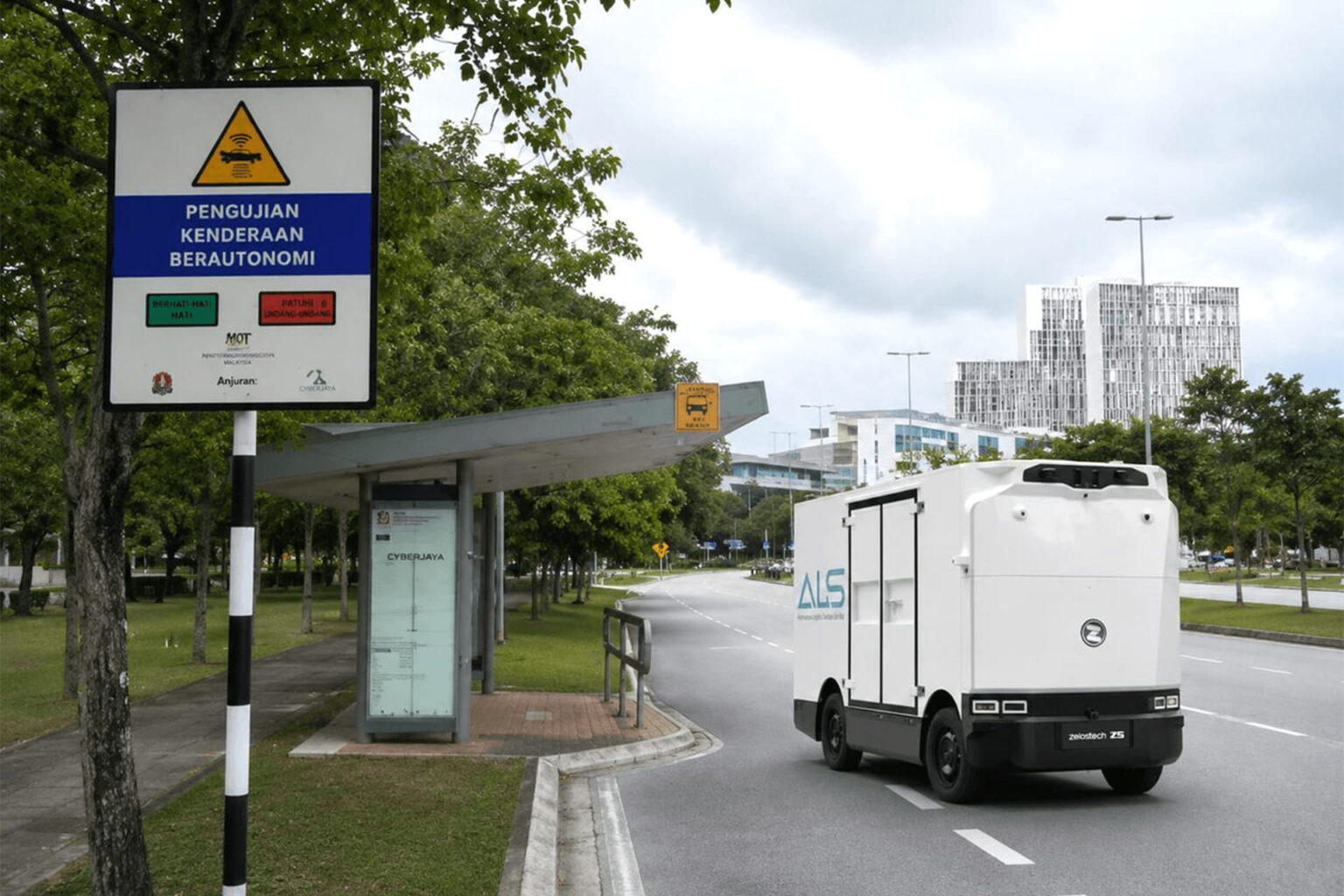
Zelostech is also expanding in Malaysia. In January, it partnered with Autonomous Logistic Solutions (ALS) and Pos Malaysia to launch Malaysia’s first autonomous vehicle proof-of-concept dedicated to postal and logistics operations, according to Zelostech. The phased trial began at Pos Malaysia’s national mail center.
During the proof-of-concept phase, Zelostech and ALS completed more than 1,000 kilometers of autonomous operations in a controlled environment with Pos Malaysia. The project logged 36 consecutive days without accidents or operational incidents, the company said.
Based on those validation results, Malaysia’s Ministry of Transport approved the country’s first dedicated public road trial license plate for a Level 4 autonomous logistics vehicle on June 30, according to Zelostech. Level 4 systems are responsible for driving tasks within limited service areas and do not require a human driver when engaged. Zelostech’s robovan is expected to begin public road testing in Cyberjaya over the next three to six months.
The Changi Airport deployment also gives Zelostech a foothold in airport logistics, where operating requirements are stricter than in urban delivery. By integrating its autonomous driving system into a major aviation logistics environment, Zelostech is applying its urban delivery experience to air cargo. If the model proves scalable, the Changi project could serve as a reference for autonomous freight operations at other airports.
Unlike autonomous vehicle pilots that focus mainly on point-to-point cargo transport, Zelostech’s Changi Airport project is designed as a multinode logistics integration system. It connects core sites including air cargo terminal operations facilities, the logistics consolidation hub, and selected freight forwarder warehouse operations.
The company links aviation operations systems, ground handling systems, and its own autonomous driving system across the logistics chain. The aim is to reduce operational silos and improve coordination in the airport’s regulated logistics environment.
The value of autonomous driving in airports is often framed as a way to replace human drivers. Zelostech’s project points to a broader challenge: airport landside logistics depends on coordination among multiple participants and operating nodes, not just labor availability.
Cargo terminals, consolidation hubs, and freight forwarder warehouses often operate separately. Cargo flows between nodes still rely heavily on manual dispatching, while delayed information and disconnected systems can slow operations. Through system integration, Zelostech is trying to connect dispersed operating units into a centrally dispatched logistics network, making cargo transfers more coordinated and less dependent on manual dispatching.
Zelostech said its autonomous van operates under strict safety constraints in a controlled airport environment. The Changi project uses a shared operating framework that connects aviation operators, logistics service providers, and autonomous driving technology systems, offering a potential model for multiparty collaboration in airport logistics automation.