



Scenes from The Wandering Earth 2 and Death Stranding, where characters move through harsh terrain in powered exoskeletons, are no longer confined to science fiction. Similar gear is beginning to appear in outdoor recreation.
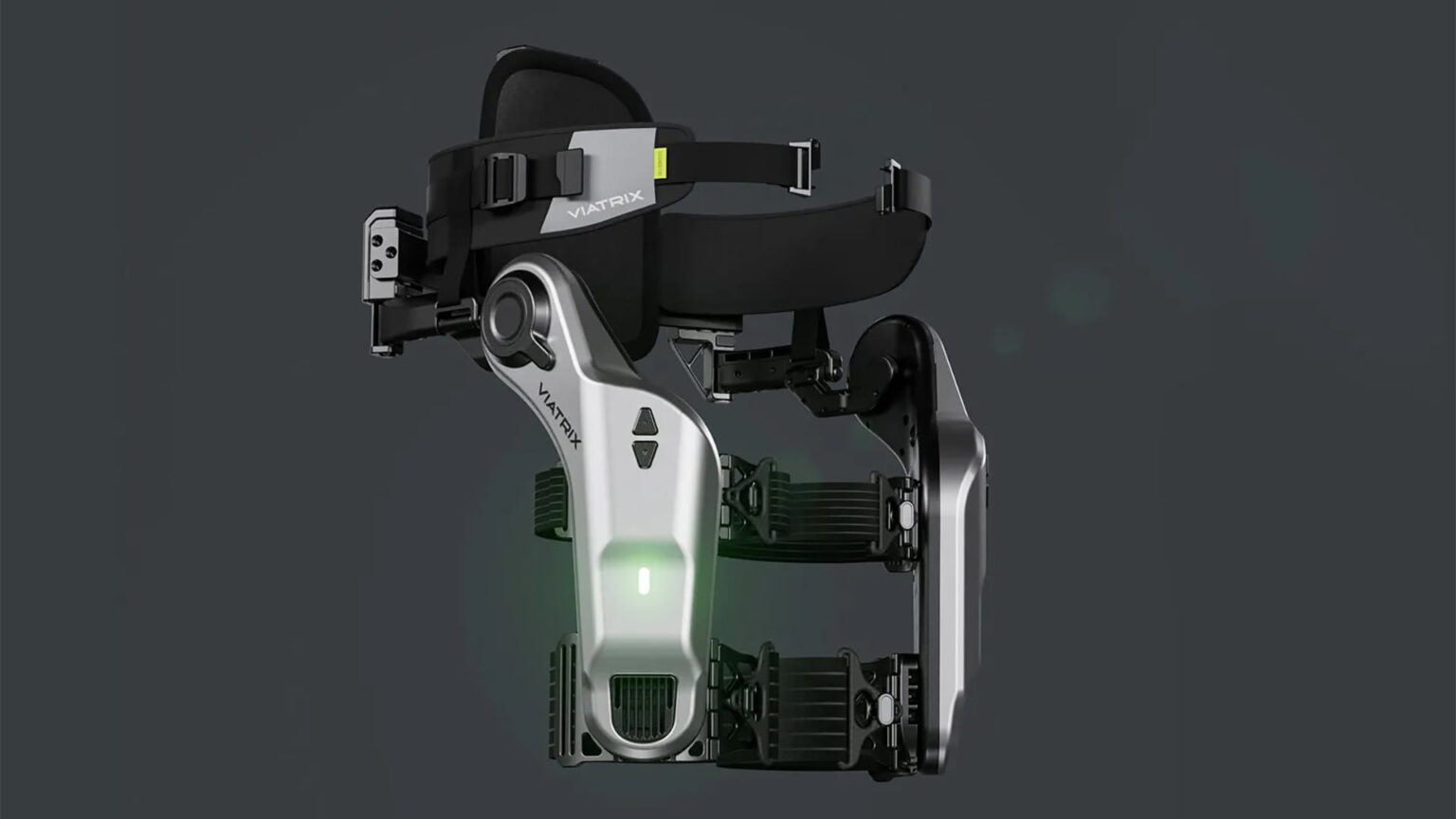
On July 4, at a resort along Yangcheng Lake, more than a dozen people walked along the lakeside wearing ULS Robotics’ Viatrix exoskeletons. After a few steps, their strides appeared to become lighter. According to ULS, the exoskeletons learned each user’s walking posture and applied thrust as they lifted their legs, making the six-kilometer hike feel closer to a leisurely city walk.
The event was jointly planned by ULS and outdoor platform Camplus. The route connected lakeside trails, resort spaces, and an ecological park, with multiple viewing and gear-changing points along the way. It gave participants a hands-on look at how human-machine assisted hiking could work in a leisure setting.
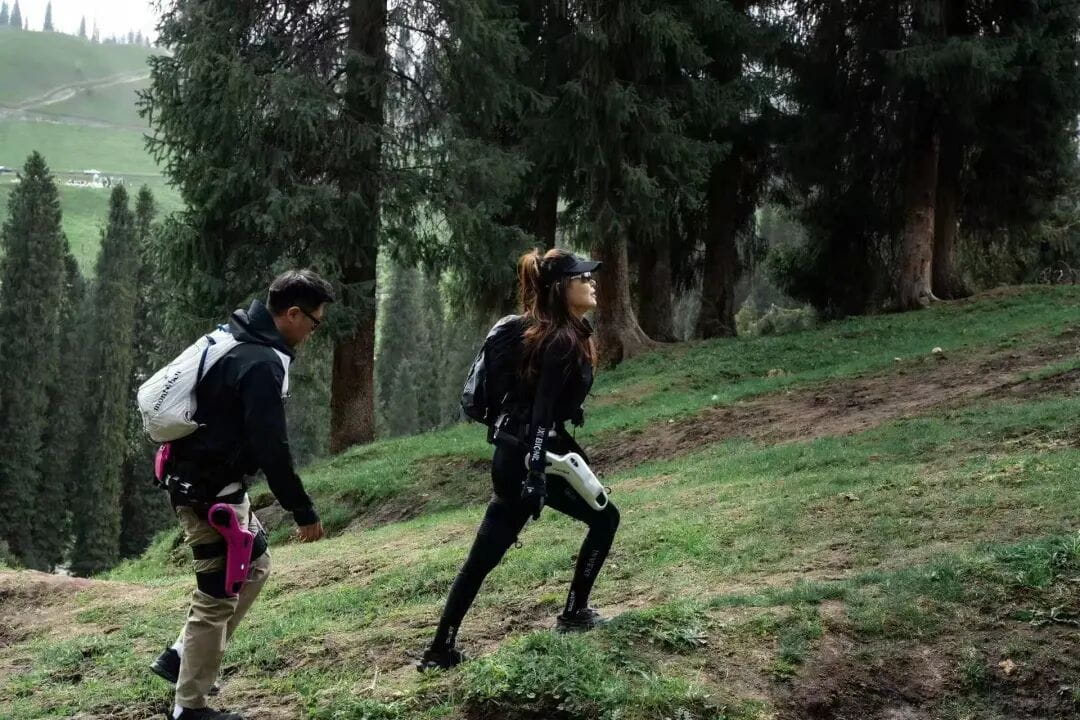
As an extension of human physical strength, exoskeletons represented by ULS are gradually moving from factory assembly lines and hospital rehabilitation departments into mountains and outdoor spaces. Their ability to support mobility and endurance is turning them into a new form of travel and exercise built around human-machine collaboration.
Founded in Shanghai in 2018, ULS Robotics began with R&D in medical rehabilitation exoskeletons before entering industrial applications. Its products have been deployed across industrial and logistics scenarios, including emergency firefighting and power inspection, while its overseas business covers 25 countries and regions, including the US and Japan.
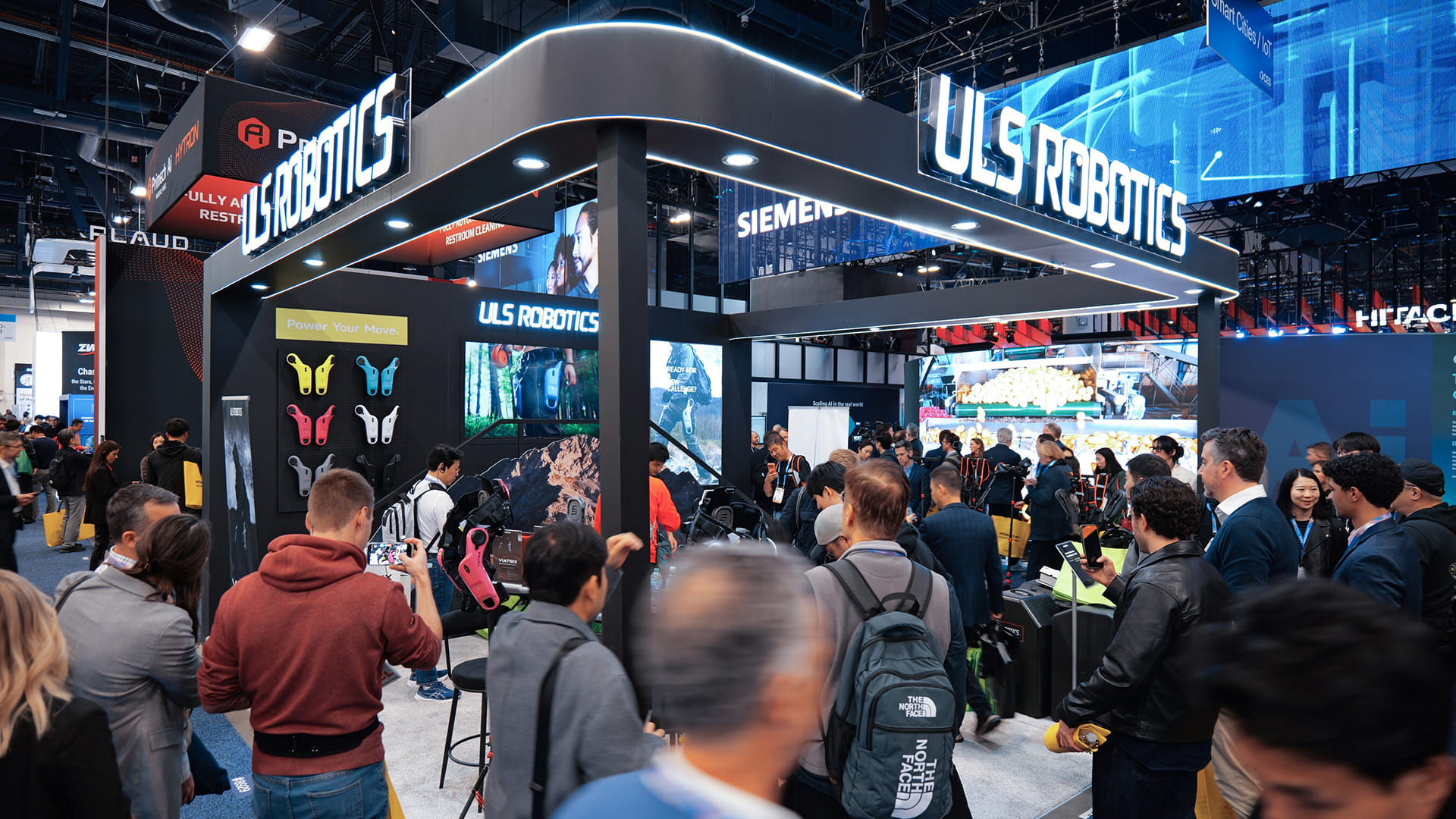
As technologies such as lightweight materials have matured, ULS began entering the consumer-grade exoskeleton market in 2025. Its consumer brand, Viatrix, has won awards at CES 2026 and the tenth Design Intelligence Award for Float 360, an original floating hip and joint mechanism.
Building lighter consumer exoskeletons
The earliest people to show interest in ULS Robotics’ consumer products were not extreme athletes or professional trail runners. Instead, Xu said, they were ordinary people with sedentary lifestyles and average fitness levels who wanted to spend more time outdoors. Men aged 30–50 made up a particularly large share of this group.
There are fewer female users because today’s exoskeleton products still tend to look bulky overall, limiting how coordinated they feel when worn and how they appear in photos. “That is why we are continuing R&D in materials and system design, so exoskeletons can become lighter and better-looking,” Xu said.
He added that lightweighting and intelligentization are inevitable trends for consumer-grade exoskeleton products. Making the devices lighter does more than improve comfort. It also reduces kinetic energy loss, making the device more power-efficient, which in turn allows the battery to become smaller and lighter.
Intelligentization is the technological foundation that allows exoskeletons to function in outdoor settings. A few years ago, some exoskeleton brands launched a round of market promotion, but failed to gain traction. Xu said the key reason was that exoskeletons at the time lacked artificial intelligence capabilities and could only perform motion planning. Everyone has different movement habits and walking gaits, making it difficult for a device to integrate fully with a user’s real movements in uncertain environments such as stairways and mountain paths.
Today, exoskeletons with AI capabilities have made the shift from preset programs to real-time learning. “After the device is turned on, the user only needs to take a few steps, and AI can automatically provide assistance based on their gait. During movement, it continuously collects data and makes corrections, allowing the device and the user to become increasingly integrated,” Xu said.
Viatrix’s self-developed automotive-grade responsive motor can deliver power with millisecond-level precision, while a combined 46 newton-meters of power across both legs, paired with a gait algorithm, increases leg strength.
From trial hikes to rentals
ULS Robotics did not begin bringing exoskeletons into the mountains at Yangcheng Lake. After a previous mecha hiking event it planned at Qiandao Lake, that route became a regular offering. ULS also worked with Camplus to set up outdoor rental and sales experience points in the scenic area, providing later visitors with hiking services that include exoskeleton rentals. The result was a space that combines outdoor settings, themed events, and product trials.
From Qiandao Lake to Yangcheng Lake, ULS has established 20 cultural tourism ecosystem partner sites across China. It first uses events to validate routes, accumulate content, and reach core user groups, then turns those experiences into repeatable rental and sales locations. This allows users to try the devices in real outdoor settings before deciding whether to buy one.
Xu said this operating model helps reduce potential users’ hesitation while using real user testing data to support product iteration, creating a cycle of experience, validation, conversion, and improvement.
Beyond bringing exoskeletons into the mountains, ULS has also moved into Haglofs offline stores. Acknowledging that exoskeleton makers tend to lack outdoor experience, Xu said ULS chose to fill that gap by working with brands that understand outdoor users. “Learning from seasoned century-old outdoor brands can help us understand customers and use cases more precisely, and iterate and adjust our products.”
At the same time, as an exoskeleton technology company whose core capability is product R&D, Viatrix aims to work with ecosystem partners to use technology to build the next generation of outdoor gear.
From one-time trials to recurring outdoor use, and from traditional retail outlets to experience-based locations, ULS is trying to build a model that can raise category awareness while converting trials into rentals and sales.
Extending human strength
Is wearing an exoskeleton to climb a mountain cheating? Xu is familiar with the question.
“An exoskeleton responds within milliseconds and mechanically amplifies force based on human movement and commands, ensuring that users can still maintain ideal technical movements when their physical strength reaches its limit.”
In other words, an exoskeleton does not make decisions for people. It conserves a person’s physical strength and makes correct movements easier to complete, extending endurance. Under the same physical limits, a person can walk farther while still exercising their body.
The floating 360-degree joint currently used in ULS Robotics’ exoskeletons can better match the flexibility of human movement, helping reduce falls and unnecessary movement restrictions during hikes.
Xu drew a clear line between consumer- and medical-grade exoskeletons. In his view, the difference between the two is not a reduction in technical capability, but a fundamental difference in use case. Medical-grade exoskeletons need to be deeply integrated with physicians’ clinical diagnoses and involve complex rehabilitation assessments and risk controls.
But for ordinary consumers, the boundary between the two types of products is often blurry. “Many people cannot clearly distinguish the actual functions of exoskeletons, or what is medical and what is for daily wear,” Xu said.
ULS places importance on proactive presales explanation, providing clear guidance and instructions when users inquire. “If users have hemiplegia, stroke, or related issues, we clearly do not recommend that they use consumer-grade exoskeletons. For older users, we also ask them to film a short video of themselves walking, then make some presales judgments based on their walking condition.”
Behind this restraint, and the decision to avoid certain use cases, is a clearer understanding of the boundaries of exoskeleton technology. Fortune Business Insights predicts that the global wearable robotic exoskeleton market will reach USD 2.49 billion in 2025, as interest in the field rises further. ULS and several other brands have completed multiple financing rounds, according to 36Kr.
The evolution of exoskeletons also raises another question: when technology can help people go farther, what defines the physical boundaries of the human body? In Xu’s view, unlike humanoid robots, whose goal is to replace people, exoskeletons are built around cooperation with people. They aim to preserve human agency while giving people greater strength and freedom.
KrASIA features translated and adapted content that was originally published by 36Kr. This article was written by Yang Yuexin for 36Kr.