

After decades in the projection industry, from bulbs to single-color lasers and now triple-color lasers, Sonnoc chairman Zhu Zhun has watched several display technologies rise, peak, and fade.
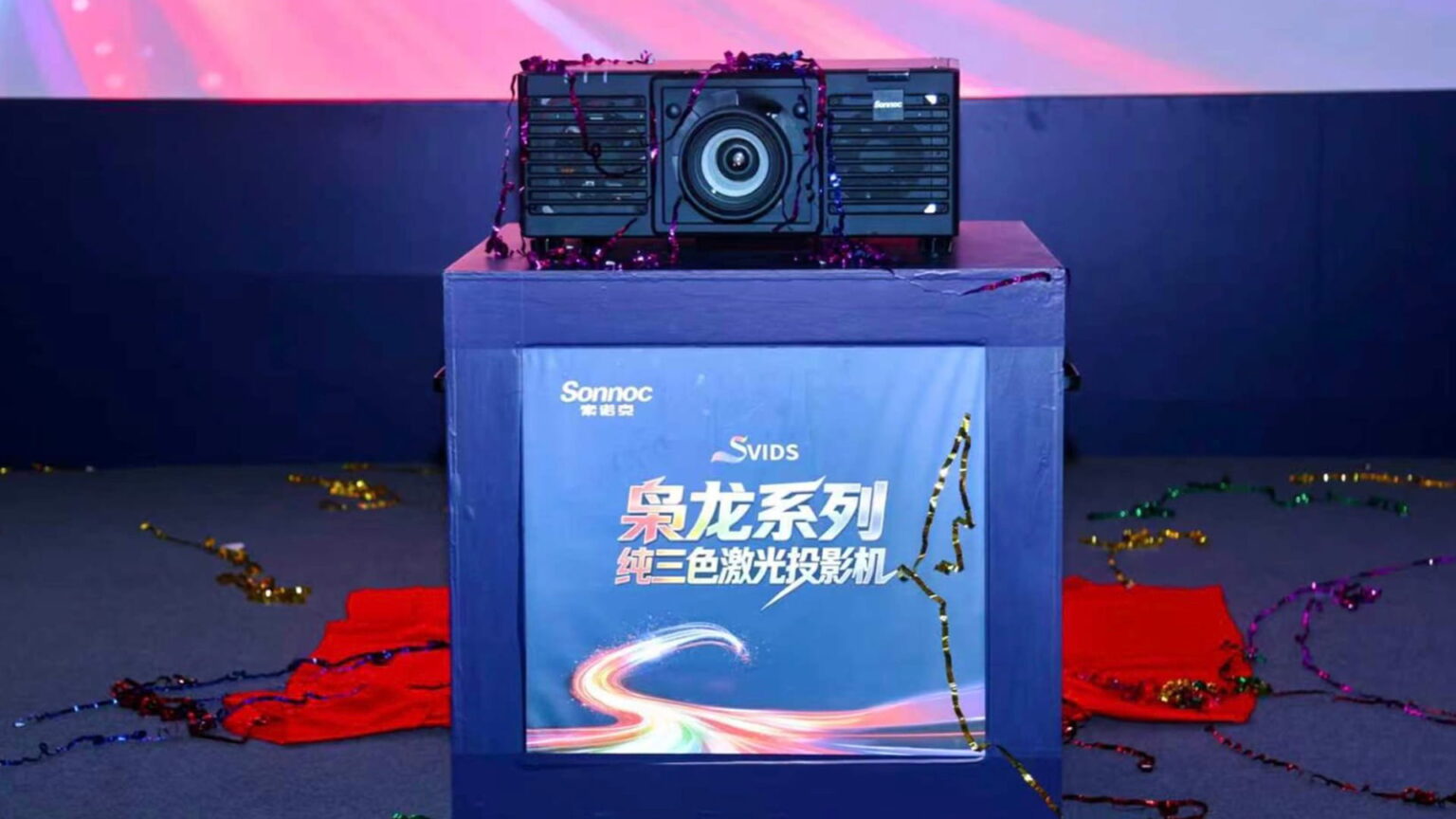
After a Japanese R&D team joined the company in 2014, Sonnoc became convinced that triple-color laser projection could become a long-term path for display technology. The road, however, proved longer than expected. It was not until spring 2026 that the company officially released Xiaolong, its series of pure triple-color laser professional projectors.
“It was not because we were prompted by some external shock,” Zhu told 36Kr. “We began studying how to commercialize triple-color lasers very early on. It is just that this road took a little longer than expected.”
Over the past two years, Sonnoc has accelerated its rollout of new products and technologies in response to changes in the industry. Several leading Chinese brands, backed by capital, have moved quickly through new technology cycles. In some areas, Zhu said, they have even overtaken competitors.
“That is exactly why we need to seize this window and quickly turn our core technologies into products that can be deployed,” Zhu said. He sees this as Sonnoc’s opportunity to gain ground against rivals.
Sonnoc’s story began with the founding of its parent company, Donview, in 1993. Starting in 1996, Donview served as Panasonic’s general distributor for projectors in China for 14 consecutive years. The turning point in its brand transformation came during an industry crisis. At the time, the projection industry was often affected by tensions in China-Japan relations, leaving the company with hundreds of millions of RMB worth of Japanese-brand inventory exposed to significant risk. Management then made a firm decision: it had to build its own projector brand and take control of its development.
In 2015, Sonnoc’s first self-owned projector officially went on sale. After years of focus, the company now holds more than 100 optical and related patents, and Zhu said its high-end professional projection business has long ranked among the top three in China.
Looking back, however, Zhu does not hide his regret. “We missed the first wave of A-share listings by projection companies. That is a disgrace, not an honor.”
But he is not interested in dwelling on regret. In 2023, Star-Net invested in Sonnoc. In Zhu’s view, it was not a simple financial investment, but a strategic partnership. Star-Net is China’s third largest network equipment supplier, he said, and can provide not only capital but also foundational artificial intelligence capabilities.
“They help us with AI enablement, and we provide them with solutions for digital studios and immersive projection restaurants,” Zhu said. He added that basic optical research is extremely capital-intensive, making it difficult to sustain such work solely through gross profit. Bringing in capital was inevitable, he said, but Sonnoc had been cautious for years and avoided purely financial investors.
Now, with the Xiaolong series ahead in technology generation while keeping costs under control, plus support from industrial capital, Zhu believes a window has opened for Sonnoc to catch up with competitors. Triple-color laser technology, he said, is that window.
Triple-color laser technology is not new. Shuji Nakamura, an inventor of the semiconductor laser diode, won the Nobel Prize for related research. For a long time, however, two major constraints limited its large-scale commercialization. First, the development of green laser diodes lagged and only gradually matured over the past decade. Second, costs remained high, as upstream core laser diode components were long dominated by Japanese companies, confining triple-color laser projection to niche applications.
The industry’s turning point came in 2024, Zhu said. Sonnoc set up an R&D company in Japan and recruited Akihiro Yamakage, a former Ricoh optical expert. Yamakage has remained optimistic about the future of triple-color laser technology. Combined with Sonnoc’s internal R&D, this external expertise helped bring the Xiaolong series to market.
“Triple-color lasers have been around for ten or 20 years. I would not dare say we are the first company to do it, but we are indeed the first to truly commercialize it in the professional projection field,” Zhu said.
According to Zhu, Xiaolong’s core competitiveness comes from the combination of TRS scanning technology and pure triple-color laser projection. He offered a simple comparison: “It is like the difference between VCD and Blu-ray, except one is playback equipment and the other is display equipment.” In terms of specific metrics, Zhu said Xiaolong’s color gamut is twice that of existing mainstream products, and its color brightness can double under the same specifications.
That level of difference in image quality may not be obvious to ordinary consumers, but for professionals, it can be a hard requirement. Zhu said Zhang Lie, a professor at the Academy of Arts & Design, Tsinghua University and an expert in digital displays of intangible cultural heritage, as well as director Liu Xiao and other industry professionals, require highly accurate color reproduction in projection. “In the past, images projected by projectors often deviated from the colors in the original design, which professional practitioners simply could not accept. Now, Xiaolong can fully meet their exacting standards,” Zhu said.
The Xiaolong series is positioned for large-format, color-critical settings, including cultural tourism lighting, museums, halls, and public venues. It is aimed at directors, artists, cultural heritage projects, and museums that require precise color reproduction.
The biggest barrier that previously prevented triple-color laser projection from becoming widespread was its high price. Sonnoc’s approach is not to compete on low-end pricing, but to pursue two paths: reducing costs through technology and replacing imported components with domestic supply chain alternatives.
On one hand, Sonnoc uses its self-developed patented scanning technology to achieve higher image-quality specifications with lower-power hardware, controlling overall machine costs from the underlying architecture. On the other hand, it has formed a deep partnership with Huawei’s HiSilicon to pursue technological breakthroughs in two key components: laser diodes and display chips. Its 14B module costs 30% less than comparable products from Nichia and has completed laboratory validation, Zhu said.
“We are not entering the RMB 1,000 (USD 146.2)-level consumer projector market, nor are we making ordinary laser televisions. In the high-end home studio segment, we only make premium products with image quality comparable to commercial cinemas.”
AI is also reshaping the form and experience of projection products. The Xiaolong series is already equipped with an intelligent color calibration system, which replaces the traditional model of engineers manually calibrating color coordinates. The system uses AI to learn from samples and automatically complete standardized and personalized color optimization.
“In the past, color calibration depended on engineers manually fine-tuning frame by frame. Each person had a different visual standard, so calibration results varied. Now, AI can independently learn from massive samples. The more data it accumulates, the more precise color calibration becomes.”
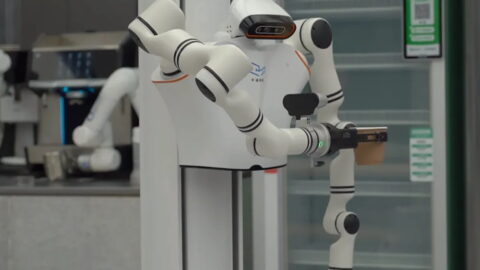
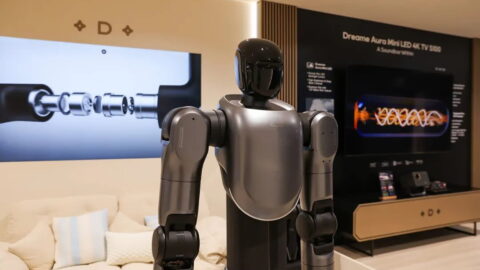
Sonnoc has also included robotic visual interaction in its future plans. Its Japanese company is developing robotic visual capture capabilities. Cameras can capture images, but Zhu said robots still lack image output capabilities. “We want to be the robot’s ‘second eye,’ filling the image output gap and completing the entire visual interaction loop.”
Sonnoc’s long-term R&D goal is medium-free 3D spatial imaging, which would require no screen, water curtain, scrim, or other carrier. Instead, it would present three-dimensional images using optical technology alone. Zhu said that if the technology is realized, it could reshape the display industry.
Zhu has designated 2026 as Sonnoc’s “first year overseas,” with an annual overseas sales target of RMB 50 million (USD 7.3 million). Its priority markets are Southeast Asia, Central Asia along the Belt and Road Initiative, and South Korea.
According to Zhu, South Korea has almost no domestic projector manufacturers and has previously relied on Japanese and Taiwanese suppliers. Now that Japanese products have lost some of their price advantage, he said, Sonnoc is more competitive than Taiwanese brands in both technology and cost. Combined with the accelerating domestic substitution of core components, Zhu believes the timing for overseas expansion is now mature.
Having watched single-color lasers rapidly replace traditional bulb light sources, Zhu has a clear forecast for the adoption pace of triple-color laser projection. Over the next three years, he expects the penetration rate of triple-color laser products to exceed 50–60% in high-end scenarios such as premium home studios, cultural heritage and museum exhibitions, and cultural tourism lighting. He estimates this corresponds to a high-end professional projection market of about RMB 3–4 billion (USD 438.6–584.8 million).
“As the domestic supply chain matures and drives costs down, market demand for high color gamut and high brightness will continue to rise. Triple-color laser replacement is already an irreversible industry trend.”
On the funding front, Sonnoc plans to launch a new funding round this year. It will seek additional investment from state-owned capital while bringing in high-quality, market-oriented industrial capital to continue supporting technology R&D and inventory investment in core components.
KrASIA features translated and adapted content that was originally published by 36Kr. This article was written by Li Xiaoxia for 36Kr.
Note: RMB figures are converted to USD at rates of RMB 6.84 = USD 1 based on estimates as of May 6, 2026, unless otherwise stated. USD conversions are presented for ease of reference and may not fully match prevailing exchange rates.