



Over the past two years, the scaled deployment of humanoid robots has become a shared concern across technology and investment circles. Although the industry’s output value is widely expected to grow significantly in the foreseeable future, it is still searching for answers on cost, supply chain quality, and, most critically, how to define real user scenarios.
After a change in control at Swancor Advanced Materials in November 2025, the company, which had originally focused on industrial materials, adopted a two-pronged strategy centered on new materials and embodied intelligence.
The shift reflects the acquirer’s ambitions in consumer-grade robotics. On December 31, 2025, Swancor announced that it would enter the personal robot market under the Swancor Qiyuan brand, while also launching the Qiyuan Q1 personal robot.
In the official promotional video, the Qiyuan Q1 stands 88 centimeters tall. It can run and jump, folds up to fit inside a backpack, and is described by the company as the world’s smallest full-body force-controlled humanoid robot. The Q1 also supports open software development kit (SDK) and hardware development kit (HDK) interfaces, uses a modular structural design, and allows 3D-printed shells and customized appearances, making it a flexible development and modification platform.
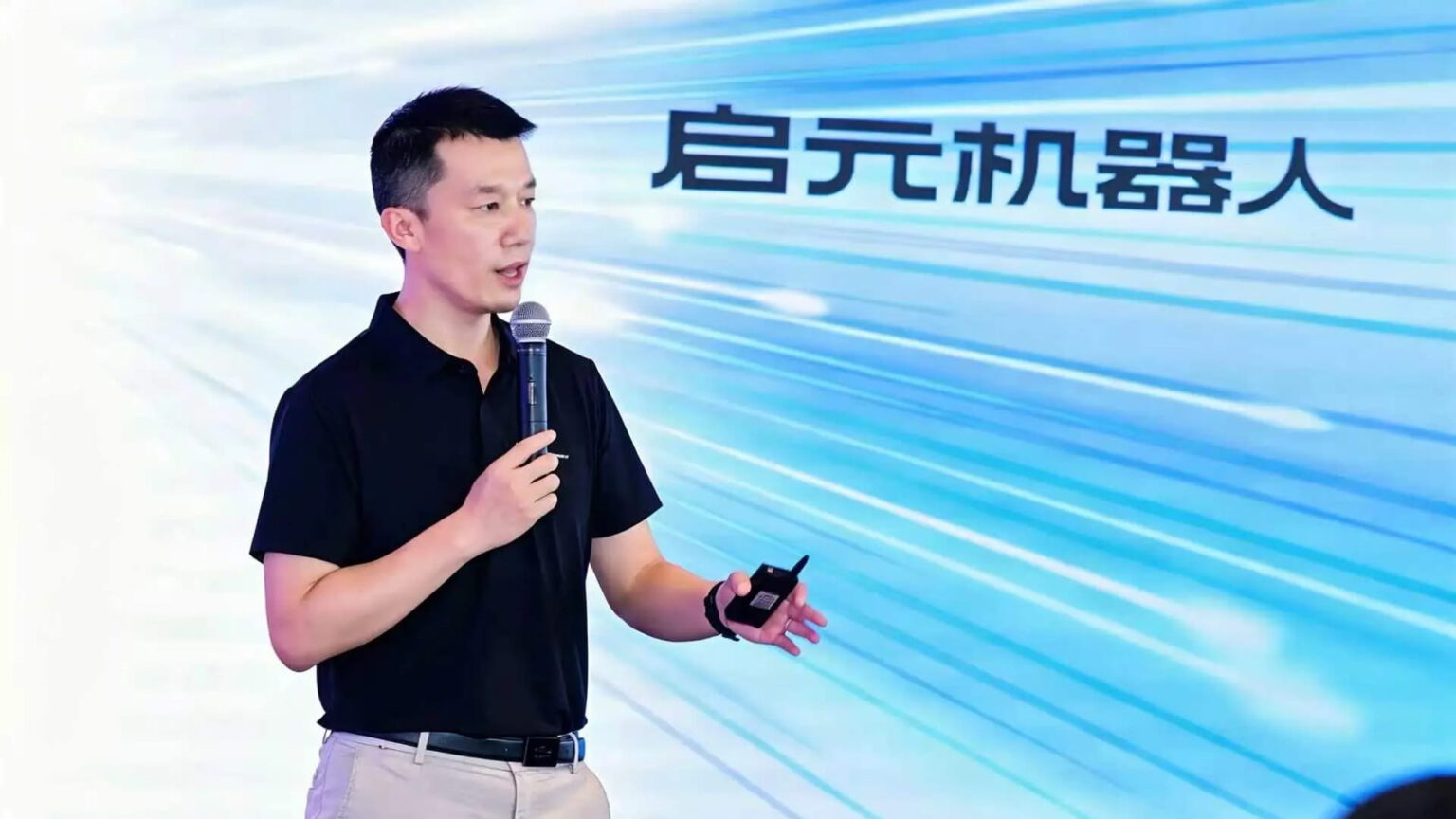
Swancor CEO Tian Hua previously served as Huawei’s head of wireless solutions for Northeast Europe, vice president of enterprise business for Northeast Europe, and vice president and chief business officer of its computing product line. At Agibot, he served as general manager of ecosystem development and chief supply officer.
Drawing on years of supply chain management experience, Tian believes manufacturing cycles are often measured in decades, while the upper bound for robots is intelligence and the bottom line is safety. Speaking with the media, Tian said, “Making a concept model is not unusual. But in the objective reality of a supply chain that is still highly customized, being able to truly deliver 10,000 identical standardized units is the only path for consumer-grade robots to cross the commercialization chasm.”
In that exchange, Tian discussed the definition of personal robots, their development stages, business models, and more.
The following transcript has been edited and consolidated for brevity and clarity.
36Kr: What is a personal robot?
Tian Hua (TH): Industrial robots create productivity value. They are production tools. Home robots are functional tools. Their essence is completing tasks, and their core attribute is still that of a tool. Our definition of a personal robot is centered on the individual. It accompanies a person across all aspects of growth, learning, and life.
36Kr: What considerations led you to choose the personal robot market?
TH: We had many internal discussions before making this choice:
- First, it was driven by vision. At the very beginning, when we set out to do this, we discussed what exactly we wanted to do with embodied intelligence. In the end, we made it clear that we wanted “to create a better life through embodied intelligence.”
- Second, there is a blank space in category definition. The market is still relatively empty. The company that first completes the definition of this category will win the right to lead a future trillion-RMB market.
- Third, there is a policy window dividend. This year’s government report and implementation recommendations on artificial intelligence plus consumption, jointly released by eight government departments, have created a major period of policy benefits.
- Fourth, there is industrial synergy. Swancor’s traditional new materials business has done extensive work on lightweight, environmentally friendly, and high-strength materials, which can be directly applied to robot bodies.
In essence, when we make personal robots, we are trying to capture the entry point of the AI era. We believe the future entry point will not be a smart speaker or a television, but an embodied intelligence robot.
36Kr: For consumers, what is the greatest value of a personal robot? Is it fun, companionship, or utility?
TH: Going back to first principles, we believe the value of a good product consists of three layers: functional value, emotional value, and asset value. A robot vacuum can clean the floor. That is functional value. But it does not understand you. If it understands you, it can provide emotional value.
Personal robots naturally have all three layers of value. For example, in the AI era, people are anxious about the future and do not know where education is headed. A personal robot allows people to naturally sense the arrival of the embodied intelligence era. Having such a carrier grow alongside them is functional value.
In the future, it can also become your little assistant, little housekeeper, learning and play companion, and conversation partner. As the hardware body stabilizes and the ecosystem and content, like apps on a phone, become increasingly rich, robots will have more and more functions.
36Kr: Many companion robots have emerged in the market over the past few years. What differentiates the Qiyuan Q1 from them?
TH: Consumer-grade robots currently face three main pain points:
- The first is capability imbalance, or the separation of body and intelligence. Traditional robots have strong hardware but weak intelligence, while internet companies have strong intelligence but weak bodies.
- The second is an extreme shortage of ecosystem and content. Their functions are limited to the attention economy, meaning entertainment, and they lack expandable ecosystem accessories and peripheral ecosystem partners.
- The third is a lack of forward-looking design. Companion robots are essentially extensions of traditional AI hardware. They simply place a large language model, based on text dialogue from a phone, into a product. But a multimodal humanoid robot is a new form. What you see is what I see. What you perceive is what I perceive. The mode of interaction is completely different.
36Kr: Some companies see this year as a deployment phase for robots. How do you divide the development phases for personal robots, and what phase are they in now?
TH: Internally, we have defined three curves:
- The first curve is technology novelty-seeking. The core demand is the dopamine hit from a first-time experience. Robots enter malls by singing, dancing, and showing off their abilities to attract crowds. Most humanoid and quadruped robots are basically still in this state.
- The second curve is content dependency. This requires a more open ecosystem to support content and game creation, so people can keep using it. It has a certain degree of functional value, such as addressing anxiety in the AI era and taking follow-along photos.
- The third curve is deeper fulfillment. It combines functional attributes, emotional attributes, and asset attributes. The core driving force is creating a better life and generating value, such as photography creation, early education, and emotional companionship.
We are focused on capturing the second and third curves.
36Kr: Personal robots will inevitably raise privacy and ethical risks. What preventive measures is Swancor Qiyuan taking?
TH: This is essentially a safety issue and rises to the level of product philosophy. We consider it from four dimensions:
- The first is physical safety, which is the bottom line. If we want to enter homes and accompany elderly people and children, the robot must be safe enough and approachable enough. That is why we made it small, designed it to be 88 centimeters tall and weigh 15 kilograms, and incorporated multiple torque sensors and force control.
- The second is electrical safety. Before entering the home, a robot must first meet electrical safety design requirements, such as addressing safety concerns similar to those around electric bikes being brought indoors.
- The third is data security. A robot is covered with cameras, tactile sensors, and force sensors. We will process sensitive data locally with masking, and cloud data will undergo strict masking and access control. Users will have full rights to know, manage, and control whether cameras are on or off.
- The final dimension is relational safety. A robot can provide companionship and understanding, but it cannot help people make choices. Humans must ultimately remain the decision-makers.
36Kr: What market size do you think personal robots could reach?
TH: The market space for personal robots is highly imaginative because it serves the world’s seven billion people. We have now entered the post-smartphone era. In the embodied intelligence era, the phone may not be the most suitable product. As one fades and the other rises, the space is enormous. We need to quickly turn that space into something real.
36Kr: The Qiyuan Q1’s hardware size is set at 88 centimeters. Aside from physical safety, were there other considerations?
TH: There were two other important considerations.
First, it was designed for geek developers. Today, developers mainly work in fixed locations such as laboratories and cannot create anytime, anywhere. We made it 88 centimeters tall so geek developers can carry it away in a bag and have a canvas for creation whenever inspiration strikes. To support this, our SDK and HDK are fully open source and open access, and the hardware is decoupled, continuously lowering the barrier for users.
Second, it helps avoid the uncanny valley effect. When robots become increasingly capable and increasingly humanlike, people can feel fear. A robot designed to be about 80 centimeters tall feels much more approachable.
36Kr: What is the pricing strategy for the Qiyuan Q1?
TH: Pricing is still confidential at this stage. But our vision is to make it increasingly affordable, available, and accessible for everyone to experience. If only a small group of people can afford it, then it cannot be called “your first personal robot.”
We hope everyone with scenario-based needs can afford it, whether they are geek developers, trendy tech toy users, families with children, or people who want companionship for elderly relatives as an act of care.
36Kr: Qiyuan is about to open offline stores in Shenzhen and Shanghai. What is the thinking behind that?
TH: This is related to our product rhythm. In the past, we kept a low profile and focused on strengthening internal capabilities. We had not accepted media interviews. On December 31 last year, we launched our first promotional campaign for personal robots and received millions of video views.
Because making consumer-grade robots is quite difficult, we spent a lot of time polishing the product internally. At this moment, we are ready. It is time to show ourselves.
36Kr: Is the business model for opening offline stores in robotics the same as that of technology brands such as DJI, Insta360, and Bambu Lab?
TH: We have indeed thought a lot about opening offline stores. The personal robot category had never been defined before. After defining it, our main goal in opening offline stores is to strengthen the user experience.
DJI and Insta360 have indeed done well offline. Our offline stores are mainly experience stores. For this category, if consumers have never experienced what a robot can do at home, it will be very difficult for them to place an order. There is a saying that people only place an order after seven rounds of interest-building. So we definitely need to build offline experience stores.
36Kr: Other robotics brands have also opened many stores in Beijing and Shanghai. Are there pain points in operating them?
TH: This is indeed a very large space, but looking at the industry overall, there are several main pain points:
- First, capabilities are not balanced. Either the hardware is strong, or the software is strong. Our products emphasize the combination of hardware and software, meaning hardware plus intelligence, to complete the construction of “body plus high-level cognition and low-level control systems.”
- Second, they mainly show off capabilities and lack an ecosystem. Many products lack ecosystems, ways to play, and content. As a result, people’s interest lasts only a few minutes. It is difficult to form a long-term user experience, which makes it even harder to capture the future entry point of embodied intelligence.
- Third, there is a lack of forward-looking product definition. In 2025, artificial general intelligence, or AGI, became a major focus, and technical capabilities already exceeded users’ ultimate needs. The key is how to find user scenarios around the technology and, from a forward-looking perspective, design a robot’s hardware, software, future ecosystem content, and intellectual property.
36Kr: It seems difficult for robots to enter the home. What is the biggest difficulty right now?
TH: To enter the home, you first need to ask what it is entering the home to do. If it is entering to do work, meaning housework, that is a world-class problem at this moment. We are exploring it, but we will not bring it to market so quickly.
But if it is entering the home to provide emotional value plus partial functional value, such as addressing anxiety in the AI era, English learning, and companionship, then current technology already exceeds scenario demand. So the bottom line for entering the home is safety, and the upper bound is intelligence. If we hold the bottom line and continue exploring upward at the upper bound, household scenarios will gradually open up, moving step by step from simple tasks and simple scenarios toward complexity.
Behind each step, we have a complete system plan for the body, low-level motion-control system, and AI brain.
36Kr: Some in the industry say development of the robot body has hit a bottleneck, and intelligence is the next challenge. What do you think?
TH: This depends on the scenario. Intelligence is indeed significant, and it is used to solve work and create productivity value. But body hardware is far from truly mature. Today’s bodies have, at most, reached what is considered usable. They are still quite far from being easy to use. This requires technology advancement in robot joints, sensors, lightweight materials, battery energy density, and more. There is still a long way to go.
36Kr: Standardization in the robotics supply chain seems poor, and each manufacturer tends to be fairly nonstandardized. Will the industry move toward full standardization and large-scale mass production like the automotive sector?
TH: China produces more than 30 million cars a year, all standardized, with one rolling off the production line every minute. Robots will certainly reach a high level of standardization in the future as well.
Right now, robotics is in the middle of moving from a nonstandardized state to a standardized one. We are also calling for this and actively participating. At the national level, work has already begun to organize committees and other bodies to formulate industry standards for embodied intelligence. Clear standards for core components are worth looking forward to.
KrASIA features translated and adapted content that was originally published by 36Kr. This article was written by Peng Li for 36Kr.