

Tata Motors’ decision to tap electric vehicle technology from China’s Chery Automobile, revealed earlier this month, has highlighted how Indian carmakers are increasingly leaning on proven technologies from China to power their electric cars—a strategy that could help accelerate launches, but carries risks given a history of frosty bilateral relations.
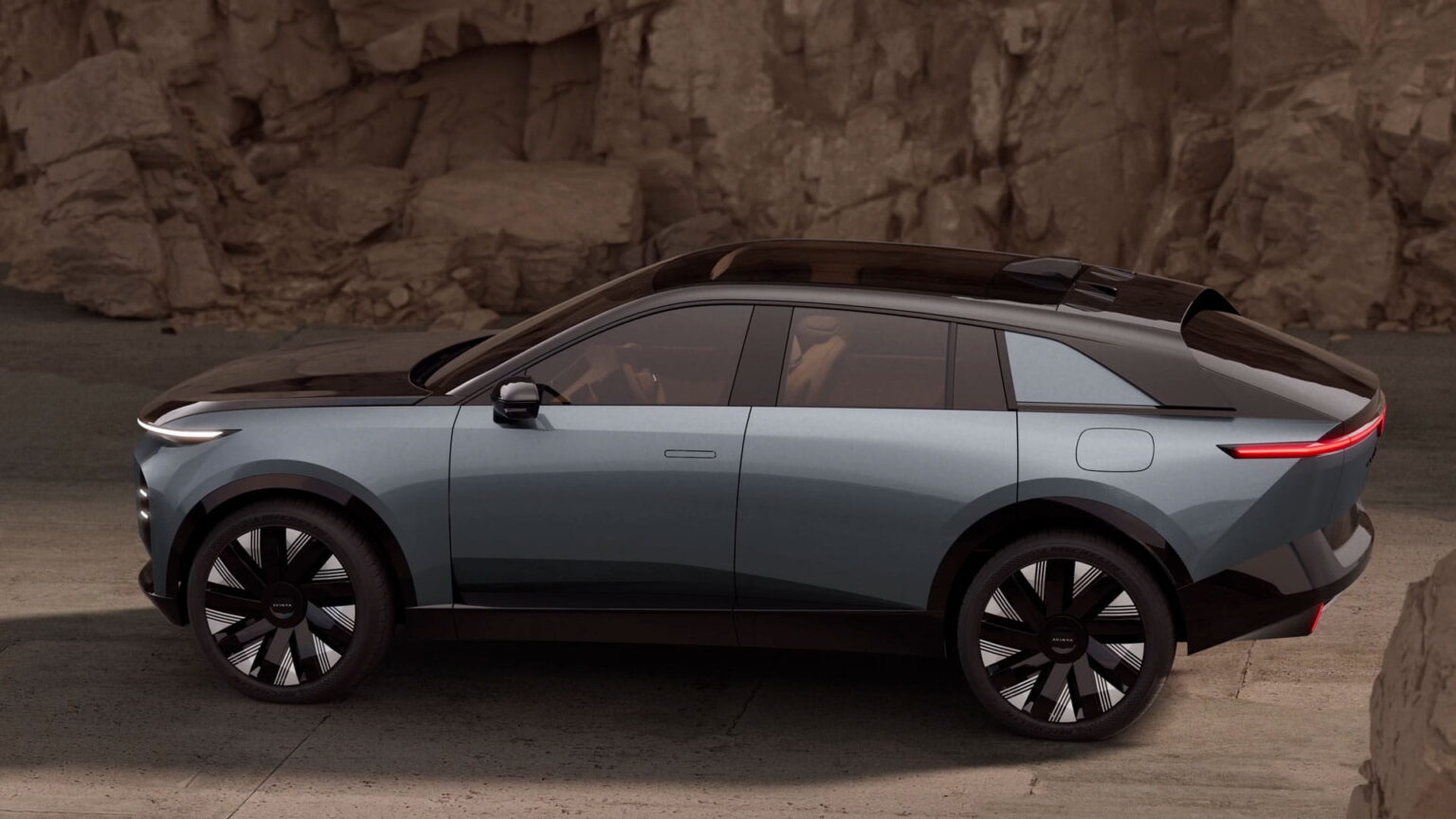
Tata Motors said in a statement on June 3 that some cars from its upcoming premium Avinya lineup will be based on a platform being jointly developed by its subsidiary Jaguar Land Rover and Chery, which was initially meant for reviving the Freelander brand. The first Avinya car will be rolled out next year.
Chery is also fueling the automotive ambitions of billionaire Sajjan Jindal, whose JSW Group has obtained a license to use the Chinese automaker’s technology for a new brand expected to go on sale around the upcoming festive season, which runs from October through November. That builds on JSW’s existing China connection through the 35% stake it bought two years ago in MG Motor’s India operations, which are owned by China’s SAIC.
Such deals reflect an urgency to make a splash with new cars as competitors from Japan, South Korea, and Europe, stung by the strong inroads being made by Chinese EVs, set their sights on India, which not only is the world’s third largest car market but also has largely shunned Chinese players due to strict foreign investment rules. Indians are also warming up to EVs as the US war with Iran pushes up gasoline prices, with cumulative sales in March and April jumping about 72% from the same period a year earlier to nearly 46,000 units, according to the Federation of Automobile Dealers Associations. The surge is raising hopes of a sales boom and nudging carmakers to gear up for a battle for market share.
“The primary driver is time,” said Vinay Piparsania, founder of automotive consultancy MillenStrat Advisory & Research.
Developing an EV platform from scratch could take “billions of dollars and several years of development,” he said, while licensing could advance launches by at least three years and “significantly reduce execution risks.”
The deals by Indian players underscore a broader push by carmakers around the world to borrow expertise from China, by far the world’s biggest EV market, with some of them buying stakes in Chinese counterparts to access technologies spanning hardware and software. Among them are Germany’s Volkswagen and Dutch carmaker Stellantis, owners of the Chrysler, Jeep, and Peugeot brands. Volkswagen has a stake in Xpeng, while Stellantis, which also operates joint ventures with Dongfeng Motors, has invested in Leapmotor.
Analysts said that while Indian carmakers have mastered gasoline-powered vehicles, they are still fine-tuning their EV skills.
“The challenge is that EVs represent a technological discontinuity,” Piparsania said. “Indian manufacturers remain highly capable vehicle developers, but they are currently choosing to cut short development cycles where global competition makes waiting costly.”
Harshvardhan Sharma, group head of the automotive tech and innovation group at Nomura Research Institute, views these decisions as a “natural progression” for Indian carmakers coming to terms with a new reality.
“This is a practical short-term move, but India must convert it into a capability building phase,” he said. “The ambition should be to license, localize, learn and eventually lead, not simply import and assemble.”
Still, India has made some progress. Mahindra & Mahindra, for instance, has developed EVs from the ground up, and plans to start exports in about two years, its automotives chief Rajesh Jejurikar told Nikkei Asia in a recent interview. Tata Motors itself also sells several EVs that are battery-powered variants of its popular gasoline hatchbacks and SUVs.
Indian companies including the Tata Group’s Agratas, Exide Industries, and the Amara Raja Group are also building sprawling factories to manufacture battery cells, which could eventually shrink India’s import bills. The Institute for Energy Economics and Financial Analysis estimates that nearly three-quarters of the lithium-ion batteries used in EVs in India are sourced from China, with the import bill soaring eightfold between fiscal 2019, which ended in March that year, and fiscal 2025 to top USD 3 billion. It could jump to USD 23 billion by 2030.
But Chinese technological prowess runs deep on that front, too. Amara Raja has licensed technologies from a subsidiary of China’s Gotion, while Exide Industries has tapped Svolt, another Chinese firm.
Analysts warned that protracted dependence on China is risky, given the two nations’ recent history of tensions, particularly over a territorial dispute in the Himalayas. In 2020, New Delhi tightened restrictions on Chinese investments after an outbreak of fighting there, although these were eased in March this year.
“India cannot afford to be slow in EV adoption, but it also cannot allow critical mobility infrastructure to become overdependent on one country,” said Nomura’s Sharma. “The risk is not just supply disruption, it is also pricing power, intellectual property dependence, cybersecurity, data and future bargaining leverage.”
This article first appeared on Nikkei Asia. It has been republished here as part of 36Kr’s ongoing partnership with Nikkei.