


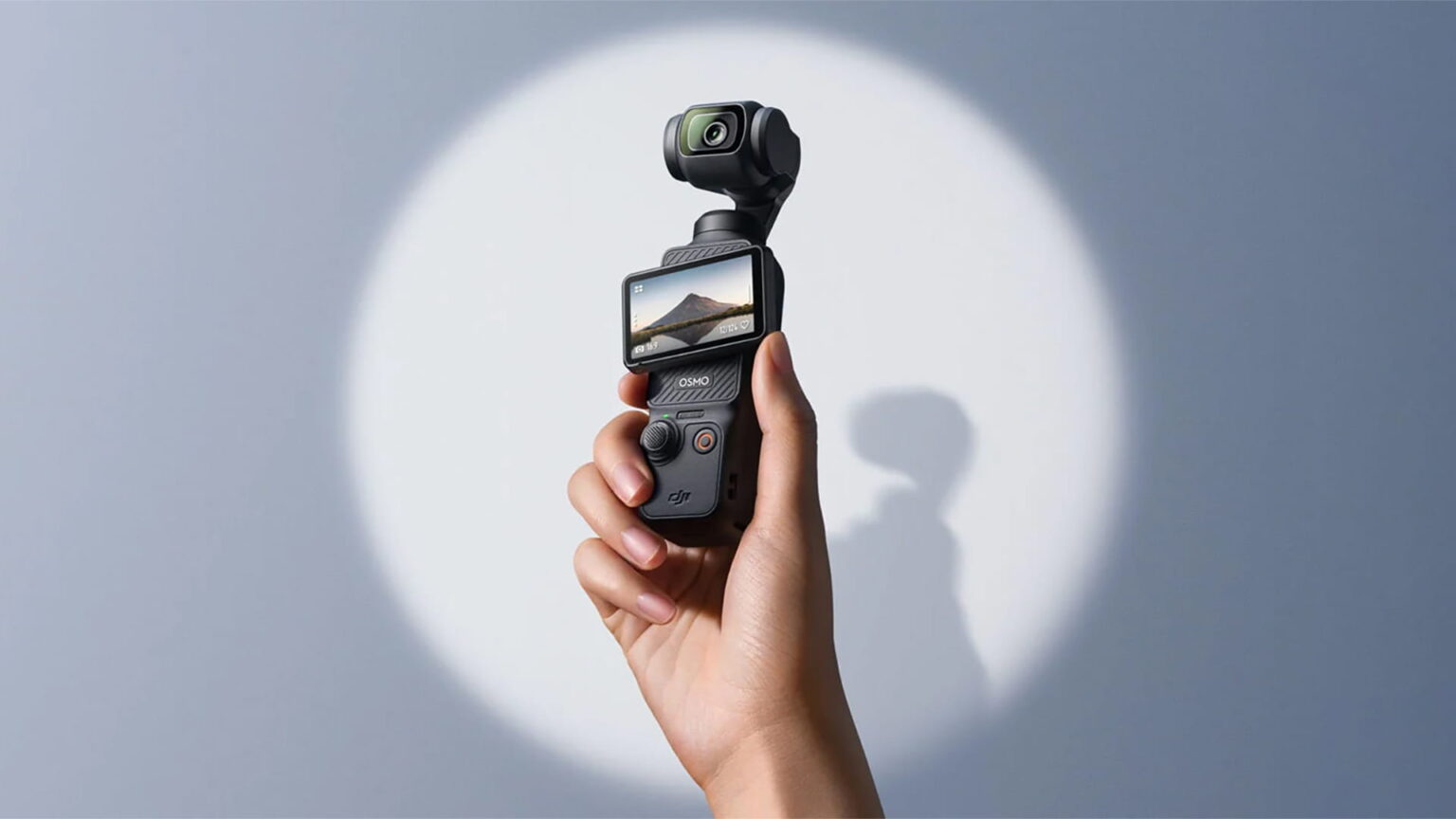
The segment that DJI once appeared to dominate is beginning to attract credible challengers.
In recent days, Vivo confirmed it has initiated a standalone camera project designed to benchmark directly against DJI’s Osmo Pocket series. Earlier media reports said Oppo’s chief product officer, Liu Zuohu, is personally leading a team exploring a similar category.
Major contenders such as Oppo and Vivo have endured years of cutthroat competition in smartphones and emerged intact. They are not rivals DJI would have chosen lightly. Yet the confrontation became almost inevitable the moment the Osmo Pocket 3 turned into a runaway hit.
Few consumer electronics products monopolize a category for long. DJI’s Pocket 3 came close. According to media reports, it sold more than ten million units globally within a year, generating over RMB 20 billion (USD 2.8 billion) in revenue from a single product. For months, constrained production capacity led to severe shortages. The device earned the nickname “electronic Maotai,” and secondhand premiums reportedly exceeded 30% at one point. It was only after DJI cut prices in the second half of last year that the narrative began to shift.
More importantly, gimbal cameras have, in the minds of many consumers, become synonymous with DJI’s Pocket series. That role as category definer, coveted by countless consumer electronics companies, appeared to fall into DJI’s hands with unusual ease.
Five years ago, smartphone makers might not have devoted serious resources to such a product. With annual revenues in the hundreds of billions of RMB, leading phone brands saw limited upside in devices like the Pocket compared with smartphones or connected hardware.
“When smartphones were still easy to grow, no one looked twice at Pocket. Phone companies aim for big business. Back then, the smartphone and internet-of-things segments were large and less difficult,” one executive at a smartphone manufacturer told 36Kr.
Now, a RMB 20 billion product looks materially different.
“Before, no one realized it was a ‘juicy piece of meat.’ Now, filling category gaps to drive incremental growth is profitable,” another industry insider said.
For DJI, the trajectory is mixed. It spent seven years validating a market that many initially overlooked: video log creators and travel enthusiasts. The first two generations were novel but sold only about one million units each. Steady iteration into the third generation finally turned the Pocket 3 into a breakout product.
That arc is typical in consumer electronics. In China’s mature supply chain ecosystem, no company can rely indefinitely on a single hit. Competition is structural.
Manufacturing barriers for gimbal cameras are meaningful. Before the Pocket 3 era, several small and midsize manufacturers exited the market just as the category began to scale. Even if smartphone makers enter, they are unlikely to capture all of DJI’s share. Still, 2026 could mark the year when the imaging hardware sector enters a more direct confrontation.
Crossing the gimbal barrier
DJI’s rise in this segment reflects advantages in technology, capital allocation, and marketing execution.
The original Pocket was the smallest three-axis mechanically stabilized gimbal camera DJI had released at the time. It addressed a clear gap between shaky smartphone footage and bulky professional gear. Its physical gimbal compensated for the limitations of electronic stabilization used in smartphones.
Gimbal stabilization remains central to the Pocket series.
Around 2020, after the first-generation Osmo Pocket validated demand, a wave of hardware makers entered the market. Moza, Feiyu, and Snoppa launched their own gimbal cameras.
Each brought adjacent experience. Moza had promoted foldable smartphone gimbals. Feiyu’s core business included gimbal cameras and handheld stabilizers. Snoppa’s Atom built early recognition on overseas crowdfunding platforms.
Snoppa’s trajectory proved the most turbulent.
Launched in 2019, the Snoppa Vmate attempted to address weaknesses in the first-generation Osmo Pocket, including its small screen, lack of standalone Wi-Fi transmission, and absence of vertical shooting mode.
Vmate introduced a rotating gimbal lens that physically pivoted 90 degrees, allowing users to switch between landscape and portrait modes without changing grip. DJI would not introduce vertical composition until the Osmo Pocket 3 added a rotating screen. Vmate also featured built-in Wi-Fi for wireless image transmission, considered advanced at the time.
Yet image transmission became both its differentiator and its constraint. Insufficient antenna design and software optimization led to lag and frequent disconnections. Smartphone previews could be delayed by several seconds, undermining real-time monitoring. The rotating gimbal design also posed manufacturing challenges. Early batches suffered from quality control issues, including tilted gimbals and malfunctioning microphones.
Worse, when Snoppa began large-scale shipments and resolved firmware bugs in the second half of 2020, DJI released the Pocket 2. With a larger sensor, improved audio, and a wider field of view, it surpassed Vmate. Before Snoppa could develop a second-generation model, chip supply disruptions forced it to exit the gimbal camera market.
Feiyu remains among the few continuing to launch new models. Its modular magnetic designs offer flexibility and are priced below RMB 2,000 (USD 280), well under the Pocket 3. However, while Feiyu addresses stabilization, it has not materially advanced image quality.
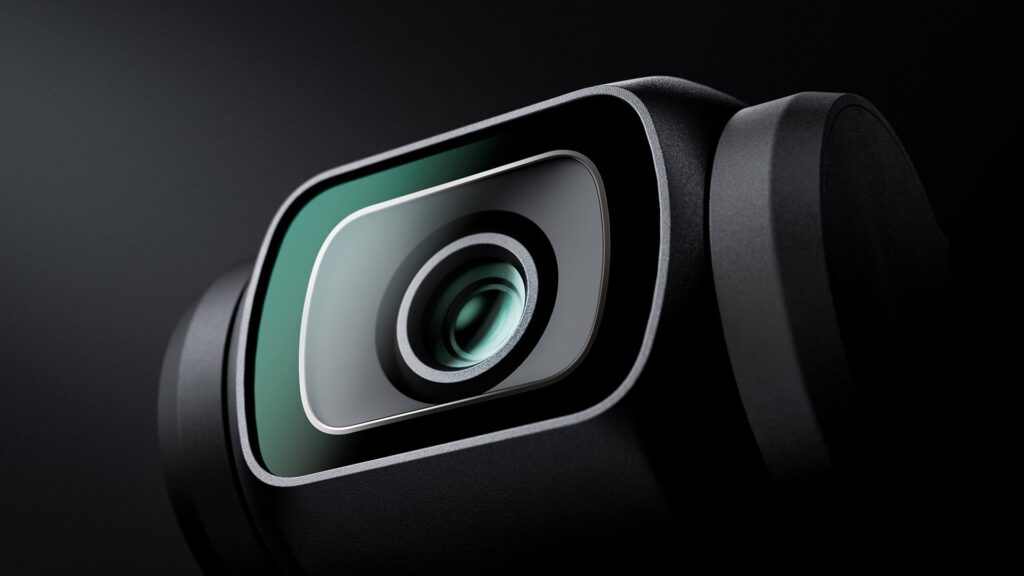
The Pocket 3’s one-inch sensor provides a clear advantage in low light, color rendering, and post-production flexibility. That specification became central to its appeal.
One marketing professional in the smart imaging sector recalled a viral campaign comparing the Pocket with the iPhone. “It said the Pocket shot better footage than the iPhone. But they cleverly compared it to the iPhone’s front camera, not the rear. It couldn’t beat the rear camera, of course, but it was a smart marketing tactic. And once it adopted the one-inch sensor, creators who care about image quality felt it was usable, even using it as a substitute for DSLRs in some scenarios.”
Beyond hardware, DJI’s advantage lies in ecosystem integration. The Pocket 3 connects to a broader lineup that includes drones, enabling creators to build coordinated shooting setups.
Engineering a one-inch sensor into a compact body requires expertise in miniaturization, heat dissipation, and algorithm tuning. These are not trivial tasks for smaller manufacturers.
“When DJI released the first Pocket, there were many imitators. By the third generation, the barrier had risen. We barely see copycats anymore,” an industry veteran told 36Kr.
When competitors emerge
Oppo’s chairman, Chen Mingyong, is known for playing Go. Industry observers often describe Oppo as cautious in new markets, but precise in execution.
Between Vivo and Oppo, Oppo is generally viewed as more aggressive, while Vivo is seen as steadier and lower profile.
Neither company lacks resilience. Both survived China’s intense smartphone competition and expanded overseas, where distribution could involve significant logistical and financial risk.
“These companies that survived in smartphones are strong. They just look weaker when compared with even stronger rivals. In other industries, it’s almost a dimensionality reduction attack, like when Xiaomi entered the automaking business and reshaped the market within a couple of years,” said a former employee of a major smartphone maker.
For manufacturers capable of mobilizing vast resources, leadership commitment is decisive. At present, they also face margin pressure.
As Samsung and SK Hynix shift production toward high-bandwidth memory for artificial intelligence applications, supply of memory used in smartphones has tightened, pushing prices higher.
According to a February report by Counterpoint Research, memory prices rose 80–90% quarter-on-quarter in the first quarter of 2026, reaching historic highs. One industry insider described the situation to 36Kr as a “catastrophe.”
In the meantime, companies are searching for new revenue streams. Camera imaging has long been a core competency for both Oppo and Vivo. After more than a decade of investment in smartphone photography, further gains from software-based algorithm improvements are beginning to show diminishing returns.
Both companies have experimented with hardware add-ons. Vivo’s X200 Ultra, for one, introduced an attachable telephoto lens. However, compared with turning smartphones into devices with external modules, the Osmo Pocket 3 format may represent a safer and more controllable path.
RELATED ARTICLE
Oppo and Vivo also benefit from brand familiarity among photography-focused users. “They are well suited for gimbal cameras. It fits their user base. Many people love the photography on the Vivo X300 Pro. The original Pocket audience overlaps,” one industry insider told 36Kr.
Some argue that hardware barriers are ultimately transitional. DJI may hold advantages in customized components and algorithm optimization, but these are engineering challenges rather than structural moats. If margins remain attractive, supplier and distributor alliances could narrow DJI’s lead.
Beyond imaging expertise, Oppo and Vivo command expansive sales networks.
According to Google Maps data, DJI operates several thousand physical stores worldwide, including authorized dealers. Vivo has more than 300,000 offline retail outlets globally.
Their channel philosophies differ. DJI emphasizes user experience, market education, and community building. Vivo relies on a sales-driven model. According to a former DJI sales executive, DJI maintains disciplined global pricing and restricts unauthorized discounts.
DJI’s distributors, however, have not endured the prolonged price wars typical of the smartphone industry. Oppo and Vivo’s agents built their networks through sustained, ground-level competition. As profit-sharing partners, they would likely welcome high-margin products such as Pocket-style cameras. If even 10% of Oppo or Vivo stores generate meaningful sell-through, the volume implications for DJI could be significant.
Even so, the Pocket 3 remains a tightly integrated product that combines micro-gimbal engineering, imaging algorithms, and software ecosystem depth.
On social media, users share detailed shooting parameters to replicate Fujifilm-style filters, seaside blue tones, vintage film aesthetics, or soft South Korean-inspired palettes. Behind those presets is DJI’s accumulated expertise in hardware and software integration.
“Hardware is one thing. The hard part is the software ecosystem and community. Be it color grading or editing know-how, DJI has applied this across its ecosystem. Starting from zero is costly,” another investor said.
KrASIA features translated and adapted content that was originally published by 36Kr. This article was written by Leslie Zhang for 36Kr.