


German sporting goods maker Puma announced on February 26 its biggest yearly net loss of EUR 645.5 million (USD 762 million) for 2025, looking to launch a quick comeback by adopting the methods of the Chinese competitor that will become its top shareholder this year.
“Puma has become too commercial, overexposed in the wrong channels, with too many discounts,” Puma CEO Arthur Hoeld said. Hoeld, who took the helm last July, has spoken repeatedly of missteps that he said damaged the company’s brand image.
In addition to sluggish sales in such key markets as Europe, the US, and China, Puma was hit hard by American tariffs in 2025. The net loss was a reversal from the previous year’s profit of EUR 281.6 million (USD 332.3 million). Sales fell 13% on the year to EUR 7.29 billion (USD 8.6 billion).
Wholesale sales to retailers, supermarkets and sporting goods stores made up roughly three-quarters of Puma’s sales in 2024, high compared with 60% for compatriot Adidas that year and 56% for US competitor Nike in the fiscal year ended that May. In wholesale, retailers have the power to determine product prices, so out-of-season products are sold at a discount.
For Puma, this created a vicious cycle that not only sapped profitability but also dragged down its brand value.
After becoming CEO, Hoeld switched to a strategy of recovering inventory from retailers to avoid price cuts. Product inventory temporarily increased 17% on the year for the July-September quarter as a result. Wholesale sales for the full year fell 17% to EUR 4.93 billion (USD 5.8 billion).
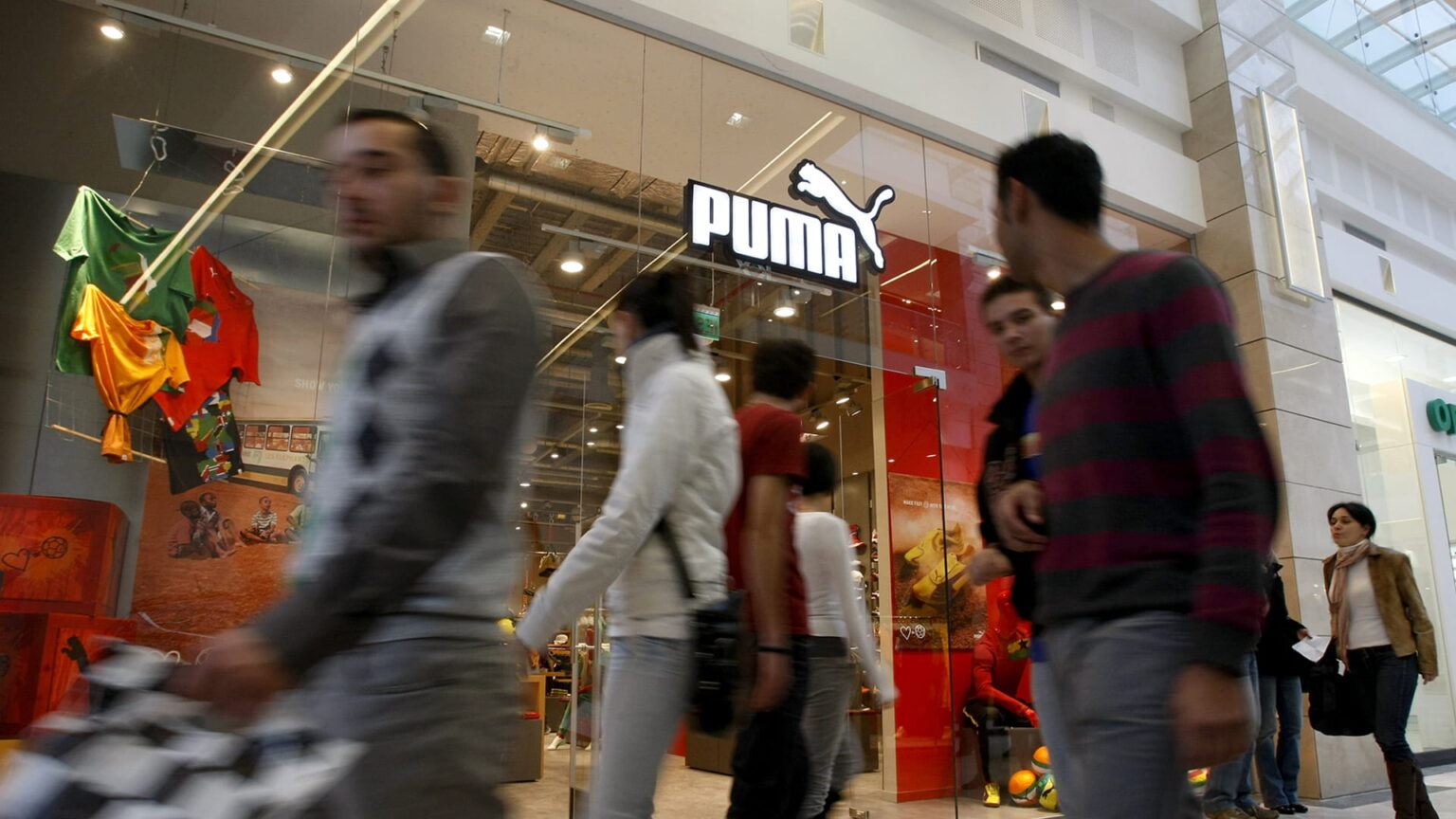
Puma is expanding its direct sales business, focusing on its own stores and online sales. As part of restructuring, the company announced cuts of 500 jobs in March 2025 and a further 900 in October.
With little know-how in the direct sales business, Puma is relying on Anta Sports, which will acquire a 29% stake in Puma to become its top shareholder in 2026.

“25 years ago, foreign brands were seen as being out of reach in the Chinese market,” Anta founder and chairman Ding Shizhong said immediately after the investment announcement in January. “But today, Chinese brands stand shoulder to shoulder with foreign brands.”
Founded in 1991 as a shoe factory, Anta has pursued a strategy of increasing the brands under its umbrella through aggressive mergers and acquisitions as well as investments. It acquired the Chinese business of Italy’s Fila in 2009 and invested in Finland’s Amer Sports, which handles outdoor sports brand Salomon, tennis brand Wilson, and others, in 2019.
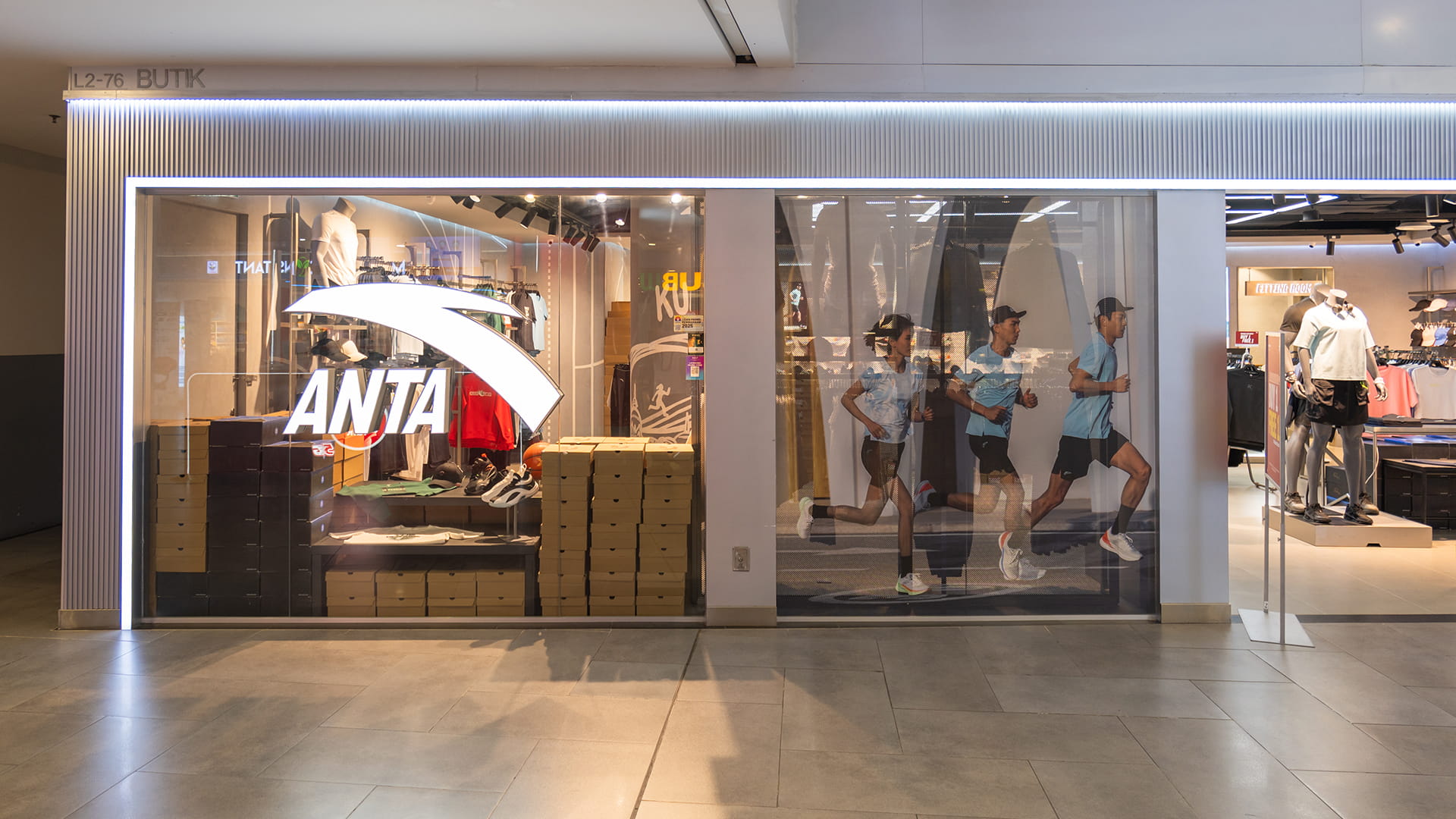
By aggregating multiple brands across different price ranges and categories, Anta has grown to become the world’s third largest sporting goods company, after Nike and Adidas.
It has expanded its China business by injecting the direct sales, product development and supply chain management know-how it cultivated through the Anta brand into other affiliated brands.
The company has increased the direct sales ratio for the Anta brand, bringing its wholesale ratio down to less than 10% in 2024. Direct sales make it easier to adjust production volume based on sales data and develop products that address consumer needs.
Anta also formed a joint venture with Japanese brand Descente, solidifying its position as a premium golf and ski brand in China.
Amer Sports has also successfully rebuilt itself by switching to direct sales, opening directly run stores in major cities and building up global brands.
“We’re welcoming Anta as a strategic partner for us to help us on that growth,” said Hoeld at a news conference on February 26. Puma is “very encouraged by the opportunities we see from it to long-term perspective, moving forward in China, but also beyond,” he said.
In addition to a fundamental overhaul of its sales methods, Puma’s revival will require the development of hit products. New products launched in 2025 under its popular Speedcat sneaker brand have struggled so far.
“We have recognized that our tactics when it comes to getting Speedcat to the market, and our anticipated success globally wasn’t living up to expectations last year,” Hoeld said.
“However, some of those reset measures, rebalancing our discounting and promotion policy have certainly helped Speedcat and give us a lot of confidence,” he said.
This article first appeared on Nikkei Asia. It has been republished here as part of 36Kr’s ongoing partnership with Nikkei.