
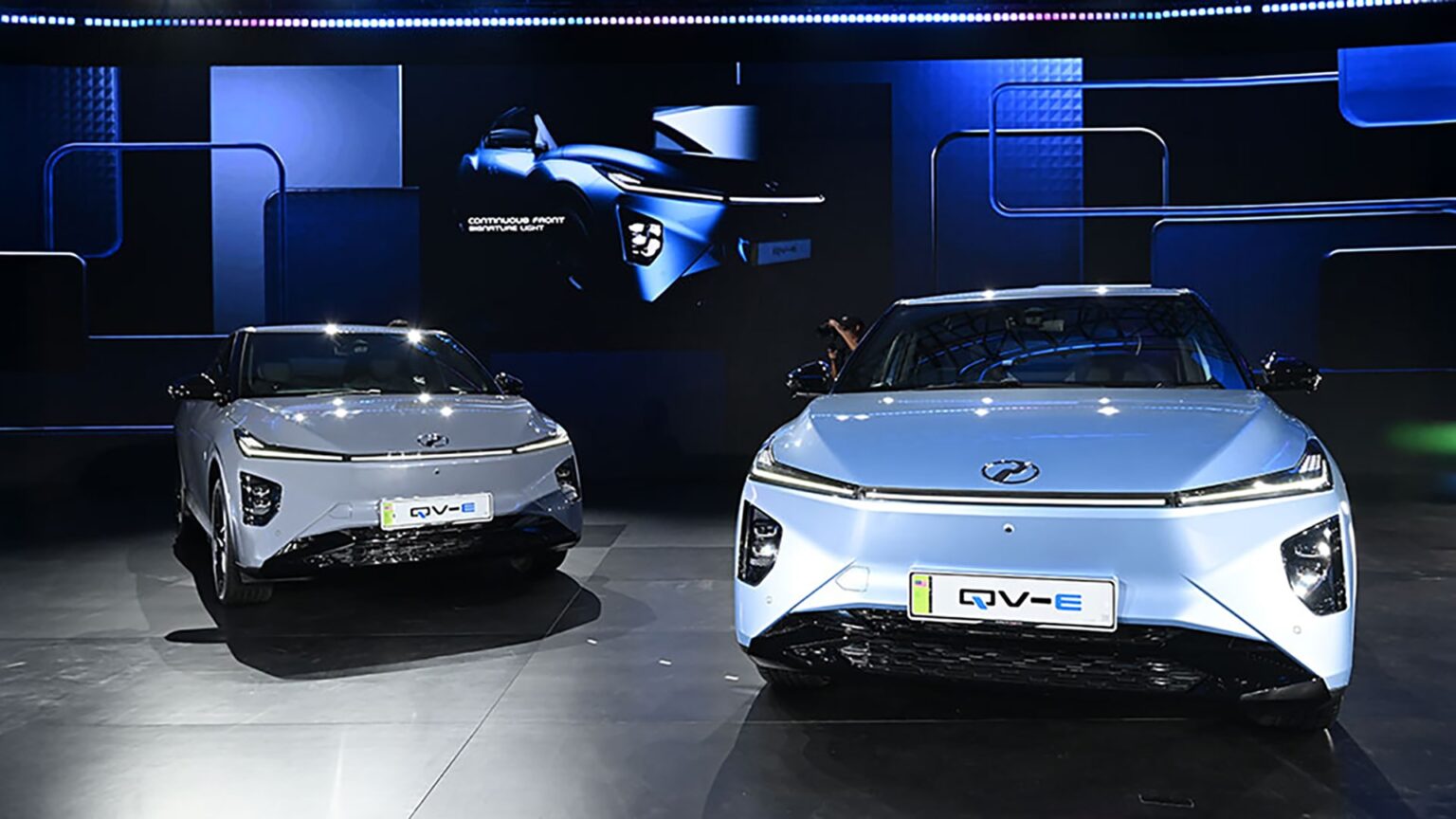
Malaysia’s largest carmaker, Perodua, rolled out its first homegrown electric vehicle, the QV-E, on December 1.
The QV-E is positioned as a national milestone in Prime Minister Anwar Ibrahim’s drive to localize EV technology, expand domestic supply chains, and reduce reliance on foreign automakers.
The sportback EV, in development since 2023 at a cost of MYR 800 million (USD 194 million), uses a lithium-iron phosphate (LFP) battery manufactured by China’s Contemporary Amperex Technology (CATL) and is priced at MYR 80,000 (USD 19,400), excluding the battery, which is leased separately.
Perodua makes the QV-E at its “smart mobility” plant in Rawang, northwest of Kuala Lumpur, which will have an initial capacity of 1,500 cars per month. The plant will be ready for production by the end of December, according to senior company executives. Perodua is also partnering with Malaysian assembler Tan Chong Motors for the next phase of its expansion.
The QV-E features a 52.5 kilowatt-hour LFP battery with an estimated range of 445 kilometers on a full charge. The vehicle supports 60-kilowatt DC fast charging and is powered by a 150 kW motor that accelerates from zero to 100 kilometers per hour in 7.5 seconds. The platform was co-developed with Austria’s Magna Steyr and includes advanced safety systems such as “Child Presence Detection,” which can sense movement and breathing in the rear seats.
Perodua also introduced Malaysia’s first “battery-as-a-sservice” program, separating ownership of the car and the battery. The leasing scheme allows Perodua to guarantee battery health and performance over a nine-year contract, while managing end-of-life disposal and recycling. The move is intended to ease customer concerns over battery degradation and poor resale value, which remain barriers to EV adoption.
“Perodua’s achievement showed that Malaysian engineers could deliver advanced manufacturing under tight timelines, despite uneven technology transfer from international partners,” said Anwar on December 1 during the official launch of the car, adding that Perodua’s work demonstrated Malaysia’s ability to “lift the nation’s dignity” by nurturing homegrown talent.
Perodua president and CEO Zainal Abidin said the company worked with more than 52 Malaysian suppliers and collaborated with local universities to build skills in electrical engineering, battery systems and EV design. The number of vendors is expected to reach 70 by 2030 as localization deepens. Local procurement this year alone is forecast at MYR 11 billion (USD 2.7 billion).
Chief engineer Chok Jia Jiunn, speaking to Nikkei Asia, said the company designed the vehicle around the tastes of Malaysians, who prefer a “dynamic exterior,” with an “aerodynamic and sporty” design. Chok described the model as a “sportback,” although it will be classified as a hatchback under Malaysian regulations. He added that the battery leasing scheme directly addresses the most common consumer anxiety.
“Malaysians are not afraid to buy EVs, they are concerned about battery degradation. This is why Perodua will offer the leasing program and take 100% responsibility for the battery,” he said.
RELATED ARTICLE
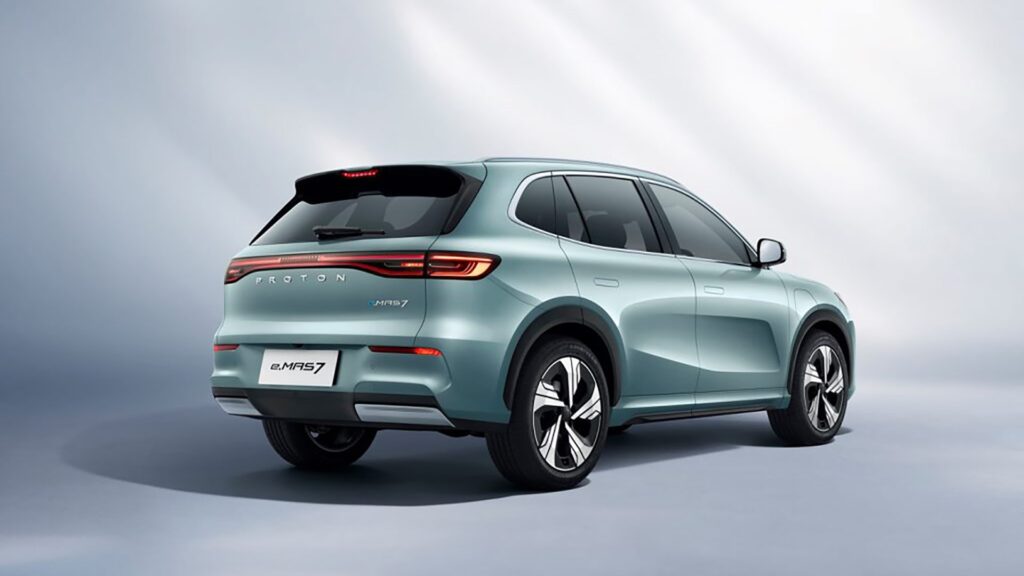
Malaysia hopes EVs will make up 20% of annual vehicle sales by 2030 and 80% by 2050. Perodua’s first EV model follows the introduction of Proton’s e-MAS 7 in 2024 and the affordable e-MAS 5 last month. With Perodua’s total sales expected to exceed 359,000 vehicles this year, the company said it aims to maintain its position as ASEAN’s second largest carmaker by volume. Malaysian government data showed that Perodua sold 289,210 cars and Proton 125,120, translating to market shares of 41.6% and 18%, between January and October this year.
Proton’s e.MAS 5, launched at the end of October, marks a pivot from niche EV enthusiasts to mass market electric mobility in Malaysia. The B-segment hatchback, or subcompact small car, is priced from just under MYR 60,000 (USD 14,550), making it the country’s most affordable EV. Proton’s chief branding officer, Salawati Muhammad Yusof, said the company designed the e.MAS 5 around Malaysian lifestyles: compact enough for city driving yet practical enough for small families or daily commuters.
“We wanted a car that fits every kind of lifestyle in Malaysia,” she told Nikkei Asia.
Proton’s EV also uses a LFP battery made by CATL, supports DC fast charging, and comes with a large 14.6-inch infotainment display. It also features remote charging management via Proton’s app ecosystem and a live charging station map to reassure first-time EV owners switching from gasoline-powered cars.
Proton argues that affordability alone will not encourage EV adoption but that a robust ecosystem will. The company has rolled out a nationwide network of 45 authorized dealers and ten body and paint centers, after-sales support, and forged partnerships with charging point operators so that about 90% of public chargers are integrated into its service map. Salawati said this infrastructure is critical to give Malaysians confidence in EV ownership.
Proton’s e.MAS 5 and Perodua’s QV-E illustrate two very different approaches to bringing EVs to typical Malaysians. The e.MAS 5 hits the market as the country’s cheapest EV. Its Prime variant starts at MYR 56,800 (USD 13,774), while the Premium model is priced up to MYR 69,800 (USD 16,926.5). These prices exclude insurance costs.
This article first appeared on Nikkei Asia. It has been republished here as part of 36Kr’s ongoing partnership with Nikkei.