
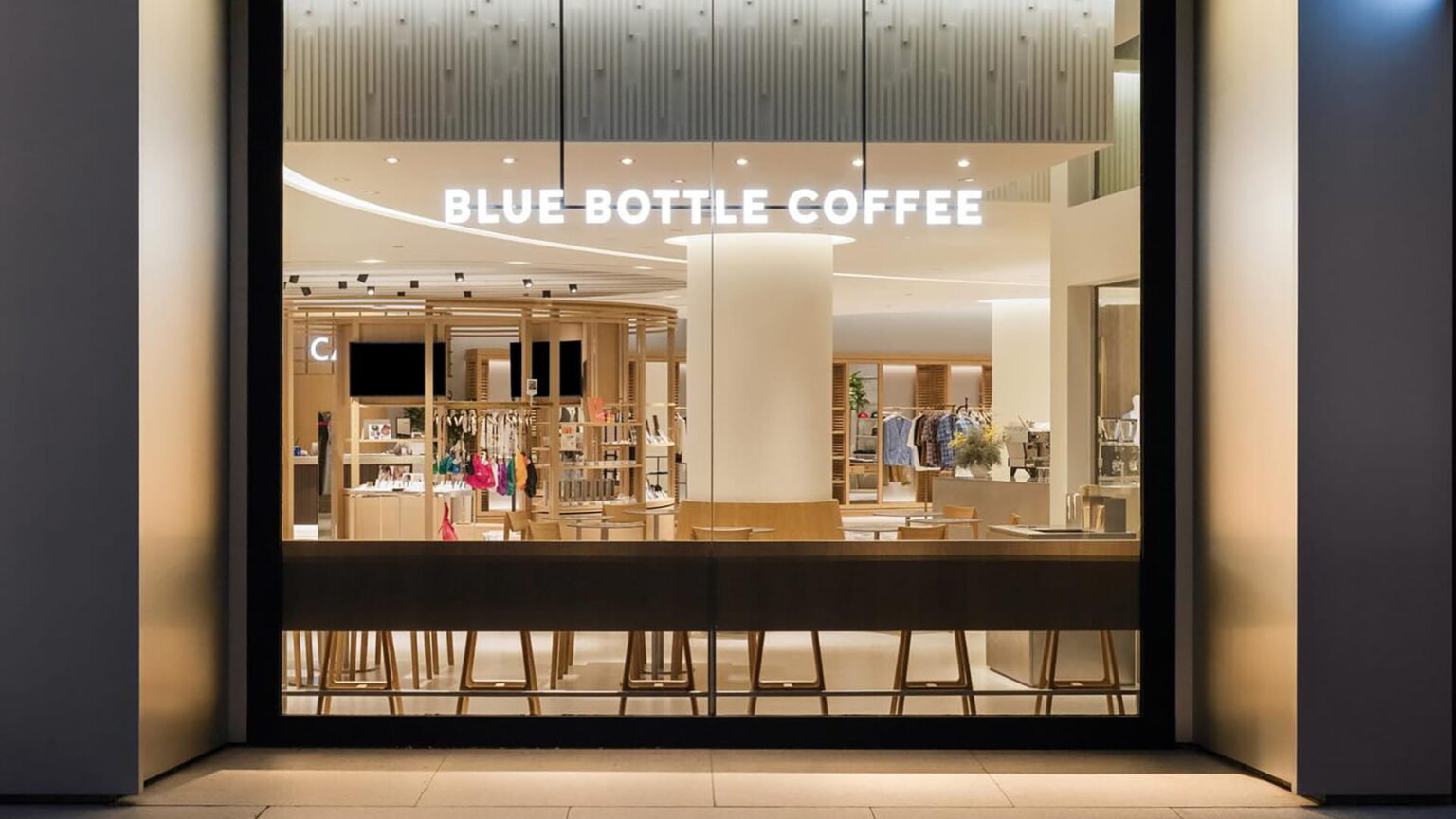
Centurium Capital has reached an agreement with Nestle to acquire Blue Bottle Coffee’s global retail store operations for less than USD 400 million, according to 36Kr. After the transaction closes, Nestle will retain Blue Bottle’s fast-moving consumer goods business, including packaged coffee beans, instant coffee, and ready-to-drink beverages.
Blue Bottle remains unprofitable. According to information obtained by 36Kr, the company generated approximately USD 250 million in revenue in the 12 months ended June 30, 2025. The US accounted for about USD 150 million, while the Asia Pacific region contributed roughly USD 100 million. A source familiar with the matter said the company is expected to achieve profitability in 2026.
Centurium Capital did not respond to a request for comment.
Luckin’s brand ambitions
A coffee industry insider told 36Kr that Luckin Coffee has recently been recruiting brand-oriented talent as it prepares to integrate Blue Bottle.
“If you want to sell a cup of coffee priced above RMB 40 (USD 5.6), brand positioning becomes the top priority,” the person said.
Founded in 2002 in California, Blue Bottle opened its first store in San Francisco in 2005. Positioned as a high-end specialty coffee brand, it built its identity around freshness. Founder James Freeman once said Blue Bottle stores would serve only coffee roasted within 48 hours. Today, the company operates a global sourcing network and maintains its own roasting standards.
In 2017, Nestle acquired a 68% stake in Blue Bottle for less than USD 500 million, seeking to expand into higher-priced coffee segments and identify new growth opportunities.
As of the end of 2025, Blue Bottle operates 140 stores globally, including 31 in Asia. Compared with Japan and South Korea, the company entered the China market relatively late.
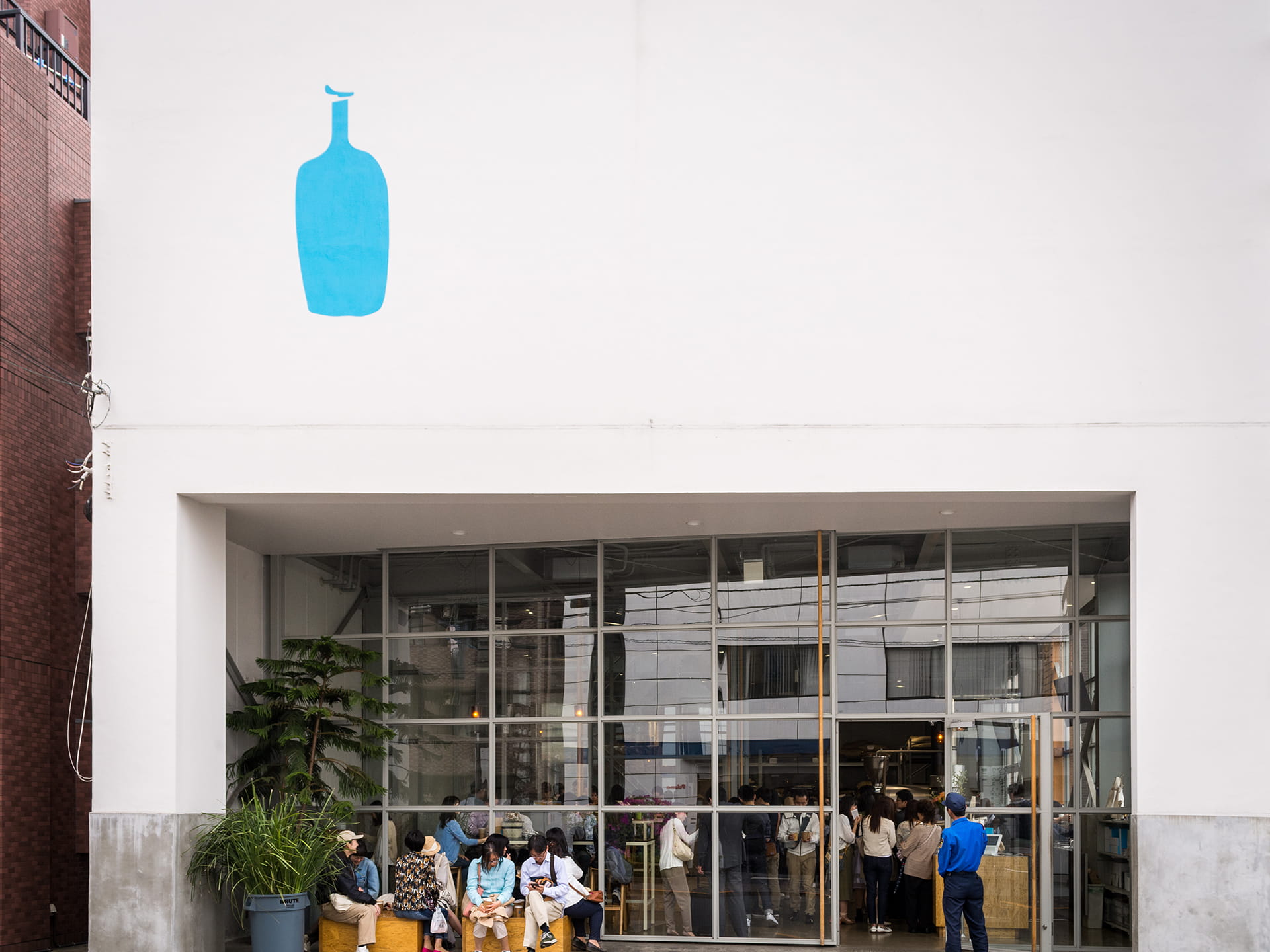
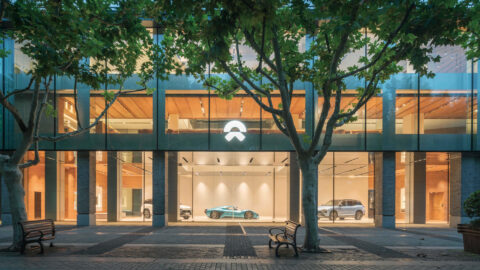
Five years after Nestle acquired the company, Blue Bottle opened its first mainland China store in 2022 along Shanghai’s Suzhou Creek. By the end of 2025, it had expanded to 15 stores across Shanghai, Shenzhen, and Hangzhou. The Hangzhou store opened on November 14. Blue Bottle’s global CEO, Karl Strovink, has publicly said the company’s headquarters views China as an important and steadily growing market.
Yet the past three years have also marked the fastest expansion period for China’s domestic coffee chains. Peet’s Coffee, which also positions itself in specialty coffee, expanded rapidly between 2022–2024, adding nearly 200 stores during that period. As of 2021, Peet’s Coffee had only about 70 stores in China. By comparison, Blue Bottle’s expansion has been more measured.
Financial value, strategic leverage
For Centurium, acquiring Blue Bottle carries both financial and strategic implications.
Centurium currently holds a 23.28% equity stake in Luckin Coffee and controls 53.6% of the voting rights, making it the company’s controlling shareholder. In April 2025, Centurium founder David Li became chairman of Luckin and has since been closely involved in the company’s planning and daily operations.
At an end-of-year ceremony in 2025 celebrating Luckin surpassing 1,000 stores in Chengdu, both Li and Luckin CEO Guo Jinyi attended in person. A Luckin employee said “the bosses are hands-on and very present on the frontlines.”
After surpassing 30,000 stores, Luckin is now facing growing pressure on profitability as competition intensifies in food delivery and coffee retail. In the fourth quarter of 2025, the company reported revenue of RMB 12.777 billion (USD 1.8 billion), up 32.9% year-on-year. Net profit, however, fell 38% year-on-year. Operating margin declined from 10.5% to 6.4%, while same-store sales growth slowed to 1.2%.
China’s midrange coffee segment has become increasingly competitive. Even with its scale advantage, Luckin is not immune. Centurium’s acquisition of Blue Bottle could help accelerate Luckin’s push into higher-end market segments. A source familiar with the matter said Luckin had previously considered acquiring M Stand.
The deal could also support Luckin’s overseas ambitions. As of the end of 2025, Luckin operated about 160 stores outside China, most of them in Southeast Asia, with only nine in the US. The US market is widely seen as the final and most challenging destination for Chinese consumer brands expanding abroad. As a US-born specialty coffee brand, Blue Bottle could provide Luckin with established overseas channels, local teams, and access to premium consumers.
Why not Starbucks or Costa?
For Centurium, evaluating global coffee assets falls within its investment focus.
According to 36Kr, Centurium previously showed interest in Starbucks and Costa Coffee. A person close to Centurium said its interest in Starbucks depended on securing a controlling stake. However, because Centurium already controls Luckin, and Starbucks headquarters wants to retain partial ownership and influence over its China operations, the likelihood of a deal was limited from the outset.
Discussions with Costa Coffee progressed further. Strategically, Costa could have differentiated itself from Luckin in China by targeting a higher price segment while Luckin focused on the mass market. It could also have helped accelerate Luckin’s international expansion. However, negotiations ultimately did not move forward.
A person familiar with Costa said the company initially appeared attractive due to its strong brand recognition and ability to generate substantial profit in the UK. However, several issues complicated the deal. Many Costa stores in Europe are aging and require renovation, its IT systems are outdated, and upgrading them would be costly and complex.
Costa’s outlook in China also appears less promising. “After Boyu invested in Starbucks, even SKP malls are opening Starbucks stores. Taking Beijing as an example, several Costa locations have lost their edge,” another industry insider said.
36Kr has also learned that although a full sale of Costa has not progressed smoothly, the company is still considering a potential divestment of its China business.
Why Blue Bottle?
Centurium also evaluated %Arabica and M Stand alongside Blue Bottle.
Sources told 36Kr that Nestle’s decision to sell Blue Bottle reflects a broader shift toward an asset-light strategy. After bringing in hedge funds and appointing a new CEO, Nestle has been seeking to divest relatively asset-heavy retail operations. In addition to Blue Bottle, the company is also exploring a sale of its bottled water business.
Nestle was reportedly willing to offer a discount. A person familiar with the transaction said Centurium’s purchase price was lower than what Nestle paid for its stake in 2017.
An industry insider close to Blue Bottle said that even as a Nestle subsidiary, the company retained considerable operational independence, preserving its brand ethos. In Asian markets such as China and South Korea, Nestle-affiliated executives participated in strategy discussions, but final decisions and day-to-day operations largely remained with Blue Bottle’s own team. Even so, the company’s growth in China has been slower than expected.
Since the second half of last year, Blue Bottle has held extensive discussions with major Chinese shopping malls about potential new locations. Several of these spaces were previously occupied by Starbucks Reserve stores that were not renewed as Starbucks adjusted its store portfolio to reduce costs and improve efficiency.
Centurium also explored acquiring %Arabica, another coffee brand with a similar price range and positioning to Blue Bottle, but the talks did not progress. According to an investment source, Blue Bottle’s brand authenticity and cultural cachet are stronger, and its store design is more refined and premium. In addition, its financial performance is relatively stronger. By contrast, %Arabica’s dispersed shareholding structure would have made a transaction more complex.
For Centurium and Luckin, Blue Bottle could become a missing piece in a broader strategy: moving up the value chain at home while building credibility abroad, one carefully roasted cup at a time.
KrASIA features translated and adapted content that was originally published by 36Kr. This article was written by Zhong Yixuan for 36Kr.