


Tokyo may be central to Japan’s startup scene, but another region, evolving along its own path, has gradually grown over the past few years into a comparable force: Kansai. Across the region, deep tech ventures built on advanced technologies from universities and research institutes are gaining traction, with a presence that is becoming hard to ignore.
Centered on Kyoto, Osaka, and Kobe, Kansai is Japan’s second largest metropolitan area and one of the world’s leading megaregions.
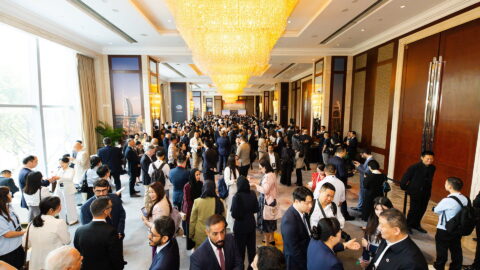
To highlight emerging opportunities in the region, the Kansai Bureau of Economy, Trade and Industry (METI Kansai) and the Union of Kansai Governments held an in-person event in Osaka on March 11, outlining why Kansai has both the ambition and the capacity to develop into a global deep tech hub.
Kansai’s road to 100 unicorns
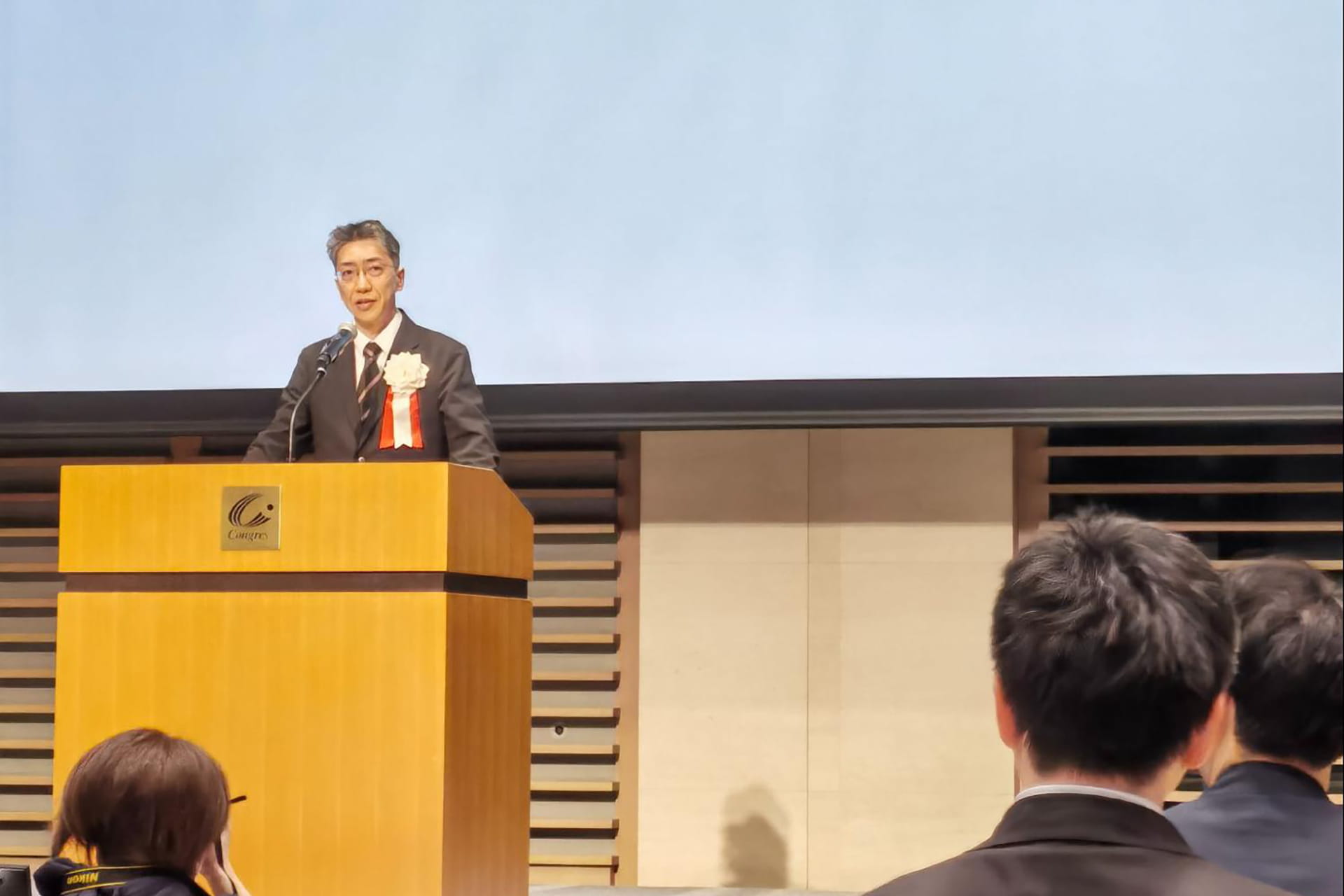
During the event, Ieaki Takeda, director general of the Kansai Bureau of Economy, Trade and Industry, said Japan’s startup policy has entered a new phase.
Looking back, the government introduced a five-year startup development plan in November 2022, aiming to expand investment to JPY 10 trillion (or approximately USD 63.1 billion) by fiscal 2027, alongside a longer-term goal of creating 100 unicorns and 100,000 startups. The broader ambition is to position Japan as Asia’s largest startup hub and a leading global cluster.
Takeda said the results are already beginning to show. According to Takeda, the number of startups in Japan has grown to about 25,000, roughly 50% higher than in 2021. He attributed the increase in part to improvements in the startup environment, including expanded funding access, the rise of university-launched startups, and greater emphasis on open innovation.
He added that policy priorities are shifting from expanding the base to increasing company value. This includes measures aimed at generating higher-value companies in priority sectors, complementing existing support.
Building a world-class ecosystem
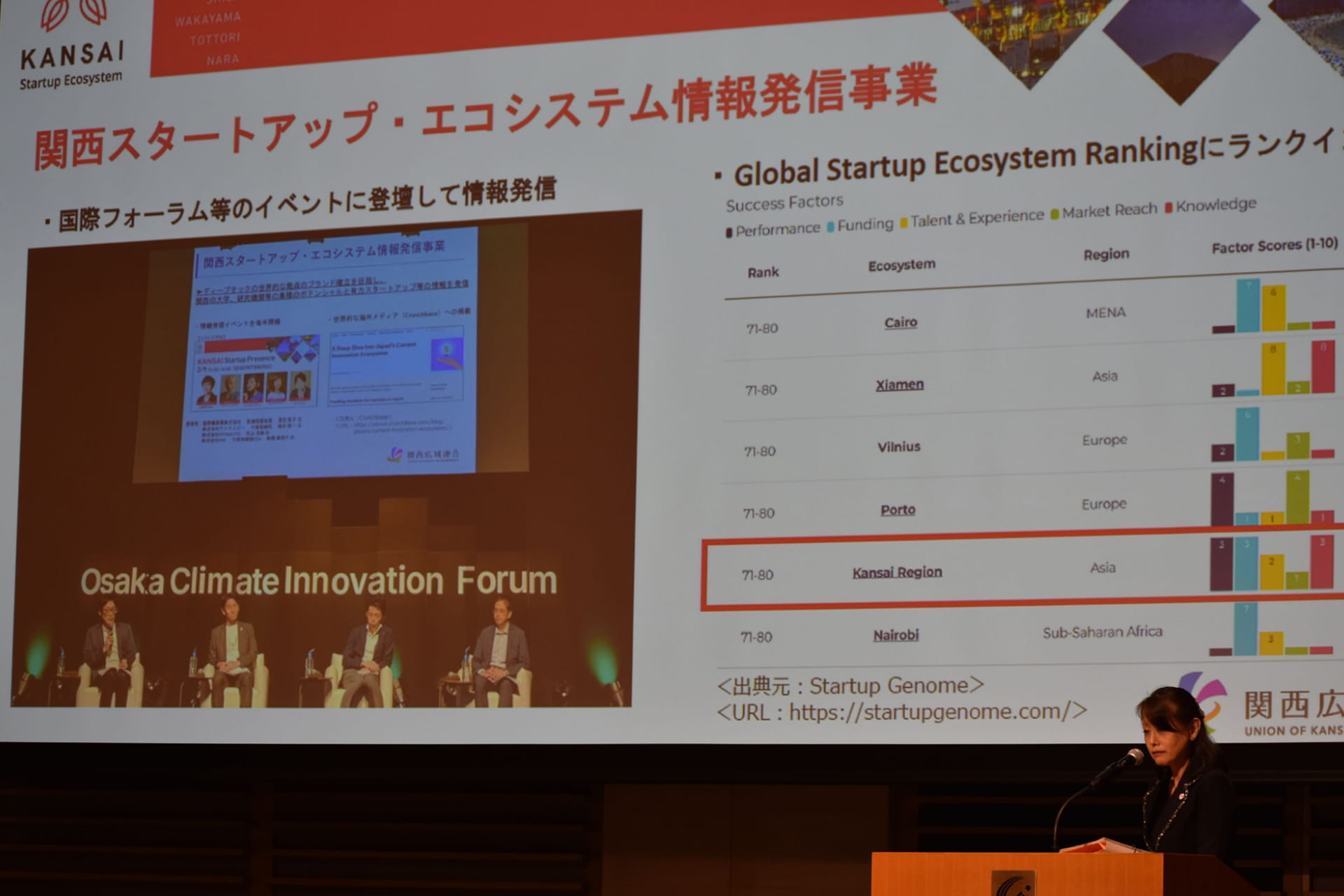
Mayu Katakabe, director general of the industrial promotion bureau at the Union of Kansai Governments, outlined the region’s potential using data.
The Union comprises two urban prefectures, six prefectures, and four cities, with a combined population of about 22 million. It promotes wide-area industrial development, including communicating the strengths of the startup ecosystem.
According to rankings by Startup Genome, Kansai was unranked until three years ago but has since improved. Among “emerging ecosystems,” it moved from the 81–90 band to the 71–80 band over the past two years, indicating steady progress.
A new brand, DeepTech Frontier Kansai, is expected to build on that momentum. The initiative aims to combine leading academic institutions, including Kyoto University and the University of Osaka, with the technological capabilities of small and midsize companies that hold global market share in niche sectors. The goal is to present Kansai’s deep tech strengths to a global audience.
Several support organizations are already active. These include the Kansai Startup Academia Coalition, which links universities and research institutes to support startup creation. The next step is to centralize information from these groups, making it easier to track developments across the ecosystem. Kansai also plans to raise its profile by exhibiting at events such as Viva Technology, one of Europe’s largest startup trade shows.
GSE 2026 as a global connector
Expo 2025, held in Osaka last year, hosted the satellite event Global Startup Expo 2025, a deep tech-focused gathering that brought together entrepreneurs and investors from Japan and overseas.
Building on that foundation, organizers are planning a 2026 edition. The concept centers on advanced technologies designated as national priorities, with a focus on the Kyoto-Osaka-Kobe corridor. It will also involve startups nationwide and stakeholders across industry, government, academia, and finance.
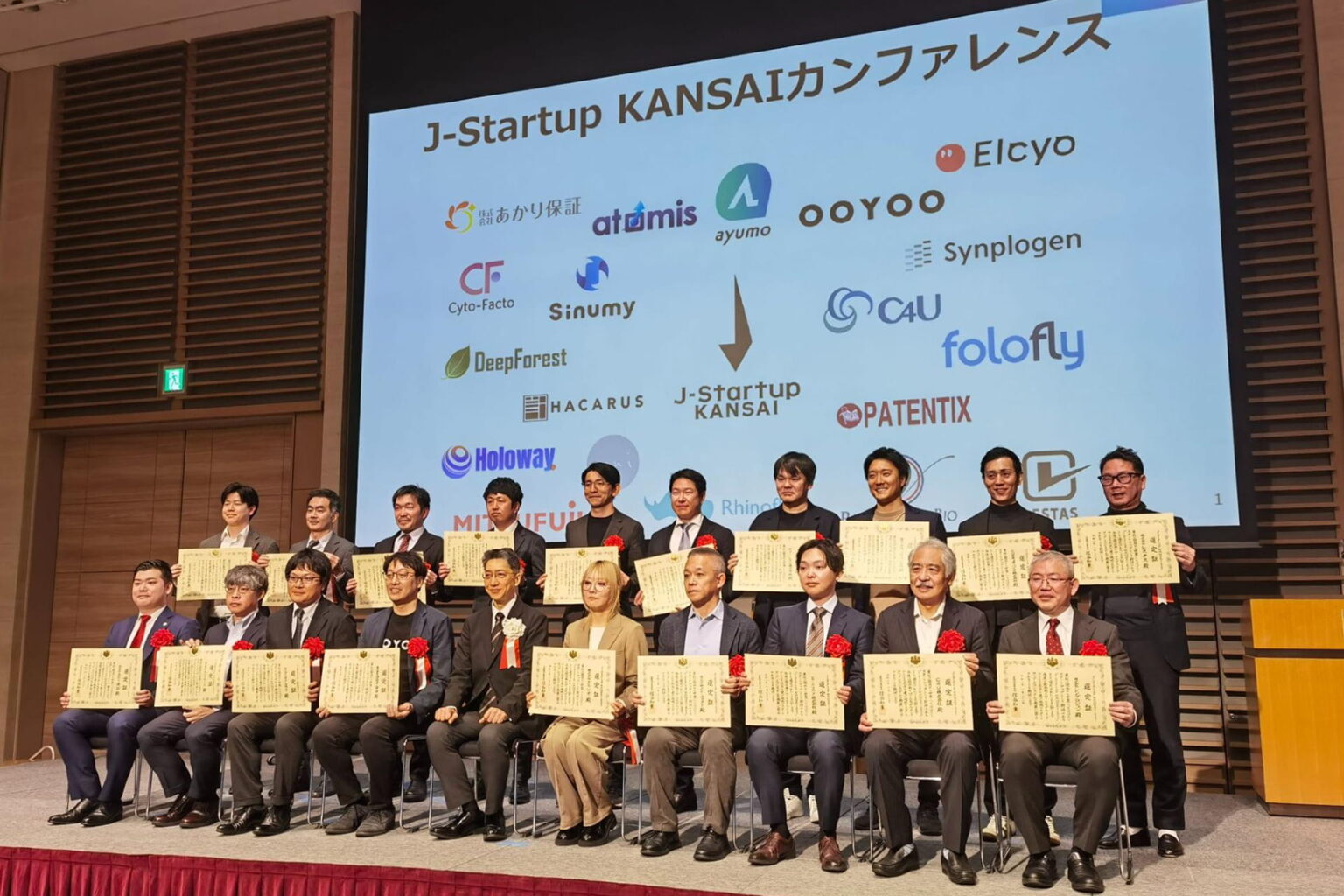
As a precursor, J-Startup Kansai featured a panel discussion on the region’s deep tech landscape and its international expansion. Speakers included Shogo Otani, CEO of OOYOO; Naofumi Makino, director of startup initiatives at the Japan External Trade Organization (JETRO); Yoshifumi Mizuhara, managing partner of Kobe University Capital; and Rie Tamashiro of the Union of Kansai Governments, who moderated the session.
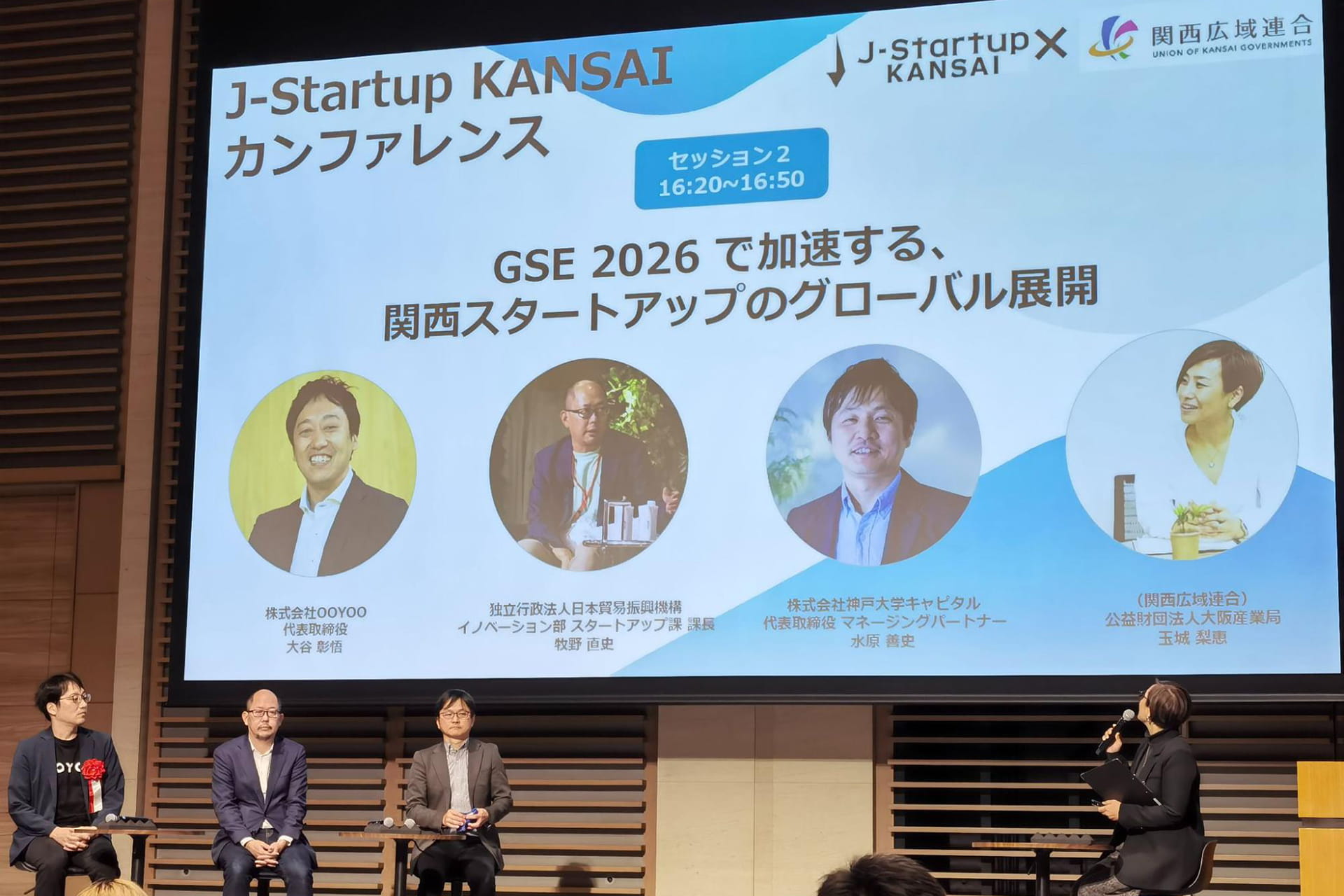
Reflecting on GSE 2025, Otani said overseas players visited OOYOO’s booth throughout the event, creating opportunities for new connections. Makino added that the expo attracted global investors, particularly from the energy sector, and helped deepen awareness of Japan’s startup ecosystem.
Tamashiro added that overseas investors were struck by the quality of what they found. “We have investors from abroad asking whether so many high-quality early-stage opportunities had really been here all along,” she said.
These responses suggest GSE could become a key platform connecting Japan with international startups and investors.
The panel also addressed global trends in deep tech investment. Mizuhara said fundraising conditions remain challenging worldwide, particularly in the energy sector. At the same time, Kansai’s research base, supported by pharmaceutical companies and a strong manufacturing sector, creates opportunities to develop deep tech startups.
Makino said deep tech continues to attract attention in part because artificial intelligence is moving toward real-world applications. “Global interest in those technology areas is clearly rising,” he said. “But from an overseas perspective, the story of exactly what you are going to achieve with that technology becomes even more important.”
Why Kansai matters now
Kansai shows clear potential to develop into a leading global deep tech hub, supported by a strong industrial base and growing policy support.
The region hosts pharmaceutical companies such as Takeda Pharmaceutical, alongside global corporations including Panasonic and Kubota, which are active in deep tech investment and partnerships. Few regions offer comparable access to large companies with established international operations.
Just as important, Japan is accelerating the deployment of AI and other advanced technologies across society, partly in response to labor shortages linked to demographic decline. This shift may create opportunities for overseas investors and entrepreneurs.
GSE 2025 reflected that momentum, highlighting projects in autonomous driving, flying vehicles, and biotechnology, among other fields. For overseas startups, Kansai is increasingly a setting to test and implement innovations, with the potential to scale globally through partnerships with established corporations.
The 2026 edition of GSE, scheduled for the fall in Osaka, may mark a turning point as Kansai’s deep tech ecosystem deepens its global connections. If that trajectory holds, the region may become harder to overlook as a gateway into Japan’s next phase of innovation.
Prospective participants and investors can check the DeepTech Frontier Kansai platform for updates and identify potential partners ahead of the event.
This article was written by Takeshi Yamaya, with contributions from the 36Kr Japan team, and published in partnership with the Union of Kansai Governments.