


Everything unfolded within just a few months.
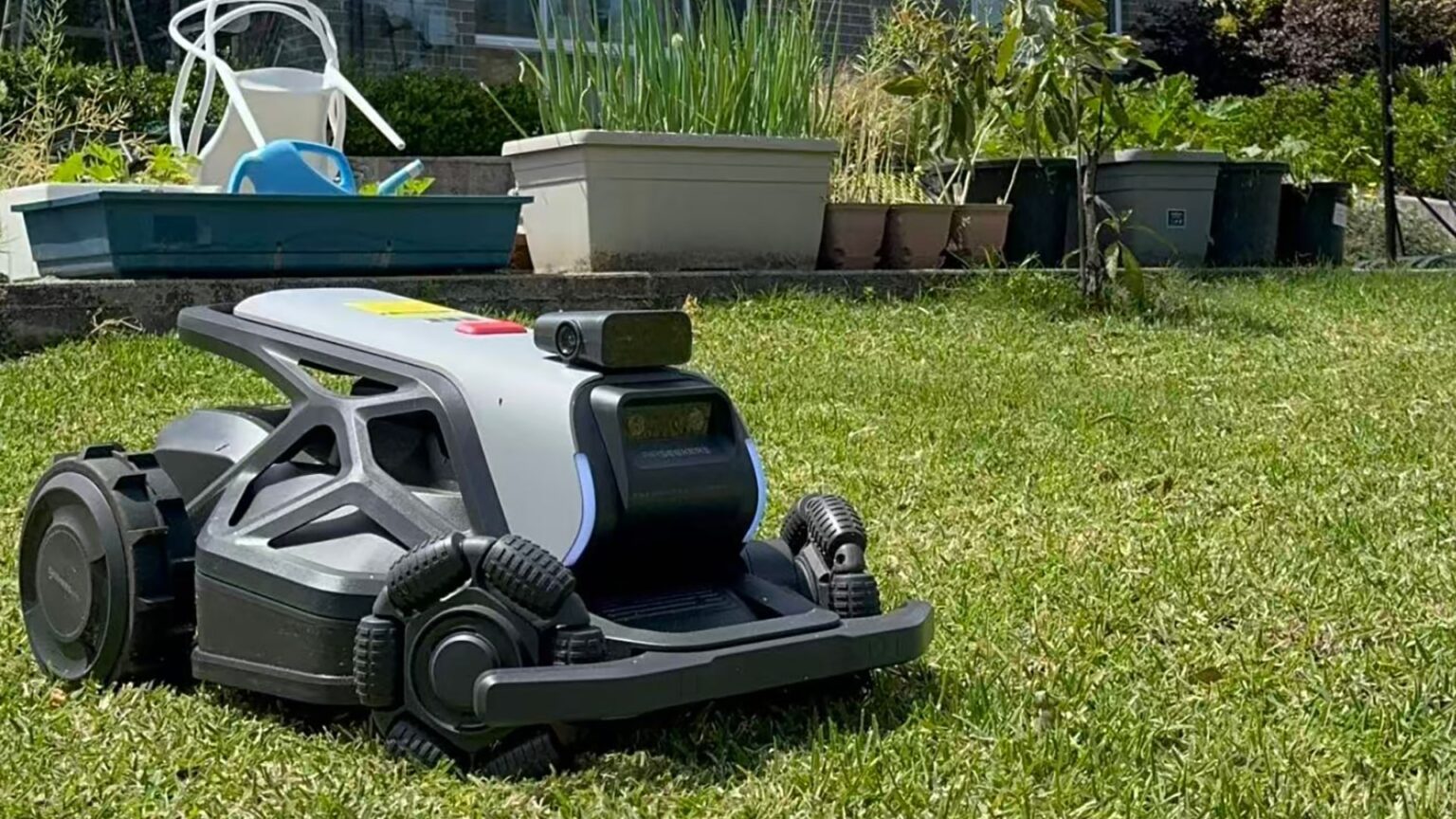
A year ago, Airseekers, founded by Hu Yue, made its name with the Tron series of robotic lawn mowers. Its flagship model, priced above USD 2,000, generated more than USD 2.2 million in preorders on Kickstarter in its first month. The company also secured three funding rounds totaling more than RMB 100 million (USD 14 million) within its first two years.
But harsh realities soon set in. R&D and delivery costs consumed capital much faster than Hu had expected. Although crowdfunding brought in revenue, nearly RMB 10 million (USD 1.4 million) went toward molds and marketing, leaving little cash on hand. Airseekers had to finance production independently, while ongoing expenses for R&D, manufacturing, certifications, and patents continued to strain resources.
High upfront hardware costs and rapid cash burn made financial management difficult. The production line had to be built from scratch, and multiple complications led to delivery delays.
A crisis of user trust soon followed. Facing pressure from suppliers, financial shortfalls, and tight delivery deadlines, the team struggled to keep pace.
Hu made a difficult decision. He published an open letter to crowdfunding backers announcing delivery delays. In it, he explained that because of production and financial pressures, Airseekers would begin commercial sales through global retail platforms and offline channels before completing all crowdfunding shipments. The goal was to maintain operations and ensure continued delivery to early supporters.
When he pressed “send,” Hu braced himself for backlash.
“We had to be honest. Doing business overseas costs far more than we imagined. We made a lot of mistakes. By then our funds were already tight. Completing thousands of crowdfunding shipments would have required tens of millions of RMB upfront. Combined with ongoing R&D, the operating pressure would have been immense,” Hu told 36Kr.
He felt he had no choice but to shoulder the pressure and remain transparent, given users’ right to know how their funds were spent. “This decision was the best option I could think of under a want-it-all scenario,” he said.
During this low point, Hu led his team through dual challenges: fulfilling deliveries while searching for a path forward. Gradually, momentum returned.
According to 36Kr, Airseekers has completed a Series A funding round worth an eight-figure RMB sum, with investment from leading robotics company Shenhao, alongside existing investors including professor Gao Bingqiang, Brizan Ventures, and Peak Patience Capital.
As of November, Airseekers has shipped nearly 10,000 units of its lawn-mowing robots, with annual revenue expected to reach nearly RMB 100 million (USD 14 million). The company is expanding its sales and marketing teams to strengthen its global presence and distribution channels. Deliveries to crowdfunders are also nearly complete.
Exporting smart hardware may look like a major opportunity, but it is full of hidden challenges. Products must withstand complex, varied environments and meet stringent certification standards and high expectations in Europe and the US. While crowdfunding helps test markets quickly, it cannot support the capital needs of mass production. Once full-scale manufacturing begins, pressure on cash flow, supply chains, and quality control escalates dramatically. These are challenges no hardware company can avoid today.
Between each rise and setback, every startup must find its own survival strategy in an increasingly difficult era.
36Kr spoke with Hu about how Airseekers is navigating its production and financial pressures. The conversation covered crisis management, product iteration, and future plans.
The following transcript has been edited and consolidated for brevity and clarity.
36Kr: What caused the delivery turmoil midyear?
Hu Yue (HY): Airseekers didn’t face major obstacles in mass production. Our shipment efficiency and product quality met expectations; in fact, we were among the smoothest startups in reaching mass production. Once the molds were completed, revisions were minimal, and our first-batch yield rate was high. The real issue was cash flow.
By late 2024, even though we received crowdfunding funds, the pricing was too low. After deducting nearly RMB 10 million in mold costs, little remained, so we had to advance funds for delivery. Meanwhile, manpower expenses, overseas team setup, certifications, and patents continued drawing down earlier financing. Early mass production also required costly pre-stocking and longer manufacturing hours.
Money spent overseas disappeared faster than expected. The supply chain and logistics cycles didn’t align. We needed to pay upfront to stock products, but overseas shipping typically took one to two months. This meant tens of millions of RMB worth of goods were stuck in transit.
I once said mass producing lawn-mowing robots would require RMB 100 million. Looking back, that number might work under ideal conditions, but real-world validation always brings surprises.
36Kr: Has the cash flow issue been resolved?
HY: With this financing round and support from a listed company, we secured longer payment terms from suppliers. Essentially, we can take goods first, sell them, and pay afterward. This reduces the capital pressure of stocking inventory. Funds from this round will go toward R&D, marketing, and maintaining a cash buffer.
Compared with relying solely on venture capital, this supply chain credit system improves cash efficiency and reduces financing costs.
36Kr: Supply chain data indicates your initial shipment strategy was aggressive. Was it?
HY: Yes, we were more aggressive than others. Our first pilot batch was several hundred units, which many would consider risky. But our aggressiveness wasn’t about cutting corners. It was about speed in decision-making and production scheduling. The results validated the approach: the first batch had no quality issues. Shipping early allowed us to capture orders in time for the lawn-mowing season and secure multiple reorders.
For startups, calculated boldness within compliance and safety limits is necessary to break through.
We’ve shipped nearly 10,000 units this year and begun stock planning for next year’s orders. We expect 2025 revenue to reach nearly RMB 100 million and 2026 revenue to reach RMB 300 million (USD 42 million), corresponding to 20,000–30,000 units. Our team is now more cautious, focusing on stabilizing delivery pace.
36Kr: What is the current internal focus?
HY: After-sales service. Domestically, we’ve built a professional after-sales team of more than ten people, supported by FAEs (field application engineers). Overseas, we’ve set up subsidiaries in Australia, Germany, and the US with localized operations and support teams. By combining domestic and overseas service frameworks, we’re building a network that covers key markets.
For many companies, getting orders is the hard part. For us, fulfilling them is. Strong after-sales service is essential for scaling shipments and responding to users on time.
36Kr: Do startups still have opportunities in today’s market?
HY: For us, yes. It took three years to bring our first flagship product, the Tron series, from zero to one. It’s now stable with a solid user base. We’ll maintain a steady pace: our team will not grow too quickly and will remain under 100 people to preserve efficiency and quality.
We’re developing our second-generation product for release next summer. It will build on our core technologies and create a fuller product lineup.
But for new entrants starting today, the window has essentially closed.
36Kr: How does Airseekers see competition, especially in Europe?
HY: We define large lawns as areas over 5,000 square meters, such as orchards or ranches. Midsize lawns are several thousand square meters, but that segment has limited ceiling and requires heavy education. In Europe and the US, lawns under 1,000 square meters account for more than 80% of total lawns.
Airseekers targets small and medium lawns with complex terrain, meaning those with trees, slopes, or uneven surfaces. This segment is largely underserved by sub-USD 1,000 robots.
Most low-cost models handle only flat gardens and face return rates of around 30% on slightly complex terrain.
This leaves a large user base willing to pay for higher-quality models. When products fail to meet real-world needs, that’s where we see opportunity. The market is not yet at a stage where price wars dominate. For now, our main competition is ourselves.
36Kr: Are your user demographics different?
HY: They are largely the same as the industry norm: mostly men aged 35–45, with many users aged 50–60. These are middle-class homeowners who often lack time to mow their lawns. Lawn appearance matters, not only socially but for property values. For this group, robotic mowing is a real need.
At this stage, users care less about brand or price. They simply want to know whether the robot fits their lawn.
Many send photos of their lawns to our customer service team for evaluation. They understand exactly how terrain affects performance.
36Kr: How does Airseekers differentiate its product?
HY: In three ways.
- Terrain adaptability: Exterior and structural design that improves off-road and self-recovery performance, addressing complex yard needs that low-cost robots can’t handle. Many competitors focus solely on algorithm development, neglecting structural solutions for complex terrains.
- Lawn care focus: Features like grass mulching and discharge turn mowing into precision lawn maintenance, strengthening brand identity.
- After-sales service: Overseas users often know little about Chinese brands. By providing timely, responsive service, we can narrow the brand perception gap.
Price is not the main factor for Western users. If a product fits their needs, they are generally willing to pay more. Price only becomes decisive when all products meet baseline expectations.
36Kr: Where will new growth come from?
HY: European and US users tend to replace tools frequently, every three to five years, and often own multiple garden devices. This behavior provides steady demand for differentiated products like ours.
36Kr: Can startups still win with technology or customization?
HY: I think many brands misjudge user messaging.
Some focus too much on parameters like coverage area, advertising capabilities for 5,000–6,000 square meters, even though most Western lawns are far smaller. This marketing not only lacks meaning but makes users question if they have overpaid, adding hesitation.
Others overuse abstract marketing ideas without clarifying how features deliver tangible value.
That said, some competitors are learning. For example, one brand focuses on edge trimming, using visible hardware like robotic arms and dedicated motors. These concrete, perceivable benefits make users more willing to pay a premium.
36Kr: What’s your product roadmap?
HY: In the short term, we’ll continue focusing on the Tron series and the higher-end segment, letting product strength and user value speak for themselves. Beyond our core hardware, we’re upgrading algorithms and expanding our SKU lineup to cover all price tiers.
Airseekers plans to offer models of varying sizes to meet diverse yard needs and fit different sales channels. Offline channels require multiple products to fill display spaces, and distributors want variety to maintain sales momentum. A single product can’t meet those needs. Launching multiple SKUs should help us compete more effectively across channels.
36Kr: Isn’t it premature to launch multiple SKUs? Wouldn’t that increase R&D and production pressure?
HY: Industry experience shows that narrow product lines can trap companies. Some brands miss key windows or incur losses due to slow iteration or limited coverage. Top brands, by contrast, succeed by building multi-price, multi-category portfolios that reach both markets and channels.
From a channel perspective, a single product can’t satisfy the economics of both online and offline sales. Online margins tend to be higher, while offline margins are lower. Without differentiated SKUs, profit structures become imbalanced.
Multi-SKU development does add cost, but thoughtful design through shared molds, common materials, and slight variations in appearance, can help us manage expenses without overwhelming supply chains or cash flow.
36Kr: Chinese lawn-mower brands have mostly been competing in existing markets. Has that changed? Are you seeing progress in new markets?
HY: It’s still largely about dividing the same pie, and that will likely continue for a few more years.
Growth in new users, particularly those switching from traditional push mowers, remains limited.
36Kr: Why is conversion so difficult?
HY: Two reasons.
First, many North American consumers are conservative. They are less open to smart robotics and generally earn less than Europeans, which limits spending power. Existing technical solutions also don’t fully match local lawn conditions, so few brands can truly break into the US. Competition there is milder than outsiders assume.
A simple test: I once asked 100 random Americans if they had heard of lawn-mowing robots. Everyone said no.
In Europe, penetration is higher. Even so, we’ve chosen to focus on offline channels because European business is essentially B2B. Product quality is the foundation, but long-term partnerships depend on channel strategy, commercial policy, and after-sales support—not price.
Online competition may look intense, but much of it is limited to e-commerce. Falling prices and chaotic pricing structures create the illusion of a price war. Offline, the situation is different.
Many leading brands rely too heavily on online promotions, which disrupt pricing systems and squeeze dealer margins. They also divert after-sales resources online, weakening offline service quality. This imbalance limits offline expansion, and that’s where we see opportunity.
36Kr: What’s the progress on channel expansion?
HY: Building offline networks in the US takes time, so our current focus there is online. In Europe, we are centered on offline partnerships.
We’ve established localized teams in Europe and stationed experienced marketing staff there, and many of them are early international veterans from Huawei, ZTE, and TCL. We’ve already secured cooperation with key distributors and maintained steady shipments.
I’m confident that by 2026, we’ll be in an even stronger position.
KrASIA Connection features translated and adapted content that was originally published by 36Kr. This article was written by Huang Nan for 36Kr.