




Retail and F&B (food and beverage) businesses operate in some of the most competitive consumer sectors, where margins are thin and exposure to external pressures, such as sourcing instability and trade-related disruption, runs high. As those pressures compound, turning a profit becomes more difficult, leading operators across markets to reassess scale, cost control, and product consistency in response.
One prominent response has been “chainization,” the deliberate expansion of mid- to large-sized brands through standardized, replicable business and product models. What was once largely limited to pilot programs designed to test overseas demand now reflects sustained commitments of capital and operational resources, as global expansion becomes an operational priority rather than an option.
The premise of chainization is straightforward: a broader footprint built on a consistent operating model enables brands to reduce unit costs through economies of scale, particularly in procurement, while expanding into new customer bases in markets with similar demand profiles.
The economics behind scale
Economies of scale in retail and F&B typically emerge through centralization. Procurement, production methods, and logistics can be unified across outlets, enabling brands to negotiate bulk purchasing agreements with suppliers. Larger order volumes simplify forecasting and inventory management for suppliers, which can strengthen a buyer’s pricing leverage.
Central kitchens and preparatory facilities may reduce waste and labor inefficiencies, while standardized equipment supports uniform processes across locations. Compared with independent operators that source and manage operations separately, a single brand serving hundreds or thousands of outlets can lower per-unit costs in measurable ways.
In price-sensitive markets, those efficiencies may translate directly into competitive positioning. Lower cost bases may allow chain brands to pass savings on to consumers while preserving margins.
Expansion beyond home markets
The push toward chainization has increasingly taken on a cross-border dimension. Yet many markets remain fragmented, with legacy infrastructure and entrenched local practices creating friction for brands seeking to extend their chains internationally. Timing is also critical. Once one brand establishes a foothold abroad, competitors in the same category often follow.
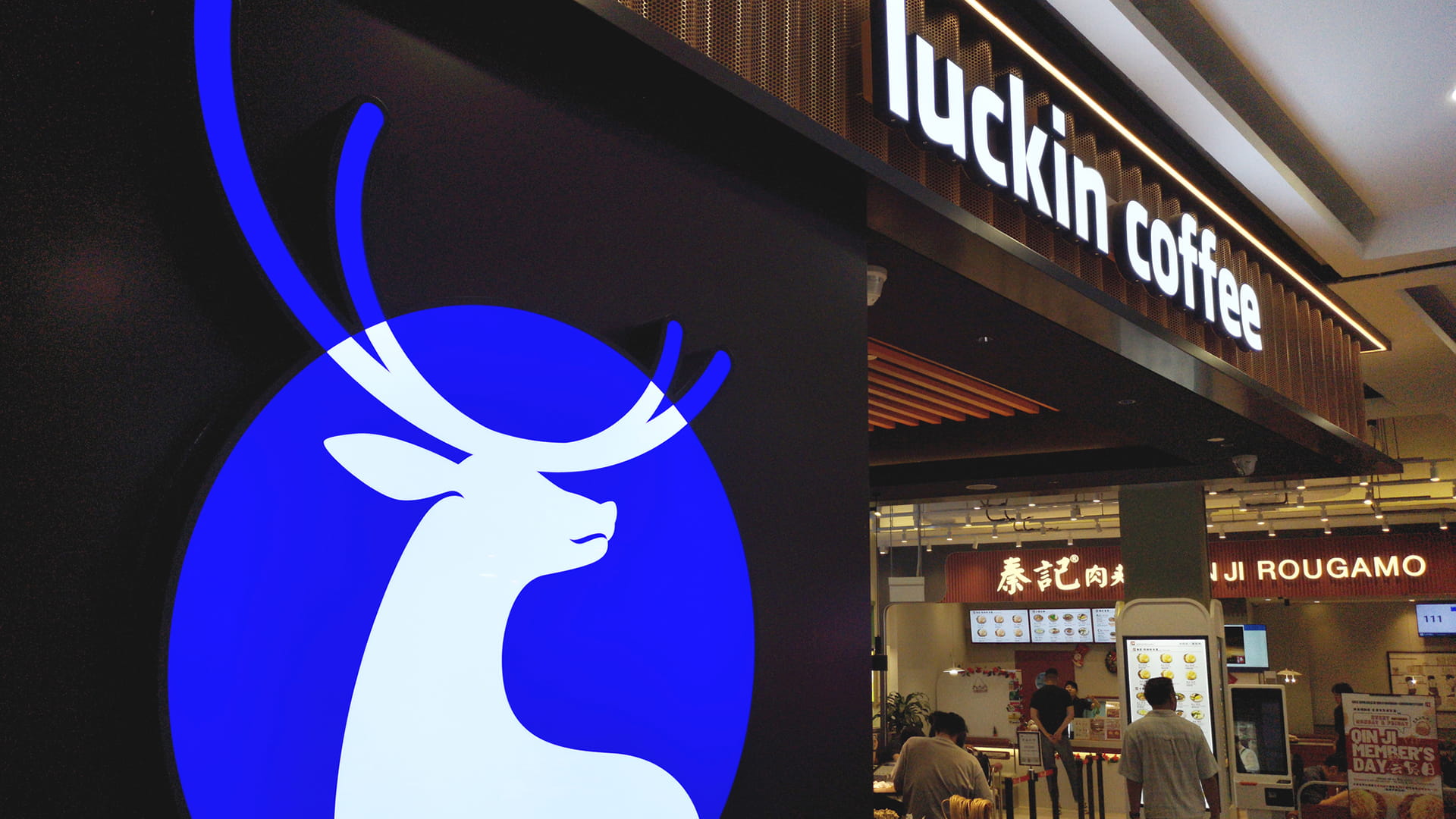
Southeast Asia has emerged as a frequent first stop for overseas expansion, particularly for companies from China. As of December 2024, Singapore-based research firm Momentum Works estimated that Chinese F&B brands operated more than 6,100 outlets across the region. That growth was driven largely by the rapid chain-based expansion of brands such as Mixue Bingcheng and Chagee.
In Singapore, roughly 85 Chinese F&B brands operated about 405 outlets as of August 2024, more than double the 32 brands and 184 outlets recorded around 14 months earlier.
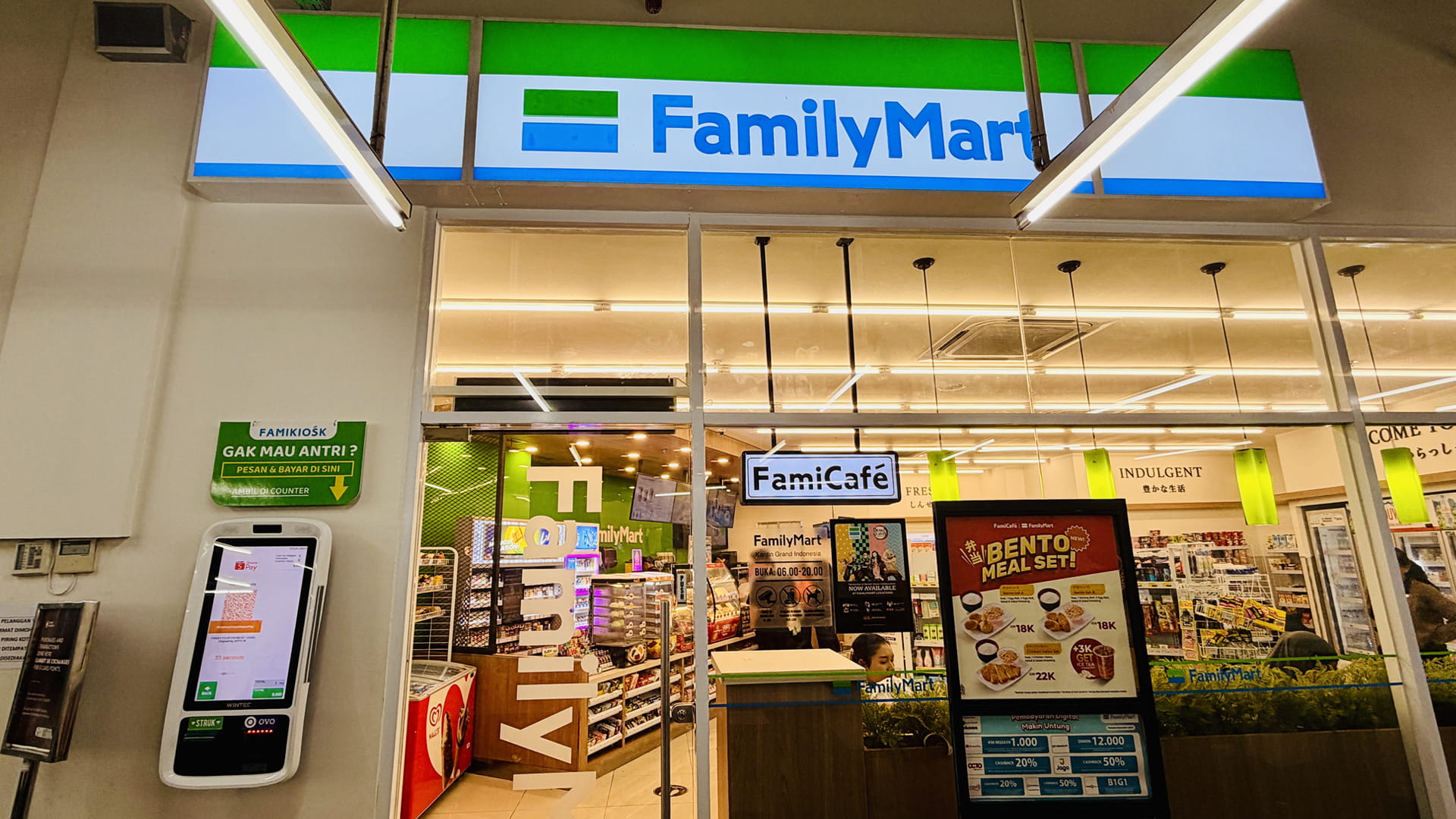
The pattern is not limited to China-origin brands. Across Asia, consumer-facing companies have pursued similar strategies. FamilyMart, Japan’s second largest convenience store chain after 7-Eleven, has expanded to more than 24,000 stores globally, including in China, South Korea, parts of Southeast Asia, and the Americas. It has recently focused on Indonesia, where it operates more than 200 outlets.
Other examples include Philippines-based fast food chain Jollibee, which operates more than 1,600 outlets globally. South Korean fashion eyewear retailer Gentle Monster has expanded into an estimated 14 countries as of June 2025, with Europe and the US among its key markets.
Infrastructure as a competitive layer
As brands transition into international chains, new opportunities are created for a different class of companies: those that enable expansion rather than compete directly for end consumers.
Operating across diverse regulatory and commercial environments requires more than brand recognition. Payment systems, compliance frameworks, device management, food safety protocols, and backend integration must function reliably across jurisdictions. For companies entering foreign markets, complexity at these layers can materially affect execution risk.
This is where business internet-of-things (BIoT) providers such as Sunmi are positioning themselves.
According to China Insights Consultancy, based on 2024 revenue, Sunmi is the world’s largest Android-based BIoT solution provider, with a market share exceeding 10%. The company operates in more than 200 countries and territories and has established subsidiaries and branches across 15 countries spanning the Asia Pacific, Europe, North America, Latin America, and the Middle East and Africa.
Several factors differentiate it from peers.
According to Sunmi, its solutions span more than 100 industry subsegments, covering operational use cases across retail, F&B, logistics, healthcare, and other service sectors. In practice, that breadth makes its devices versatile. They can be deployed not only at checkout counters, but also for use cases such as inventory management, tableside ordering, last-mile delivery confirmation, and compliance tracking.
Brand recognition in China and overseas has also contributed to greater mindshare among enterprises evaluating partners for chain-based expansion.
Partnerships further reinforce that positioning. Last September, Google recognized Sunmi as its first Android Enterprise Gold Partner in the Asia Pacific region and certified it under the Android Enterprise Recommended, or AER, program, signaling compatibility and security compliance within Google’s enterprise ecosystem.
RELATED ARTICLE
Rethinking front-of-house systems
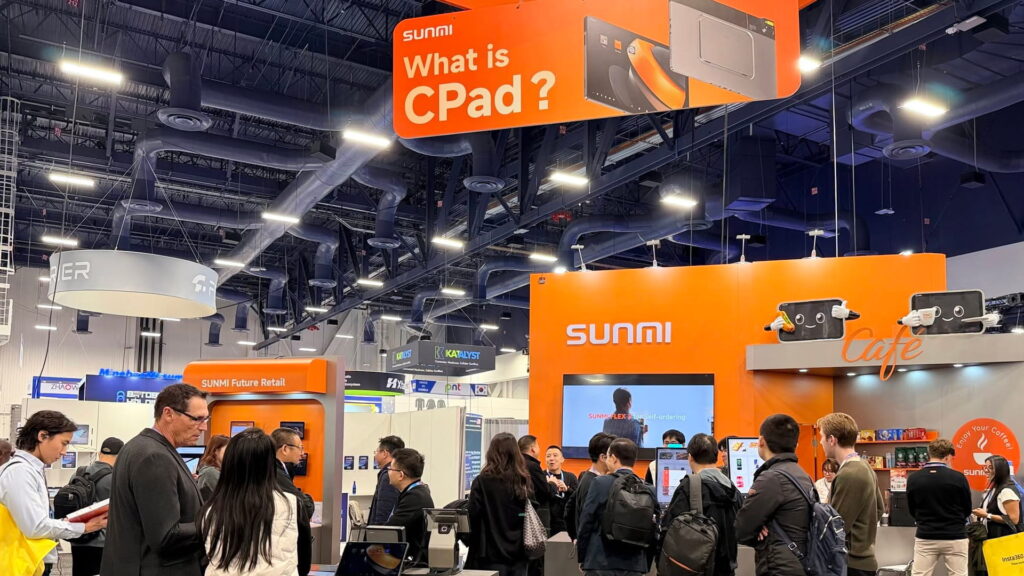
Sunmi emphasizes market-driven R&D, which has led to products such as its CPad series. The line is designed to consolidate front-of-house functions into a single terminal device, positioned as an alternative to traditional point-of-sale (POS) systems that often require multiple peripherals.
The CPad series was developed in response to fragmented merchant setups observed in North America, where consumer tablets are frequently paired with third-party accessories. Such configurations can increase maintenance complexity and limit functionality, Sunmi said.
Launched in early 2025, CPad was exhibited at this year’s CES and the NRF exhibition, commonly known as Retail’s Big Show, where it drew attention for its integrated design.
Sunmi’s operational experience abroad also informs its product design. Serving customers across multiple regions has required localization to accommodate varying payment preferences, regulatory requirements, and system integrations, with versatility a central focus.
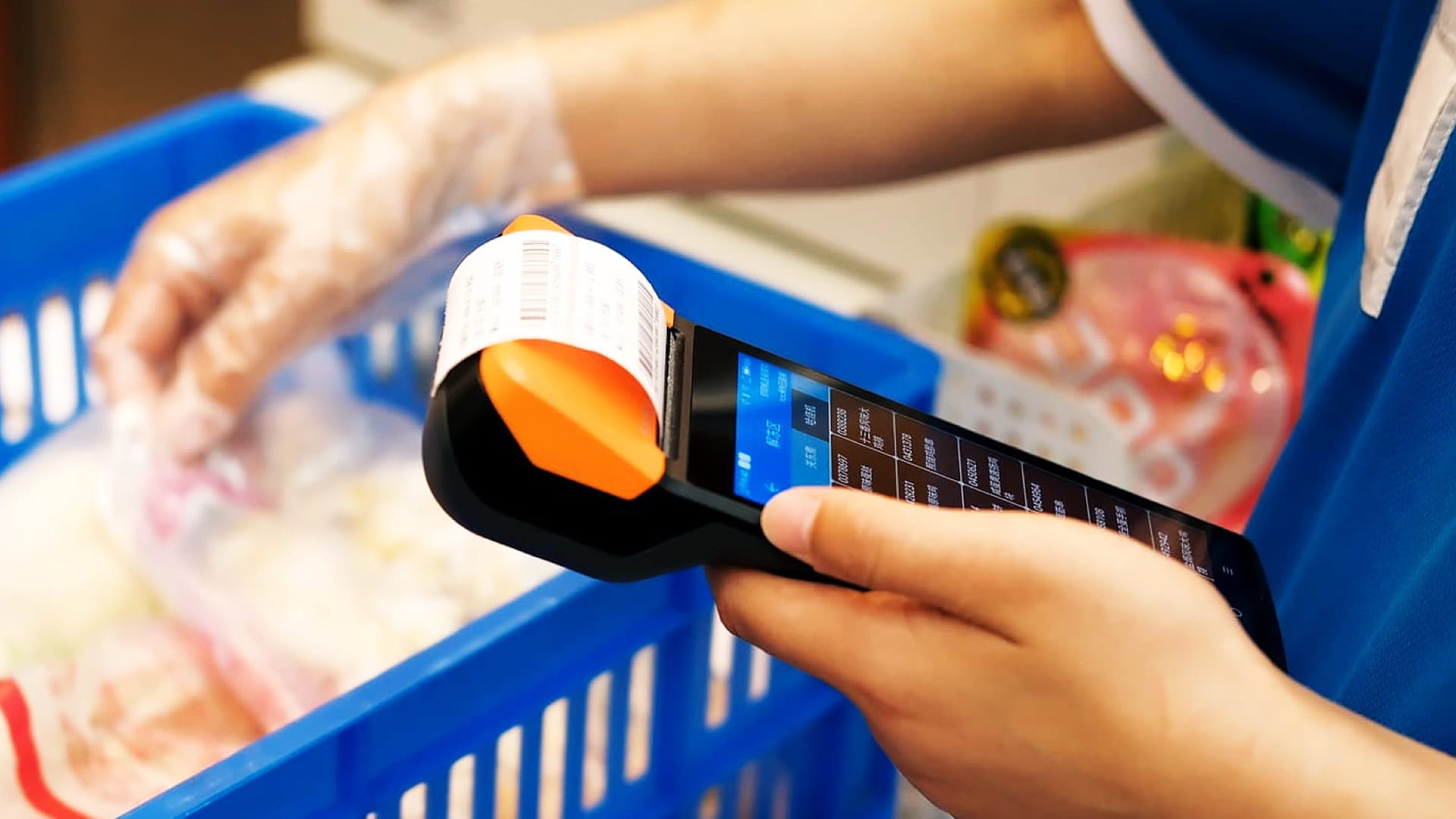
Case in point: FamilyMart, a Sunmi customer, deploys Sunmi’s V2 Pro handheld POS device to support food safety management across its stores.

Food safety procedures in convenience stores are labor-intensive. Staff must record timestamps at multiple stages, including delivery completion, inspection, storage, defrosting, unbagging, and pre-sale. When product counts reach dozens or hundreds, manual recordkeeping can disrupt operations during peak hours and increase labor demands.
Using the V2 Pro, FamilyMart store staff can scan barcodes to synchronize data directly to a centralized system, reducing handwritten records and minimizing errors between shifts. The device’s built-in label printer generates best-by or expiration labels based on timestamp data. It can also capture and upload images to support safety inspections.
In this case, the V2 Pro serves a tailored role in FamilyMart outlets, supporting the sale of ready-to-eat products. Through its digital and integration capabilities, it addresses compliance and operational requirements, easing pressures that would otherwise intensify as store networks scale.
Building for scale
Beyond hardware, Sunmi has introduced Max, a service platform that allows enterprises and developers to build, customize, and manage applications across its devices.
Max is designed for deployment at scale, supporting networks of up to 10,000 stores and high daily order volumes per outlet. It provides backend infrastructure, including APIs and cloud databases, intended to simplify the replication of unified systems across chain networks.
According to Sunmi, more than 7,000 enterprises across roughly ten countries have adopted Max, and the company is focused on enhancing customization to embed such infrastructure choices over time.
Sectors where chainization is most visible, including retail and F&B, are also those in which payment infrastructure and operational efficiency play a central role in the customer experience. Yet companies expanding overseas often do so before fully adapting their systems to new markets. That gap can create opportunities for integrated, next-generation solutions to be adopted from the outset, rather than retrofitted later.
In that context, companies that support globalizing chain brands at the level of operational infrastructure, such as Sunmi, may find themselves positioned at a critical juncture in the next phase of consumer globalization.
This article was published in partnership with Sunmi.