


On March 25, Pop Mart released its 2025 earnings report, posting revenue of RMB 37.1 billion (USD 5.4 billion), up 184.7% year-on-year. Overseas markets became its main growth driver, contributing more than 40% of total revenue.
The results were strong by any measure. But the capital market was unconvinced. After the report was released, Pop Mart’s stock at one point plunged more than 20% in early trading.
On March 26, Pop Mart said in a filing that it would spend HKD 599 million (USD 76.4 million) to repurchase 3.94 million shares at HKD 148.4–157.8 (USD 18.9–20.1) apiece. The move was intended to stabilize market sentiment and signal the company’s confidence in its long-term outlook.
Beyond growth in some areas falling short of expectations, there was another persistent concern: reliance on a single blockbuster. In 2025, Labubu and The Monsters, the franchise behind it, contributed more than 38% of revenue, up from 34.7% in the first half. That also made plush the company’s largest revenue-generating product category, surpassing blind boxes. In 2025, Pop Mart’s plush category generated RMB 18.7 billion (USD 2.7 billion) in revenue, up 560.6% year-on-year, far above the market’s expectation of RMB 14.1 billion (USD 2 billion).
Those concerns are not unfounded. At Pop Mart’s 2025 annual meeting, one figure circulated widely: 49% of new members recognized only the Labubu 3.0 product. The blockbuster’s pull was strong enough that many consumers who did not know Pop Mart still hung the colorful, distinctive Labubu from their bags. It also reinforced an industrywide fear that every viral product eventually reaches the end of its cycle.
At such a moment, Pop Mart has repeatedly stressed the importance of long-term operations. That is a familiar message for a company facing questions about future growth, and in some ways it is a story every company climbing uphill must tell.
The search for “the next Labubu”
Even at Pop Mart’s midyear earnings briefing in 2025, when business was booming and the mood was upbeat, investors were already asking what might follow Labubu. Management could only point, again and again, to its product development and operating capabilities.
But in March, the operating ability Pop Mart had long prided itself on suffered a rare setback.
At the end of February, Pop Mart unveiled a new IP, KeyA. Unlike the cute, sweet characters it had introduced in the past, KeyA is a long-haired girl whose core concept is “a girl in constant self-creation and improvement,” in line with today’s emphasis on self-definition.
The new IP drew immediate criticism, with more than 8,000 critical comments appearing under Pop Mart’s official Xiaohongshu account.
Part of the problem was a mismatch in the marketing message. In Pop Mart’s official narrative, the creator behind the IP is Chloe Chen, an artist born after 2005 who began drawing independently at age three, started creating illustrations at 13, and entered the Faculty of Manga at Kyoto Seika University in Japan at 16. But consumers appeared less interested in the story of a prodigy than in the IP’s design and narrative.
An-an (pseudonym), a veteran in the toy collectible industry, told 36Kr that emphasizing a creator’s personal resume is a common tactic among small and midsized toy collectible companies because a new IP has little story to tell. But that approach can invite backlash, and at Pop Mart’s scale, the risks are magnified.
Pop Mart made few adjustments in response. It continued launching products and holding exhibitions as planned. At one point, media reports showed weak sales of the new IP’s blind box products on e-commerce platforms.
To be clear, it is not as if Pop Mart has never produced successful new IPs.
In 2025, it had seven IPs generating more than RMB 1 billion (USD 145.2 million) in revenue, up from four in 2024. The fastest-growing was Hirono, which generated RMB 2.1 billion (USD 304.8 million), up more than 16-fold year on year. Launched in August 2024, Hirono began with a limited audience and was gradually scaled by the company.
The problem is that none of these IPs comes close to the scale of The Monsters, the franchise that includes Labubu. In 2025, The Monsters generated RMB 14.2 billion (USD 2.1 billion) in revenue. By comparison, second-ranked Skullpanda contributed RMB 3.5 billion (USD 508.1 million), less than one-quarter as much.
In An-an’s conversations with one of Pop Mart’s investors, the latter did not view Hirono as a meaningful supplement or substitute for Labubu. “It is more like a family-friendly animation character than a toy collectible IP,” the person said. Growth in Pop Mart’s other IPs was also seen as the natural result of the company’s broader expansion and rising sales volume, not as an unexpected breakthrough.
That may be a high bar, but investors still want to see another IP deliver the kind of breakout growth Labubu did.
Extending Labubu’s lifecycle
So how is Pop Mart responding to the doubts and setbacks that have piled up around it?
A look back at Pop Mart’s 2025 earnings report shows one theme repeated throughout: how to extend Labubu’s lifecycle and further develop the IP.
In the earnings review, Pop Mart said that owning a world-class IP is only a new starting point. It said it would continue to operate carefully, launch high-quality products, deepen the IP’s meaning through continued content innovation, strengthen its cultural depth and market reach, and explore more possibilities in the present and future, with the goal of turning The Monsters into a world-class IP with a long lifecycle.
In other words, before another breakout IP emerges, the more urgent task is figuring out how to extend Labubu’s life.
Management, including CEO Wang Ning, has repeatedly argued that older IPs can be revitalized through new product categories, celebrity-style operations, and related strategies. In its view, there is no need to fixate on “the next Labubu.”
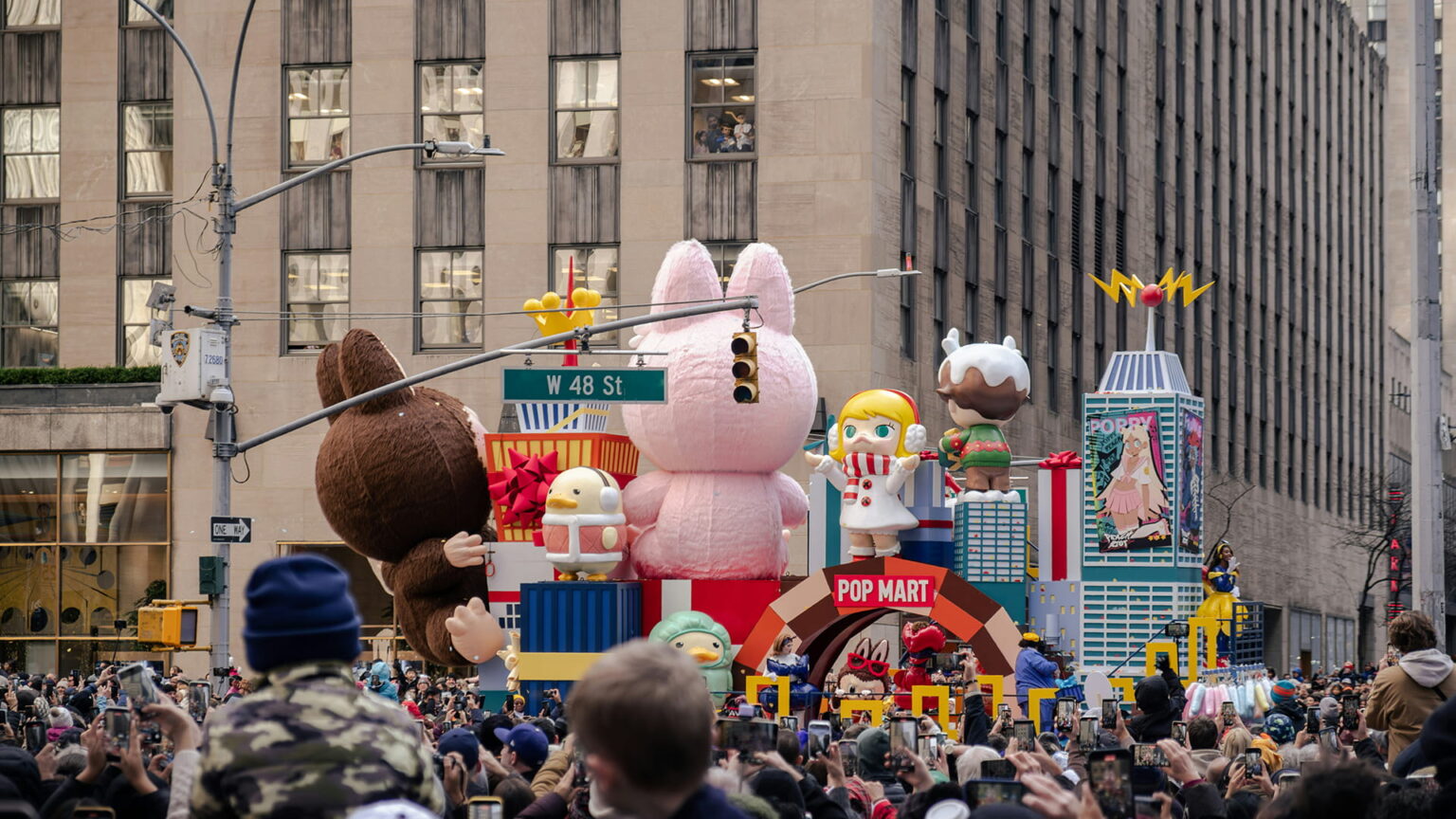
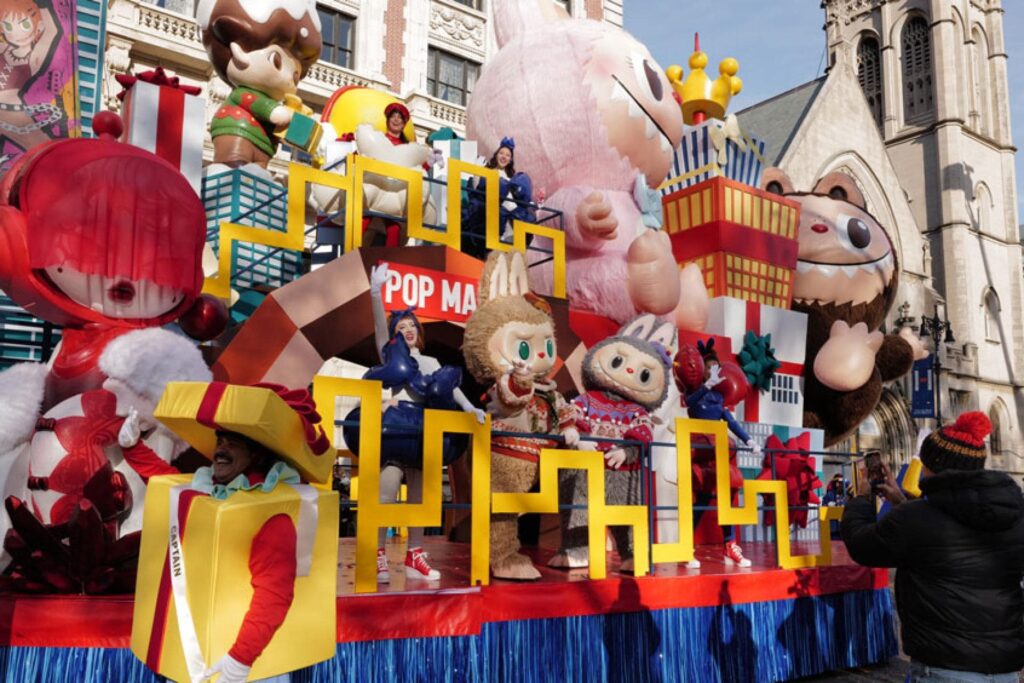
Labubu’s visibility only increased further in 2025. It collaborated with Porsche, and the broader The Monsters family appeared in the Macy’s Thanksgiving Day Parade.
RELATED ARTICLE
Wang once said the most important thing the company learned from Disney is continuous investment and continuous operations. In his view, had Mickey Mouse not received any investment for 50 years, the IP would have disappeared.
At the same time, Labubu has also been trying to address one of its weaknesses: content.
On March 19, Pop Mart announced that Labubu was becoming the lead character in a film. The company reached a partnership with Sony Pictures to produce an animated Labubu film directed by Paul King, the director of Paddington.
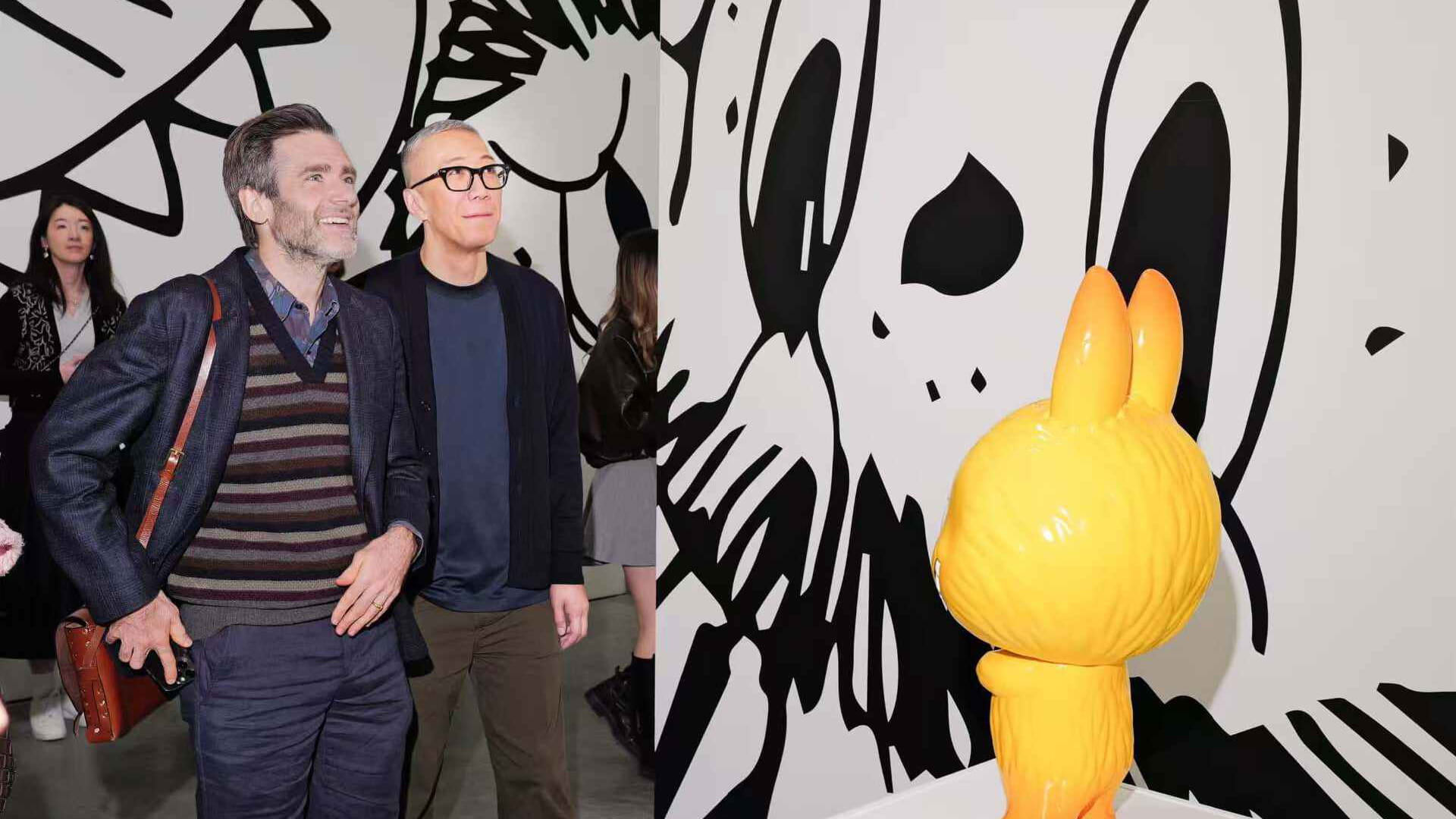
An-an said that, for investors, this is a positive signal. As the film moves through production and eventually reaches audiences, it could not only extend Labubu’s lifecycle, but also bring other members of The Monsters family into the spotlight, giving Pop Mart a new story to tell.
At around the same time last year, Pop Mart had also announced plans to produce animated shorts themed around Labubu and Hirono, but those projects later faded from view. In mid-April of that year, a Labubu product video released by the company was also accused by internet users of copying from films including Soul. To some extent, that episode exposed Pop Mart’s weakness in content. This time, Pop Mart has decided to hand content creation to people better equipped to do it.
An IP without content is easier for consumers to abandon over product design or quality problems. One with a story is not. People do not stop liking Tom and Jerry because a blind box product based on it turns out poorly. As pressure builds on Pop Mart’s supply chain and product quality issues continue to surface, filling out the content behind its IPs has become more urgent.
What the toy collectible business shares with the content business is that neither can be fully monopolized. No one can say where the next blockbuster will come from, not even market leaders such as Tencent in gaming, Heard Island in short dramas, and Pop Mart in toy collectibles. But operating an IP that has already become a global hit is a more certain task. Labubu had already generated another wave of attention through its strong fit with the vinyl plush category.
At the earnings briefing, Wang said the company expects growth of no less than 20% in 2026, describing the target as conservative.
Both Labubu and Pop Mart now face their next step. It is a test the company cannot avoid.
KrASIA features translated and adapted content that was originally published by 36Kr. This article was written by Lan Jie for 36Kr.
Note: HKD, RMB figures are converted to USD at rates of HKD 7.84 = USD 1 and RMB 6.89 = USD 1 based on estimates as of April 7, 2026, unless otherwise stated. USD conversions are presented for ease of reference and may not fully match prevailing exchange rates.