



After years of rapid expansion, China’s drone industry may be entering a period of adjustment, stemming from the rollout of new regulations. Since January 1, China has formally enforced a revised version of its public security administration punishments law, explicitly bringing unauthorized drone flights under regulatory oversight. Violations can result in fines, administrative detention, or, in serious cases, criminal liability.
Another regulatory layer will take effect on May 1, when two national standards come into force. All civil drones will be required to complete real-name registration, while drones that are not activated, or that have been deactivated, must be technically incapable of flight. Pilots operating in core controlled airspace must file flight plans in advance. Drones weighing 250 grams or more are subject to mandatory safety management and real-time location reporting once airborne.
The framework also formalizes a system of “classified management.” Micro and light drones are exempt from pilot licensing requirements when flown in approved airspace, but users are still expected to comply with the full regulatory process. That includes adherence not only to flight parameters, but also to no-fly zones and altitude limits.
On paper, the rules raise the bar for drone use and risk discouraging participation. They have already unsettled the industry. Nike (pseudonym), a professional drone pilot, told 36Kr that the market has been in turmoil since the rules were finalized. Some pilots who failed to complete real-name registration have been fined or had their drones confiscated. Corporate clients, wary of regulatory exposure, have deprioritized freelance pilots for filming work, triggering what Nike described as a cliff-like drop in demand.
Drones remain a central pillar of China’s low-altitude economy. In 2025, the concept was written into the government work report and, for the first time, incorporated into the country’s 15th five-year plan as an emerging industry slated for cultivation and expansion.
Much of the groundwork, however, had already been laid. As early as 2023, the State Council and the Central Military Commission issued interim regulations requiring real-name registration and advance flight filings. The latest rules represent a series of refinements rather than a wholesale overhaul.
The deeper challenge lies in low-altitude airspace itself, which typically covers areas below 1,000 meters and has long been subject to unclear management boundaries. Under the current five-year plan, regulators are rolling out more granular policies aimed at tiered and categorized airspace management. The new drone rules should be understood within that broader policy shift.
Viewed this way, the panic may be premature. The strategic importance of the low-altitude economy remains intact, and the intent of regulation is to support more orderly growth. Short-term disruption, however, appears unavoidable, and the industry will require support to manage the transition.
Market turmoil
For drone pilots, the impact has been immediate. After years of development, demand for pilots has emerged across commercial aerial photography, agricultural spraying, power line inspection, surveying, and emergency response.
By the end of 2024, about 273,000 people held drone pilot licenses issued by the Civil Aviation Administration of China. More than 2.17 million drones were registered nationwide. The gap suggests that most registered drones, particularly consumer photography models, are operated either by unlicensed pilots or by users flying under license exemptions. Professional pilots account for only a small share of overall usage.
China’s regulations do not require all pilots to be licensed. Micro drones under 250 grams and light drones under four kilograms dominate the consumer market and are exempt from licensing when flown in approved airspace. For hobbyists documenting everyday life, real-name registration is mandatory, but pilot certification is not.
The new rules do, however, tighten restrictions on where and how drones may fly. Altitude limits are tied to aircraft class. Micro drones are capped at 50 meters, while light drones are limited to 120 meters above ground level. Because altitude is measured as true altitude rather than relative height, a pilot launching from the roof of a 100-meter building would have only 20 meters of legal climb space remaining for a light drone.
Flights involving controlled airspace must be filed in advance through UOM, the national drone management platform. The true-altitude system is designed to maintain a physical buffer between low-altitude drones and manned aircraft, whose minimum operating altitude is typically around 300 meters, reducing the risk of midair collisions.
Nike said UOM’s current delineation of test zones and control zones remains uneven. In some cases, drones are permitted near airports but restricted in remote wilderness areas. Local governments are now introducing supplementary rules tailored to regional airspace conditions, and approval processes may improve over time.
His larger concern is regulatory fragmentation. If local authorities develop divergent airspace rules, pilots who rely on geographic mobility will be forced to constantly adapt. For a profession built on flexibility, he said, that could prove deeply disruptive.
A Matthew effect
Even as implementation continues and uncertainty persists, the new rules may accelerate consolidation among drone manufacturers.
All drones are now required to support remote identification, and unregistered or unactivated aircraft must be grounded through hardware-level restrictions. For low-cost toy drone makers, adding identification modules and registration locks raises bill-of-materials costs and demands stronger software and backend integration. Companies unable to absorb those costs may be pushed out of the market.
Regulatory literacy has also become a competitive barrier. An industry insider told 36Kr that smaller firms often lack the technical depth, cost flexibility, and compliance expertise needed to keep pace. Without dedicated regulatory teams, understanding and implementing evolving rules can be overwhelming. In practice, regulatory risk is shifted to users, some of whom may conclude that the effort outweighs the benefit.
Larger manufacturers are better positioned. DJI, for example, has long emphasized compliance and maintains teams dedicated to regulatory research. Many of its products already support remote identification, limiting the impact of the new requirements.
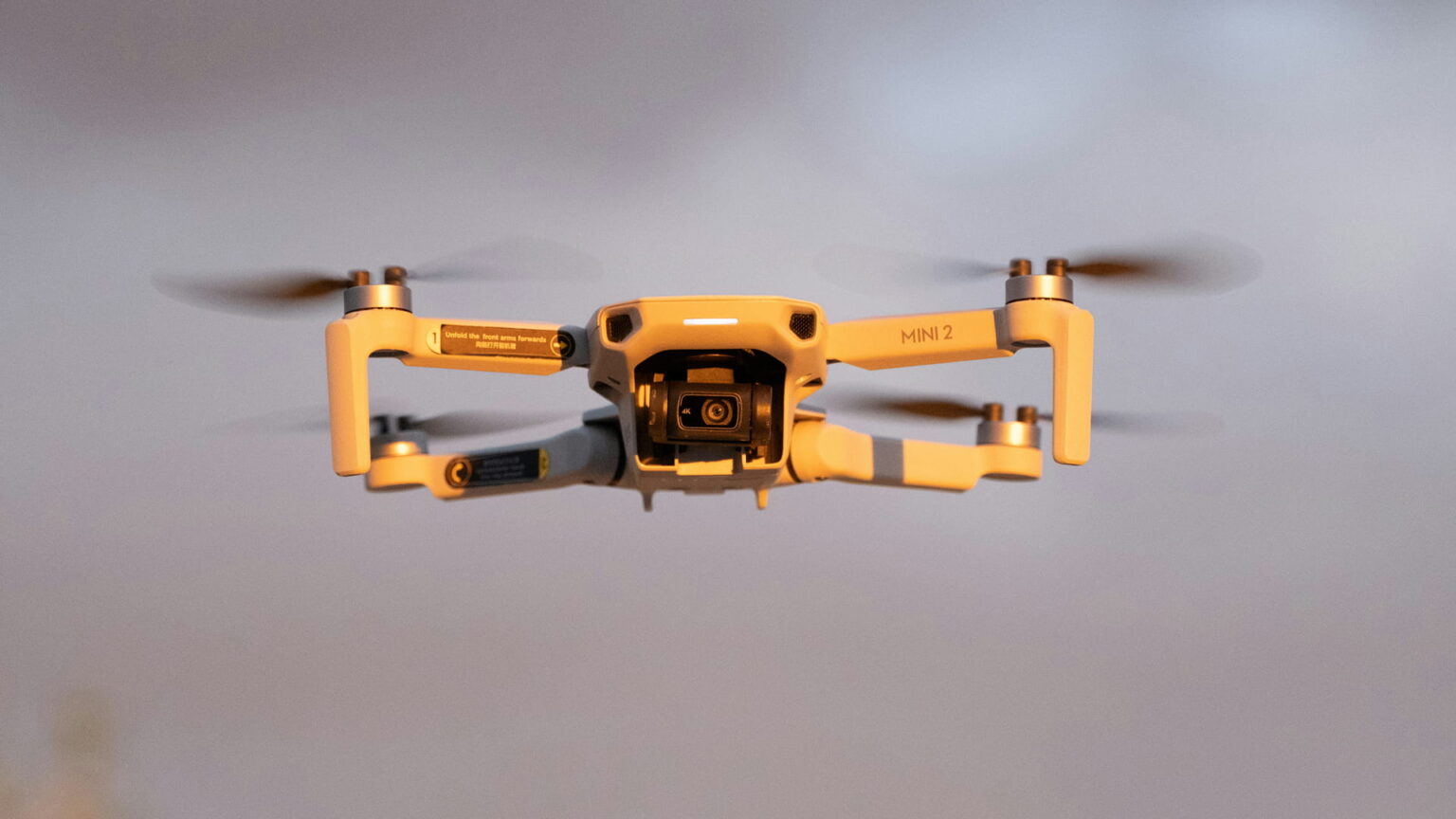
DJI’s consumer lineup includes the high-end Mavic series, the midrange Air series, and the entry-level Mini series. Research from China Galaxy Securities shows that the Mini series is the company’s sales backbone, largely because its sub-249-gram weight reduces regulatory friction in many markets. That design strategy has been central to DJI’s success in turning drones into mainstream consumer electronics.
Under China’s latest rules, sub-250-gram drones face the lightest regulatory burden, requiring only real-name registration and flight filing through UOM.
Even so, operational complexity is rising. Users routinely ask how to fly legally, but local rules can change quickly. Keeping software, guidance, and customer support aligned with a patchwork of regional policies is becoming increasingly difficult.
China’s drone industry has spent years building a dominant global position. As consumer drone markets expand worldwide, regulators are tightening oversight. The underlying objective is consistent: to balance innovation and industrial growth with public safety and airspace order.
China’s regulatory trajectory over the past decade reflects a process of experimentation and gradual refinement. As oversight normalizes, disruption and consolidation are likely. Industry participants are betting that as UOM matures and local airspace rules stabilize, compliance will shift from a constraint to an enabling foundation, allowing the low-altitude economy to grow on more sustainable terms.
KrASIA Connection features translated and adapted content that was originally published by 36Kr. This article was written by Leslie Zhang for 36Kr.